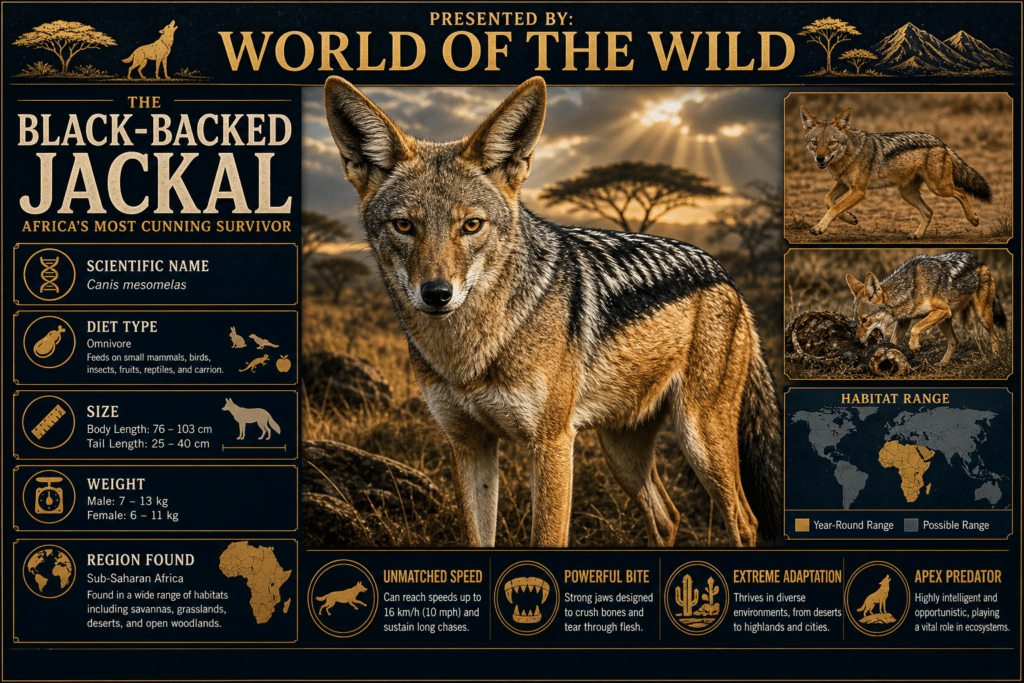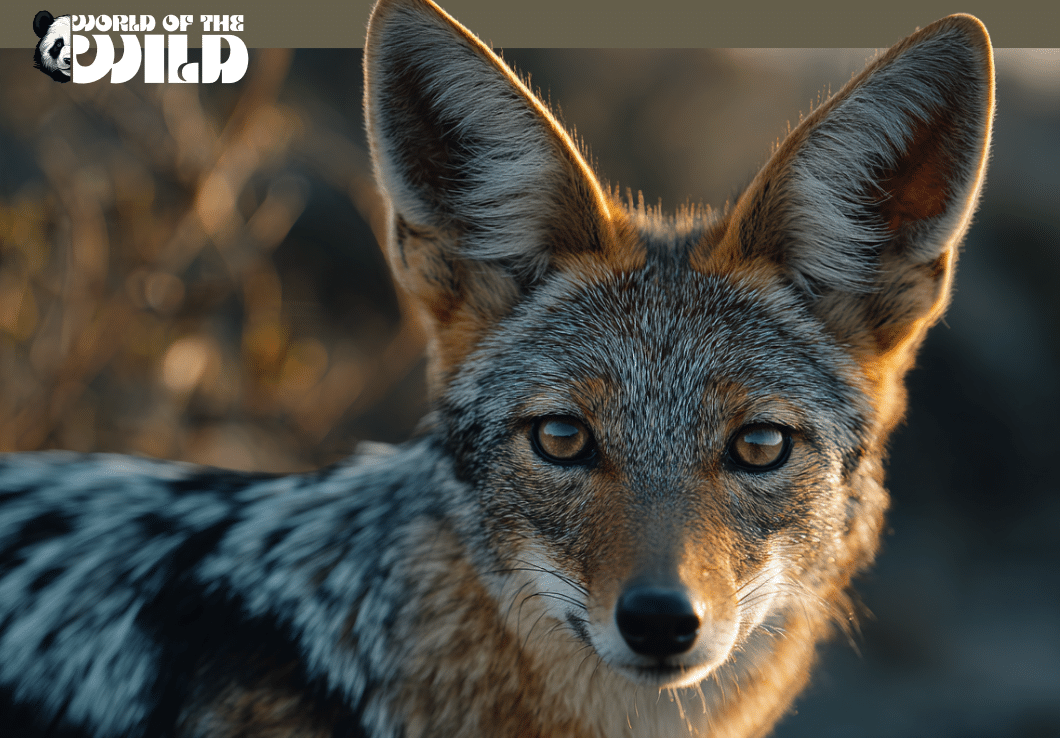

In the vast, sun-scorched savannas of Africa, where lions reign and hyenas laugh into the night, there exists a creature that has quietly outlasted them all — a ghost of the grasslands, a trickster wrapped in rust and shadow. The black-backed jackal (Canis mesomelas) is not the largest predator on the continent, nor the most feared, but it may very well be the most resilient. With a mind sharp enough to outwit apex predators and a social bond strong enough to weather the harshest of droughts, this striking canid has carved out a niche that no other animal has managed to fill quite so brilliantly. Often dismissed as a scavenger, often underestimated as mere background wildlife, the black-backed jackal deserves a far closer look — because the more you learn about it, the harder it becomes to look away.
Facts
- The black-backed jackal is one of the oldest living canid species on Earth, with fossil records placing its lineage back approximately 2.5 to 3 million years — making it older than the domestic dog’s entire evolutionary journey.
- Unlike many canids, black-backed jackals are strictly monogamous and often mate for life, with bonded pairs maintaining territories together for years on end.
- They are capable of running at speeds up to 40 mph (64 km/h), allowing them to pursue prey and escape threats with remarkable agility.
- Black-backed jackals have been recorded hunting prey far larger than themselves, including young impala and Thomson’s gazelles, using coordinated pair or family-group tactics.
- They possess an extraordinary immune system — capable of scavenging carcasses riddled with anthrax, distemper, and rabies pathogens that would prove fatal to most other animals.
- In some parts of Southern Africa, black-backed jackals have adapted to coastal living and are regularly observed hunting Cape gannets and other seabirds along rocky shorelines.
- Black-backed jackals communicate using a distinctive, haunting wail — often described as one of the most iconic sounds of the African night — which serves as a territorial call, alarm signal, and contact call between mates.
Species
The black-backed jackal belongs to the following taxonomic hierarchy:
- Kingdom: Animalia
- Phylum: Chordata
- Class: Mammalia
- Order: Carnivora
- Family: Canidae
- Genus: Canis
- Species: Canis mesomelas
Within the species, two geographically distinct subspecies are generally recognized. Canis mesomelas mesomelas inhabits the southern range, spanning South Africa, Namibia, Botswana, and Zimbabwe, while Canis mesomelas schmidti is found in the eastern African populations of Kenya, Tanzania, Ethiopia, and Somalia. The two subspecies are morphologically similar but show slight variations in size and coat intensity, likely driven by regional environmental pressures.
The black-backed jackal shares its genus with two other jackal species found on the African continent: the side-striped jackal (Canis adustus), a more forest-adapted and considerably shyer animal, and the golden jackal (Canis aureus), which ranges across North Africa, the Middle East, and into Southeast Asia. Interestingly, genetic studies have confirmed that the black-backed jackal and the side-striped jackal form their own distinct lineage within Canis — diverging from the golden jackal and wolf lineage far earlier in evolutionary history. This makes them the most ancient members of the genus, a distinction that only deepens their scientific intrigue.
Appearance
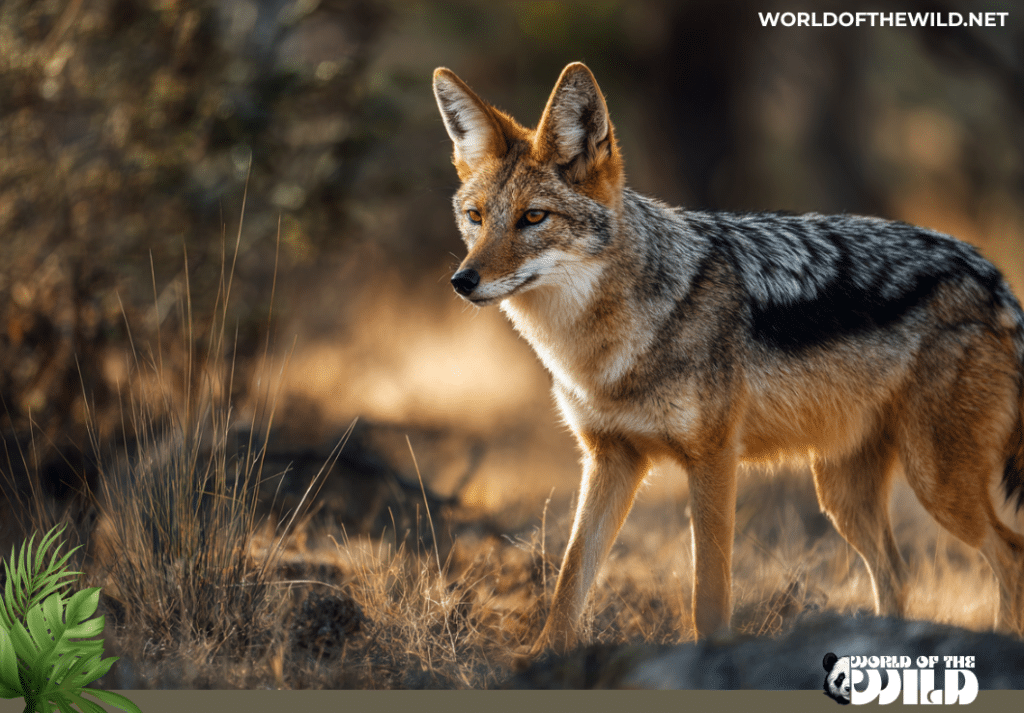
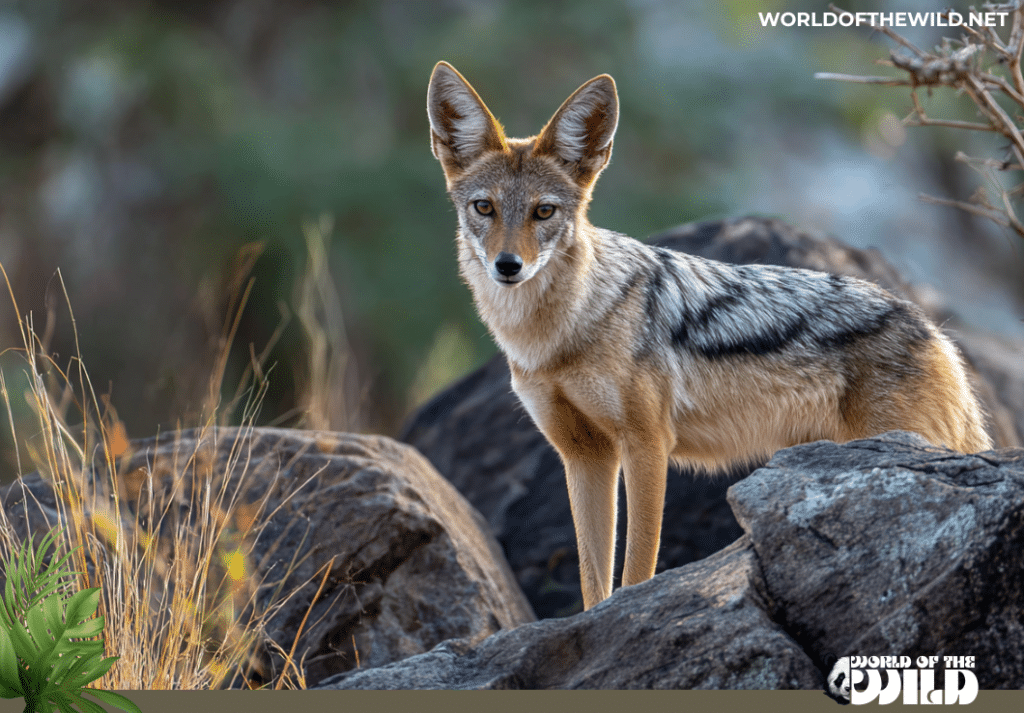
The black-backed jackal is arguably one of the most visually striking members of the canid family, instantly recognizable the moment it steps into the open. Its most defining feature is the bold saddle of black and silver fur that runs from the back of the neck down to the base of the tail — a stark contrast against the warm reddish-brown flanks and creamy underbelly. The saddle is not a solid black but rather a beautifully intricate mix of black-tipped and silver-tipped hairs that shimmer in sunlight, creating a grizzled, almost metallic appearance.
The face is fox-like and expressive, with large, upright, pointed ears that are russet on the outside and pale within — perfectly tuned for detecting the faintest sounds across open terrain. The muzzle is long and slender, well-suited for probing into crevices and small burrows. The eyes are a warm amber-brown, alert and intelligent in bearing.
In terms of size, black-backed jackals are medium-small canids. Adults typically stand 15 to 20 inches (38 to 50 cm) at the shoulder and measure 28 to 35 inches (70 to 90 cm) in body length, with a bushy tail adding an additional 10 to 13 inches (25 to 33 cm). Body weight ranges from approximately 13 to 26 pounds (6 to 12 kg), with males generally being slightly larger than females. The build is lean and athletic — long legs, a deep chest, and a lightweight frame that speaks directly to a life spent running, chasing, and evading.
Behavior
If there is one word that encapsulates the behavioral essence of the black-backed jackal, it is adaptability. These animals are extraordinarily flexible in nearly every dimension of their daily lives — from what they eat to when they are active to how they structure their social lives.
Black-backed jackals are primarily crepuscular and nocturnal, being most active around dawn and dusk to avoid the scorching midday heat of their savanna habitats. However, in areas where human disturbance is low, they can be observed foraging well into daylight hours. Their home ranges vary considerably based on food availability but generally span between 2 and 20 square miles (5 to 50 km²), which mated pairs defend vigorously against rival jackals through scent marking, howling, and direct confrontation.
Socially, the species is built around the monogamous mated pair as the fundamental unit. Unlike wolves or African wild dogs, they do not form large packs, but they do practice a fascinating form of cooperative family structure in which offspring from a previous year’s litter — known as “helpers” — remain with their parents and assist in raising the next generation of pups. These helpers guard the den, babysit, bring food to nursing mothers, and even regurgitate food for younger siblings. Studies have demonstrated that pups raised with helpers have significantly higher survival rates than those raised by a pair alone.
Communication is rich and multi-modal. The iconic wailing call — a rising, drawn-out shriek often rendered as a sort of mournful yodel — serves simultaneously as a long-distance contact call, a territorial declaration, and an alarm signal. Pairs will often call in duet, their voices overlapping in a way that may exaggerate the apparent number of animals present to potential rivals. Shorter yips, growls, and a characteristic “keckering” vocalization are used in close-range interactions. Body posture, facial expressions, and tail positioning round out a sophisticated communication repertoire.
Their intelligence is frequently underestimated. Black-backed jackals have been observed using decoys and distraction tactics when approaching prey, engaging in deliberate problem-solving when accessing food sources, and even exploiting the kills of larger predators like lions and leopards with a calculated boldness that borders on audacity. They have been documented shadowing honey badgers to steal their catches and tracking vultures to locate fresh carcasses miles away.
Evolution
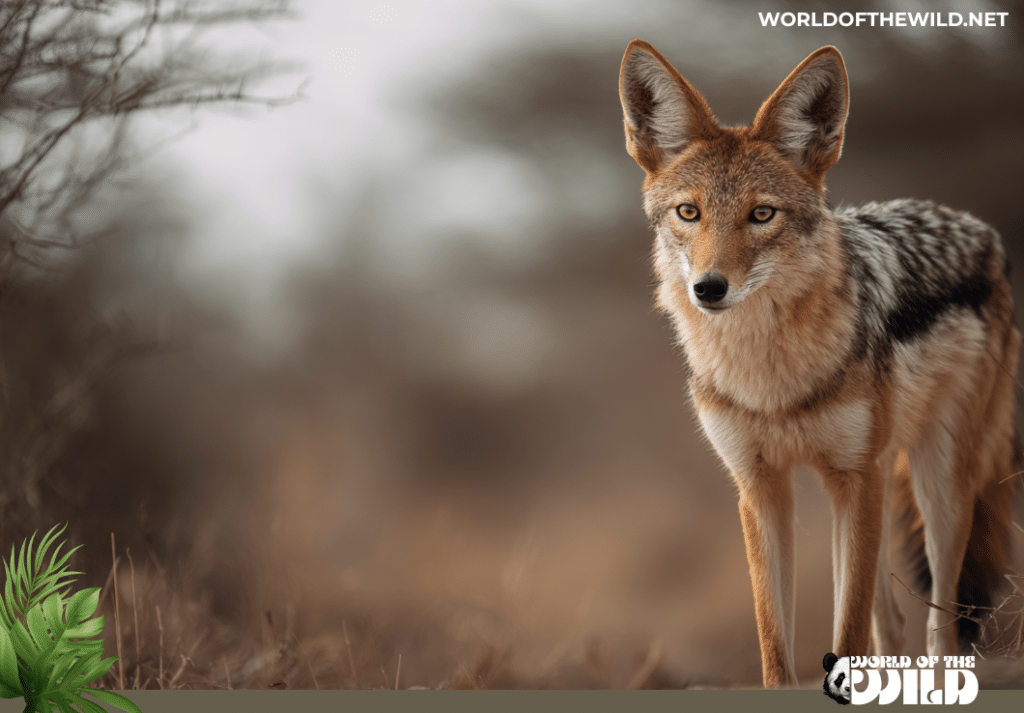
The evolutionary story of the black-backed jackal is one that fundamentally challenges the popular image of jackals as latter-day opportunists lurking in the shadow of more “successful” predators. In reality, Canis mesomelas and its close relative the side-striped jackal represent the earliest branching lineage within the genus Canis, having diverged from the main wolf-like lineage somewhere between 5 and 6 million years ago during the Late Miocene to Early Pliocene epoch.
This divergence took place during a period of profound climatic and ecological transformation in Africa, as forests gave way to increasingly open grassland and savanna ecosystems — the very habitats in which black-backed jackals remain dominant today. Their persistence across millions of years of continental change, from dramatic shifts in climate to the rise and fall of megafauna, speaks to the evolutionary robustness of their body plan and behavioral repertoire.
Fossil evidence of Canis mesomelas-like animals has been recovered from sites across eastern and southern Africa dating back 2.5 to 3 million years, making them contemporaries of early hominids. In fact, black-backed jackals and our own evolutionary ancestors would have shared the same landscapes across the Plio-Pleistocene African savanna — competing, coexisting, and occupying overlapping ecological niches for millennia.
What is particularly remarkable from an evolutionary standpoint is how little the species appears to have changed in its fundamental form over this immense timespan. The black-backed jackal is in many respects an evolutionary conservative — its generalist diet, flexible social structure, and mid-sized body plan have proven so effective across such a wide range of conditions that natural selection has had little pressure to alter them dramatically. In evolutionary biology, this kind of long-term stability is not stagnation — it is success.
Habitat
The black-backed jackal occupies a distinctive disjunct geographic range — meaning that its populations are split into two separate regions with a significant gap between them. One population spans the countries of eastern Africa, primarily Kenya, Tanzania, Somalia, Ethiopia, Eritrea, and Djibouti. The second and larger population covers southern Africa, encompassing South Africa, Namibia, Botswana, Zimbabwe, Mozambique, and parts of Angola and Zambia. This unusual distribution is thought to be a relic of historical range fragmentation driven by changing vegetation zones during the Pleistocene.
Within these regions, black-backed jackals inhabit a remarkably broad spectrum of environments. They are most commonly associated with open savannas, grasslands, and bushveld, where their speed and wide-angle vision serve them well. However, they are equally at home in semi-arid and arid scrubland, coastal dune systems, montane grasslands at elevations exceeding 10,000 feet, and even the fringes of agricultural land and suburban areas in parts of southern Africa. Their adaptability to disturbed and human-modified landscapes has made them one of the few large carnivores to actually expand their effective range in recent decades, even as many of their contemporaries have declined.
Key habitat features that black-backed jackals require include adequate cover for denning — such as rocky outcrops, dense thicket, aardvark burrows, or thick reed beds — reliable water sources in drier regions, and sufficient prey diversity to sustain their omnivorous diet throughout seasonal fluctuations.
Diet
The black-backed jackal is a supremely opportunistic omnivore, and understanding its diet is perhaps the quickest way to understand why it has survived so long while so many of its contemporaries have struggled. Put simply: it will eat almost anything of nutritional value.
The core of the diet consists of small mammals — rodents, hares, mongooses, and small antelope fawns — along with birds, reptiles, insects, carrion, wild fruits, and berries. Along the coastlines of Namibia and South Africa, jackals have become skilled and surprisingly aggressive hunters of Cape fur seal pups, often working in pairs to isolate vulnerable animals from the colony. In the same coastal regions, they raid seabird nesting colonies and scavenge marine carrion washed ashore, demonstrating a dietary flexibility that would be the envy of any generalist ecologist.
Hunting strategies vary considerably with prey type and group size. When pursuing small prey such as rodents, a single jackal employs a classic pounce-and-pin technique reminiscent of foxes — leaping high and striking downward with the forepaws. When targeting larger prey such as young impala or Thomson’s gazelle fawns, mated pairs or family groups coordinate their efforts, one individual distracting or harrying the prey while the other closes in. Jackals are also accomplished kleptoparasites, shadowing larger predators and moving in boldly to steal bites from a fresh kill before the primary hunter can react — an approach that requires both nerve and precise threat assessment.
Seasonal availability heavily influences diet composition. During the dry season, when prey is scarce, plant material, insects, and scavenged carcasses become increasingly important. During the wet season, abundant rodent populations, ground-nesting bird eggs, and the peak of ungulate birth seasons provide a temporary bonanza of high-quality food.
Predators and Threats
Despite its cleverness and agility, the black-backed jackal is far from invulnerable in the wild. It faces predation pressure from a considerable array of larger carnivores and raptors — particularly in the early, most vulnerable stage of life.
Leopards are arguably the most significant natural predator of adult jackals, using their stealth and ambush technique to overcome the jackal’s speed advantage. Caracals, African wild dogs, spotted hyenas, and lions also take jackals opportunistically, though these interactions often end in the jackal’s escape thanks to its agility and early warning system of keen ears and eyes. From the air, martial eagles, crowned eagles, and Verreaux’s eagles pose a serious threat to pups and occasionally to small adults. Pythons and crocodiles account for additional mortality in suitable habitats.
On the human-induced front, the picture is considerably more complicated. In South Africa and Namibia in particular, the black-backed jackal has earned a deeply controversial reputation as a livestock predator, particularly affecting sheep and goat farming communities. As a result, it is subject to intensive and legally sanctioned persecution across much of its southern African range — including trapping, poisoning, shooting, and denning. South Africa alone reportedly removes tens of thousands of jackals annually through lethal control programs. While this reflects genuine conflict between farmers and wildlife, the ecological toll and its broader implications for ecosystem function remain poorly understood and largely unmonitored.
Additional human-caused threats include vehicle collisions along roads that bisect jackal territories, habitat transformation through agricultural expansion and urban development, diseases transmitted by domestic dogs (including rabies and canine distemper), and the secondary poisoning of jackals that consume carcasses laced with poison intended for other predators. Climate change, through its modification of rainfall patterns and vegetation structure across African savannas, poses a longer-term and less visible threat to the stability of ecosystems on which jackals depend.
Reproduction and Life Cycle
The reproductive life of the black-backed jackal is a masterclass in parental investment and cooperative care. Breeding typically occurs once per year, with the timing varying across the range — mating generally takes place in late autumn to winter in southern Africa (roughly May to August), with births occurring approximately 60 to 65 days later, aligning pup emergence with periods of improving food availability.
Courtship in this species is notably understated, reflecting the depth of pre-existing pair bonds. Established mates, who may have been together for several years, engage in brief renewed bonding behaviors before mating, while unmated individuals engage in more active searching and competitive interaction with rivals. Once bonded, pairs are strongly sexually faithful — extra-pair copulations are rare and appear to carry a significant social cost.
Litters typically comprise 3 to 6 pups, though litters as large as 8 have been recorded. The pups are born blind, helpless, and covered in dark grey fur in a prepared den — which may be a modified aardvark burrow, a rocky crevice, a hollow log, or an excavated chamber under dense vegetation. The mother remains close to the den for the first several weeks, relying heavily on the male and any helpers present to supply her with food through regurgitation.
Pups begin emerging from the den at approximately 3 weeks of age, begin consuming solid food at 8 to 10 weeks, and are typically fully weaned by 4 months. By 6 to 8 months, young jackals are largely self-sufficient, though many remain in the family territory for a full year or longer, transitioning into the helper role described earlier. Sexual maturity is reached at approximately 11 months, though most individuals do not breed until they have established their own territory and secured a mate — a process that may take one to three years.
In the wild, black-backed jackals typically live 7 to 10 years, though individuals reaching 12 to 14 years have been documented. In captivity, lifespans of up to 16 years have been recorded. Mortality is highest in the first year of life, primarily through predation and food scarcity.
Population
The black-backed jackal holds a conservation status of Least Concern on the IUCN Red List — a designation that reflects the species’ broad distribution, behavioral flexibility, and resilience in the face of significant human pressure. Unlike many of Africa’s iconic carnivores, the black-backed jackal has not experienced the dramatic population collapses that have afflicted lions, cheetahs, African wild dogs, and leopards over the past century.
Global population estimates are difficult to determine with precision, partly because jackals are secretive, largely nocturnal, and found across vast and often remote areas. Conservative estimates suggest that several hundred thousand to over one million individuals exist across the combined eastern and southern African ranges, with the southern African population likely being the larger and denser of the two. In some areas, particularly where livestock farming creates an inadvertent food subsidy through carcass availability and rodent-rich pastures, local jackal densities can be exceptionally high.
That said, the IUCN Least Concern status should not inspire complacency. Populations subject to heavy lethal control in farming regions show localized depletion, and there is growing scientific evidence that intensive culling of jackals can paradoxically increase their population density in surrounding areas through a compensatory reproductive response — a phenomenon known as the “rebound effect” that complicates management strategies significantly. Meanwhile, the long-term trajectory of jackal populations in the face of accelerating land-use change, disease pressure from domestic dogs, and climate-driven habitat shifts remains an open and under-researched question.
Conclusion
The black-backed jackal is, in almost every sense, a testament to what life can achieve when it is given the freedom to be resourceful. Over millions of years and through upheavals that erased countless other species, this lean, sharp-eared canid has not merely survived — it has thrived, adapted, and even expanded. It raises its young with devotion, defends its mate with loyalty, and faces a continent full of far larger, far more celebrated predators with an almost cheerful audacity.
And yet, despite this remarkable story, the black-backed jackal remains one of Africa’s most misunderstood and persecuted animals — caught in a centuries-old conflict with human agriculture that has reduced it, in many people’s minds, to a nuisance, a pest, a problem to be managed. The reality, as so often in conservation, is far more complex and far more interesting than that reductive narrative allows.
Understanding the black-backed jackal — its intelligence, its ecological value as a controller of rodent populations, its role in the nutrient cycle as a scavenger, its contribution to the extraordinary biodiversity of African savannas — is the first step toward coexistence. And coexistence, rather than eradication, is ultimately what both humans and jackals need if the wild places of Africa are to remain truly wild. The next time you hear that haunting, rising wail split the African night, resist the urge to dismiss it. Listen carefully instead. You are hearing one of the oldest voices on Earth — and it still has a great deal left to say.
Quick Reference
| Scientific Name | Canis mesomelas |
| Diet Type | Omnivore |
| Size (Body Length) | 28–35 inches (2.3–2.9 feet), plus 10–13 inch tail |
| Shoulder Height | 15–20 inches (1.25–1.67 feet) |
| Weight | 13–26 pounds |
| Region Found | Eastern Africa (Kenya, Tanzania, Ethiopia, Somalia) and Southern Africa (South Africa, Namibia, Botswana, Zimbabwe, Mozambique) |