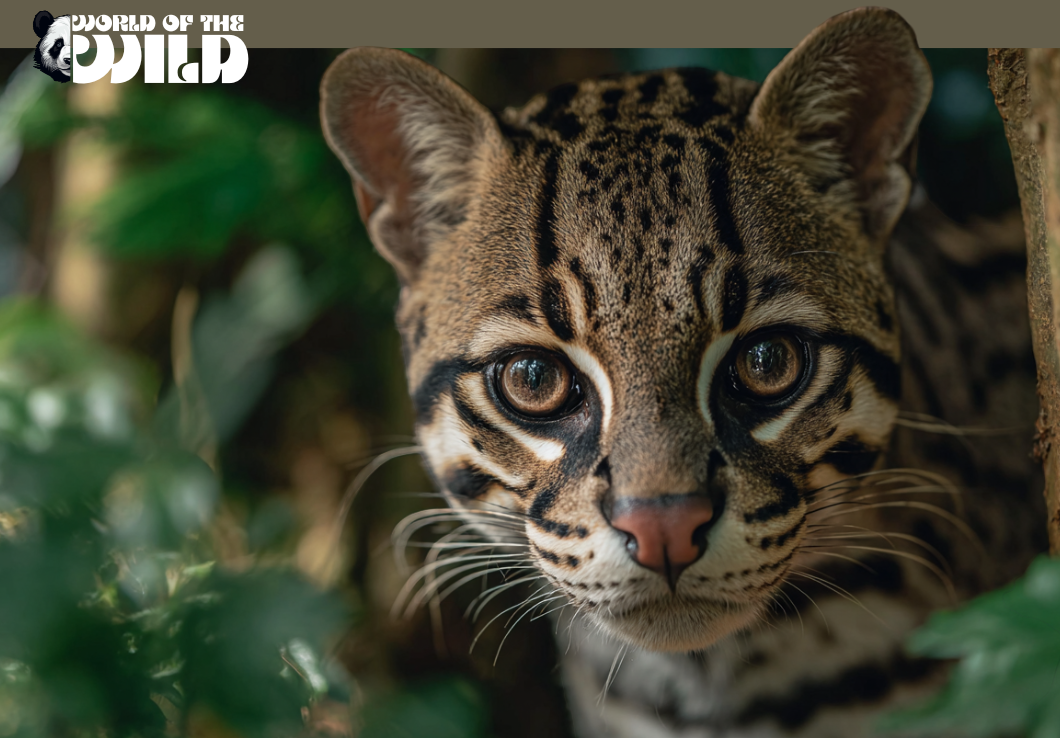

There is a moment, if you are lucky enough to witness it, when an ocelot steps out of the shadows of a tropical forest. Its spotted coat catches the light like a living mosaic, its amber eyes cut through the darkness with a predator’s quiet authority, and for just a second, the jungle holds its breath. This is a cat that seems almost too beautiful to be real — too ornate, too perfectly designed, as if nature spent extra time on the brushwork.
The ocelot (Leopardus pardalis) is one of the most visually stunning wild cats on Earth, yet it remains one of the least understood. Overshadowed by its larger cousins — the jaguar, the puma, the leopard — the ocelot has long occupied a quiet corner of the popular imagination. That is a shame, because this medium-sized wild cat is not merely beautiful. It is ecologically vital, evolutionarily ancient, and facing a future shaped almost entirely by human decisions. Once heavily hunted for its extraordinary fur, then nearly wiped out across portions of its range, the ocelot has clawed its way back in some regions while quietly disappearing in others.
Understanding the ocelot means understanding something profound about wild places and the creatures that define them. So let’s step into the shadows and follow this spotted ghost through its world.
Facts
- No two ocelots have the same coat pattern. Like human fingerprints, the rosette and streak markings on each ocelot are entirely unique — researchers use them to identify individuals in the wild.
- Ocelots have twice the night vision of humans. Their retinas contain a specialized reflective layer called the tapetum lucidum, which bounces light back through the eye a second time, dramatically amplifying vision in low-light conditions.
- They were once a fashion catastrophe. At the height of the exotic fur trade in the 1960s and 70s, it took the pelts of approximately 25 ocelots to make a single fur coat. Hundreds of thousands were slaughtered annually to satisfy demand.
- Salvador Dalí had one as a pet. The surrealist artist famously kept an ocelot named Babou and reportedly brought it aboard the ocean liner SS France, where it startled a fellow passenger who assumed it was “just a regular cat painted over.”
- They are fastidiously clean hunters. After capturing prey, ocelots have been observed removing feathers and fur before eating — a behavior more commonly associated with larger, more cognitively complex felids.
- Ocelots are one of the few wild cats that regularly use latrines. They deposit scat in consistent locations, which serves as territorial communication — a sophisticated social signaling system for a largely solitary animal.
- Their jaws cannot chew side to side. Like all felids, ocelot jaw joints only move vertically, meaning they shear and swallow meat rather than grinding it — a design that trades versatility for devastating bite efficiency.
Species
The ocelot sits within one of the most elegantly organized branches of the cat family tree. Its full taxonomic classification is as follows:
- Kingdom: Animalia
- Phylum: Chordata
- Class: Mammalia
- Order: Carnivora
- Family: Felidae
- Genus: Leopardus
- Species: Leopardus pardalis
The genus Leopardus is a fascinating group exclusive to the Americas and comprises the smallest wild cats found in the Western Hemisphere. The ocelot is the largest member of this genus and shares it with several close relatives, including the margay (Leopardus wiedii), the oncilla (Leopardus tigrinus), the Andean mountain cat (Leopardus jacobitus), and the pampas cat (Leopardus colocola). These cats collectively represent a lineage that diverged from Old World felids after the ancestors of modern cats crossed into the Americas.
Historically, taxonomists recognized as many as nine to ten subspecies of ocelot based on geographic distribution and morphological differences. Modern genetic analysis has narrowed this significantly. Current consensus generally recognizes two primary groupings: a northern clade (ranging from the southwestern United States through Central America and into northwestern South America) and a southern clade (occupying most of South America east of the Andes). The subspecies Leopardus pardalis albescens, native to Texas and northern Mexico, is of particular conservation concern given its extremely fragmented range and critically small population numbers in the United States.
Appearance
The ocelot is a masterwork of natural design. Adults are medium-sized by wild cat standards, typically measuring between 28 and 39 inches in body length, with a tail adding another 11 to 16 inches. Most individuals stand roughly 16 to 20 inches at the shoulder — roughly the height of a large domestic cat, though considerably more muscular and powerfully built. Males are noticeably larger than females, a pattern of sexual dimorphism common across the felid family.
In terms of weight, ocelots generally range from 15 to 34 pounds, though some particularly well-fed males in prey-rich environments have been recorded approaching 40 pounds.
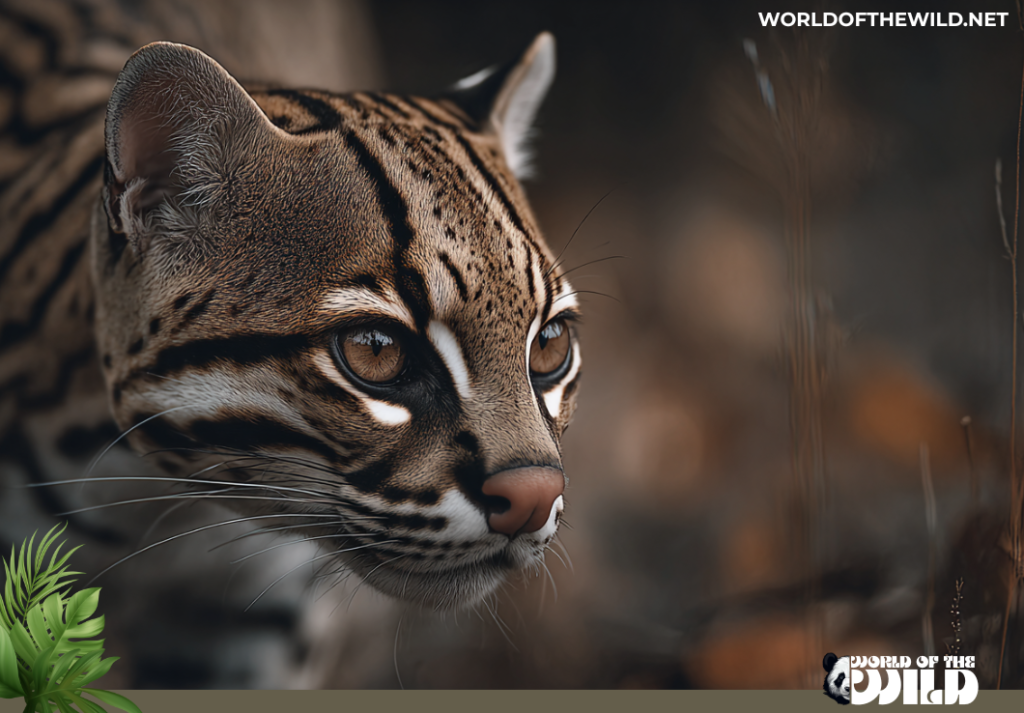
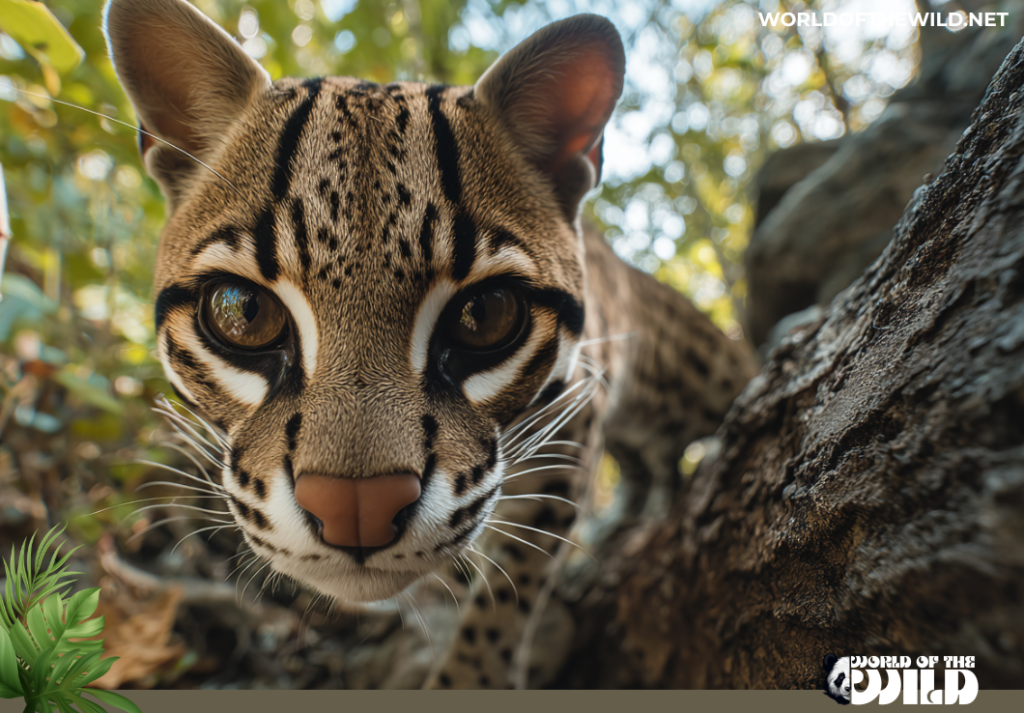
The coat is where the ocelot truly commands attention. The base color varies from a pale creamy yellow to a warm tawny orange, shading to white on the undersides, chest, and throat. Across this background runs an extraordinary array of dark-bordered spots, rosettes, and elongated chain-like streaks running parallel along the neck and back. The markings are not random — they follow a consistent spatial logic that likely serves both camouflage in dappled forest light and individual recognition within a population.
The face is equally distinctive: bold dark streaks run from the inner corner of each eye toward the ears, and two prominent stripes run along each cheek. The ears are rounded and bear a bright white spot on the back — a feature common among felids that may aid cubs in following their mothers through dense vegetation. The tail is ringed with dark bands that become more pronounced toward the tip. Every physical detail of the ocelot’s body tells a story of refinement over millions of years of evolution.
Behavior
The ocelot is a creature of the night — or more precisely, of the twilight and the deep dark hours before dawn. Classified as primarily nocturnal to crepuscular, it spends most daylight hours resting in dense vegetation, in tree hollows, or draped along a branch where its spotted coat renders it nearly invisible against filtered light and shadow. As darkness falls, the cat becomes an entirely different kind of presence: alert, purposeful, and extraordinarily efficient.
Ocelots are fundamentally solitary animals. Adults maintain exclusive or semi-exclusive home ranges that they defend and mark with scent glands, urine sprays, and the previously mentioned latrine deposits. Male ranges are substantially larger than female ranges and typically overlap with the territories of several females, which shapes mating opportunities. Despite this solitary lifestyle, ocelots are not antisocial in the rigid sense — radio-tracking studies have documented brief, apparently tolerant encounters between individuals at shared territory boundaries, and family groups (mother and offspring) maintain contact for extended periods.
Communication relies heavily on olfactory and acoustic channels. Ocelots produce a range of vocalizations including yowls, meows, and a distinctive sound described as a “wah-wah” call that functions in mating and social contexts. Unlike larger cats such as lions or tigers, ocelots cannot roar — their hyoid bone anatomy permits purring instead, a trait shared with all small felid species.
Intellectually, ocelots demonstrate problem-solving ability and strong spatial memory. They learn and remember the locations of prey concentrations, water sources, and den sites with remarkable precision, navigating territories of up to 18 square miles with confident efficiency. Their climbing ability is impressive but, interestingly, less developed than that of their close relative the margay, which has evolved highly flexible ankle joints allowing it to descend trees headfirst. The ocelot remains more terrestrial — a ground-level ambush specialist with the occasional arboreal detour.
Evolution
The story of the ocelot’s evolution begins with one of paleontology’s great migration events: the Great American Biotic Interchange. Roughly three million years ago, the formation of the Isthmus of Panama created a land bridge connecting North and South America, allowing fauna to flow between the previously isolated continents. Felids, which had originated and diversified in the Old World, crossed into North America and eventually made their way south.
The genus Leopardus is believed to have originated approximately 8 million years ago, making it one of the oldest lineages within the family Felidae in the Americas. The ancestors of modern ocelots adapted rapidly to the extraordinarily diverse ecosystems of South and Central America — tropical forests, scrublands, wetlands, and grasslands — each environment shaping the refinements we see in the living animal today.
Fossil evidence for early Leopardus species is relatively sparse, which is typical for small-to-medium felids whose delicate bones preserve poorly in the geological record. Molecular clock analyses, however, have proven invaluable. Genetic studies suggest that the ocelot lineage diverged from its closest relatives within Leopardus somewhere between 2 and 4 million years ago, coinciding roughly with the environmental upheaval of the Pleistocene era — a period of dramatic climate fluctuations that repeatedly reshuffled the distribution and speciation of wildlife across the Americas.
The ocelot’s success across this evolutionary journey reflects an extraordinary generalist flexibility underpinned by specialist tools: a coat designed for concealment, senses calibrated for darkness, and a body plan optimized for short, explosive predatory action in dense environments.
Habitat
The ocelot’s geographic range is sweeping by the standards of any wild felid. It extends from the southernmost tip of Texas in the United States, through Mexico and the entirety of Central America, and across the vast breadth of South America as far south as northern Argentina and Uruguay. Within this range, the ocelot is present in an impressive variety of ecosystems — a testament to its adaptability.
Tropical and subtropical forests represent the ocelot’s primary stronghold. The dense vegetation of the Amazon Basin, the Atlantic Forest of Brazil, and the cloud forests of Colombia and Ecuador provide ideal conditions: abundant prey, complex terrain for hunting and denning, and thick canopy cover that suits the cat’s stalking style. However, ocelots are far from forest-obligate. They inhabit mangrove swamps, thorn scrub, savanna edges, and riparian corridors — ribbons of vegetated land running along rivers and streams that serve as critical wildlife highways through otherwise fragmented landscapes.
Ground cover density appears to be the most consistent habitat requirement across all ecosystems where ocelots are found. They are far less common in open, exposed landscapes and consistently select areas with dense understory vegetation, fallen logs, tangled roots, and other structural complexity that supports their ambush hunting strategy.
In the United States, the ocelot’s presence has been reduced to a small, isolated population in the dense thorny shrubland of the Rio Grande Valley in south Texas — a landscape dramatically different from tropical forest but fulfilling the same ecological function: impenetrable cover and sufficient prey. This population, estimated at fewer than 60 individuals, represents the northern extent of the species and one of North America’s most endangered large mammal populations.

Diet
The ocelot is a hypercarnivore — an obligate meat-eater for whom animal protein is not a dietary preference but a biological necessity. It sits comfortably in the middle of the food chain: large enough to take down prey considerably heavier than itself, small enough to require frequent, reliable kills rather than the occasional large feast strategy employed by apex predators like jaguars and pumas.
The prey base of the ocelot reflects the ecosystems it inhabits. Across its range, the cat hunts a wide variety of small and medium-sized vertebrates. Rodents — including rats, agoutis, mice, and paca — form the dietary core in most regions. Birds, lizards, snakes, frogs, and fish round out the menu in areas where these are available. In forest environments with abundant prey diversity, ocelots have been recorded taking animals as large as small deer, armadillos, anteaters, and young peccaries.
Hunting strategy is built around stealth, patience, and an explosive final strike rather than sustained pursuit. The ocelot moves slowly and deliberately through its territory, using its extraordinary senses of sight, smell, and hearing to detect prey movement. Once a target is located, it freezes, lowers its body to the ground, and closes the distance through a patient, almost glacially slow stalk — sometimes covering a hundred meters over the course of twenty minutes. The final rush is brief and decisive, with a bite to the skull or neck delivering an immediate kill.
Studies have documented that a single ocelot requires roughly one kill per day to meet its caloric needs, translating to a significant impact on local rodent and small vertebrate populations — a role that is ecologically vital for maintaining prey population balance within forest ecosystems.
Predators and Threats
In the wild, adult ocelots face predation pressure primarily from the larger cats that share their range. Jaguars and pumas will opportunistically prey on ocelots, particularly when food is scarce or when an ocelot is caught in an exposed position. In areas where all three species co-exist, ocelots actively adjust their activity patterns to minimize overlap with these larger predators — a behavioral adaptation known as temporal partitioning. Large constricting snakes such as anacondas pose a threat in South American wetland habitats, and large raptors such as harpy eagles may take young or subadult ocelots in forest environments.
But natural predation is, by any measure, secondary to the threats posed by human activity. The ocelot’s history with humanity is a fraught one.
The fur trade of the mid-20th century was catastrophic. Between 1960 and 1975, hundreds of thousands of ocelots were killed annually across Latin America to supply the luxury fashion market in North America, Europe, and Japan. The implementation of the Convention on International Trade in Endangered Species (CITES) in 1973 and subsequent national bans on exotic fur imports dramatically reduced — though did not eliminate — this pressure.
Today, habitat destruction stands as the primary existential threat. Deforestation for cattle ranching, soy agriculture, palm oil production, and urban expansion has eliminated and fragmented enormous tracts of ocelot habitat across Central and South America. Road mortality represents a growing and deeply underappreciated threat — ocelots attempting to cross between habitat fragments are frequently struck by vehicles. In Texas, road mortality is the single leading cause of ocelot death and has been identified as a major obstacle to population recovery.
Retaliatory killing by ranchers who view the ocelot as a threat to poultry and small livestock, along with the illegal pet trade (ocelot kittens are captured and sold, requiring the mother to be killed), adds further pressure to populations already stressed by habitat loss.
Reproduction and Life Cycle
Ocelots do not follow a strictly defined breeding season — in tropical regions with relatively stable climate, mating can occur year-round, though peaks have been noted in various populations correlating with prey availability and climatic cycles. In the northern part of their range, including Texas and Mexico, breeding activity appears to concentrate in late summer through autumn.
Courtship involves persistent and often noisy vocal exchanges between a male and a receptive female. The male may follow a female for several days, engaging in scent investigation and physical proximity before mating is accepted. Copulation is brief but repeated over the course of the receptive period.
The gestation period lasts approximately 79 to 85 days — relatively long for a felid of this size. Females give birth to litters of typically one to two kittens, rarely three. The birth den is a well-concealed location: a hollow log, a dense thicket, or a cave recess that provides protection from both predators and weather.
Kittens are born with their eyes closed and covered in the spotted coat they will carry for life, though in a muted, woolly early form. They begin opening their eyes at around two weeks and are weaned by approximately eight weeks. However, they remain with their mother for a considerably longer period — up to two years in some documented cases — learning hunting techniques through observation and increasingly independent practice. This extended maternal investment is critical: the hunting skills required to survive as a solitary predator are complex and take time to develop.
Sexual maturity arrives at approximately 18 to 22 months in females and slightly later in males. In the wild, ocelots typically live 7 to 10 years, though individuals in protected areas with abundant prey have been recorded reaching 13 years. In captivity, lifespans of 18 to 20 years have been documented.
Population
The ocelot is currently classified as Least Concern on the IUCN Red List — a designation that demands careful interpretation. While the global population is estimated at over 40,000 individuals spread across its broad range in the Americas, this headline figure obscures dramatically different realities across different parts of that range.
Core populations in the Amazon Basin, the Colombian rainforest, and the Peruvian and Bolivian lowlands remain relatively robust where large continuous tracts of habitat persist. But at the margins of the range — in Central America, Atlantic Forest Brazil, and the United States — populations are severely fragmented, small, and in some cases, teetering on the edge of local extinction.
The U.S. population in Texas, as noted, numbers fewer than 60 individuals in the wild, making it one of the most endangered felid populations in North America. Brazil’s Atlantic Forest population is similarly precarious, occupying a biome that has been reduced to roughly 12% of its original extent.
Population trend data suggest that while the species is not in immediate global crisis, the trend in most subpopulations is negative — driven by the relentless combination of habitat loss, road mortality, and persecution. The ocelot’s broad classification as Least Concern has sometimes worked against it, reducing the urgency with which conservation resources are allocated compared to more charismatic species with more dramatic overall numbers.
Conclusion
The ocelot is not simply a beautiful cat. It is an ecological keystone in the complex web of neotropical food chains, a survivor of one of the most brutal episodes of wildlife exploitation in modern history, and a species whose future serves as a precise barometer of our broader commitment to preserving wild habitats.
Its story carries a rare strain of cautious hope. The ocelot has shown remarkable resilience — rebounding in areas where fur hunting has ceased and habitat has been protected, proving that it can recover when given the space and safety to do so. But resilience has limits, and the fragmented, road-cut, deforested landscapes that increasingly define its range are testing those limits in real time.
Conservation efforts — wildlife corridors linking habitat fragments, road underpasses in Texas and Brazil, community engagement programs that reduce persecution by local farmers, and sustained enforcement of anti-poaching laws — are making measurable differences. They are not enough on their own, and they will never be enough without the broader policy and economic transformations that address deforestation at scale.
The ocelot endures as a reminder that the wild world is not simply background scenery to human civilization. It is a living system of incomprehensible complexity and beauty, of which this spotted cat is one small but irreplaceable thread. To lose it in any corner of its range is to lose something that cannot be manufactured, replicated, or recovered on any human timescale.
The ocelot deserves better than a footnote. It deserves a future.
Quick Reference
| Scientific Name | Leopardus pardalis |
| Diet Type | Hypercarnivore (obligate meat-eater) |
| Body Length | 28–39 inches (~2.3–3.3 feet), plus 11–16 inch tail |
| Shoulder Height | 16–20 inches (~1.3–1.7 feet) |
| Weight | 15–34 pounds (up to ~40 lbs in large males) |
| Region Found | Southern Texas (USA) through Mexico, Central America, and South America to northern Argentina and Uruguay |