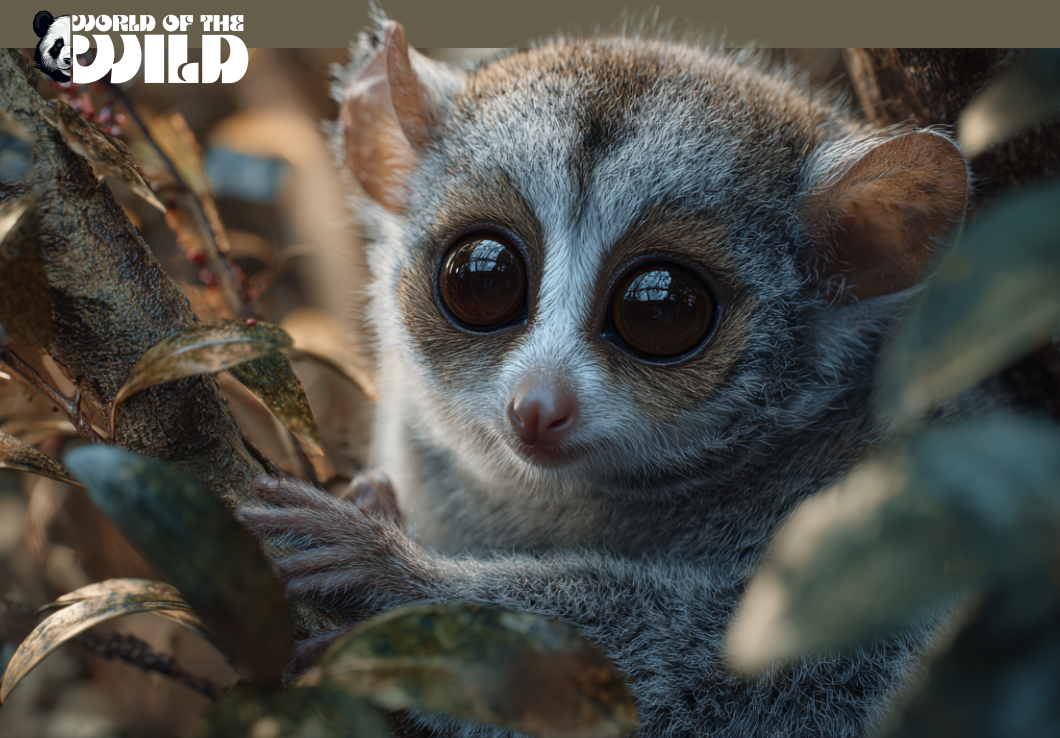

Deep in the tropical forests of southern India and Sri Lanka, when the last light of dusk dissolves into darkness, a pair of enormous, luminous eyes blink open and begin to scan the shadows. Perched on a slender branch, barely larger than a human hand, the Gray Slender Loris awakens for another night of silent, deliberate hunting. It moves like a ghost — slow, calculated, and utterly soundless — yet conceals within its small frame a set of biological marvels that have fascinated zoologists for decades.
The Gray Slender Loris (Loris lydekkerianus) is one of nature’s most quietly extraordinary creatures. It is venomous, possesses night vision refined over millions of years, and maintains a social intelligence that belies its seemingly simple lifestyle. Yet despite all of this, it remains largely unknown outside the scientific community. As forests shrink and illegal wildlife trade surges, this enchanting little primate is slipping closer to the edge of survival — and most of the world doesn’t even know it exists. That needs to change.
Facts
- It is one of the only venomous primates on Earth. The Gray Slender Loris doesn’t produce venom itself — instead, it licks a gland near its elbow that secretes a toxic substance, mixes it with saliva, and delivers a painful, potentially dangerous bite.
- Its enormous eyes don’t move in their sockets. To compensate, the loris can rotate its head nearly 180 degrees, much like an owl, giving it an impressively wide field of vision without sacrificing the depth perception its large, forward-facing eyes provide.
- It has a specialized “toilet claw.” The second toe on each hind foot is adapted specifically for grooming — a quirky but highly practical evolutionary tool.
- Lorises can go torpid during food scarcity. When insects and prey become scarce, the Gray Slender Loris can enter short periods of torpor, dramatically slowing its metabolism to conserve energy.
- Their grip is extraordinarily powerful. Special blood vessel networks in their hands and feet called retia mirabilia allow lorises to maintain a vice-like grip on branches for extended periods without muscular fatigue — even while sleeping.
- They use urine to mark territory and communicate. Urine washing — rubbing urine onto the hands and feet — is a primary method of scent communication among lorises, conveying everything from territorial ownership to reproductive status.
- Despite their slow pace, they are precision predators. The loris’s deliberate slowness is actually a hunting strategy, allowing it to stalk insects and small prey without triggering vibration-sensitive escape responses.
Species
The Gray Slender Loris belongs to the following taxonomic hierarchy:
- Kingdom: Animalia
- Phylum: Chordata
- Class: Mammalia
- Order: Primates
- Family: Lorisidae
- Genus: Loris
- Species: Loris lydekkerianus
The genus Loris contains two recognized species: the Gray Slender Loris (Loris lydekkerianus) and the Red Slender Loris (Loris tardigradus), the latter being restricted primarily to the wet zone forests of Sri Lanka and distinguished by its reddish-brown dorsal coloration. The Gray Slender Loris itself is divided into several subspecies, the most widely recognized being:
- Loris lydekkerianus lydekkerianus — the nominate subspecies, found in Tamil Nadu and Andhra Pradesh in India and in the dry zone of Sri Lanka.
- Loris lydekkerianus nordicus — found in the northern dry zone of Sri Lanka, slightly larger and paler than other subspecies.
- Loris lydekkerianus malabaricus — the Malabar slender loris, found along the Western Ghats of India in the wetter coastal forests, exhibiting a somewhat darker coat.
- Loris lydekkerianus grandis — found in the highland wet zone forests of Sri Lanka, considered the largest of the subspecies.
- Loris lydekkerianus nycticeboides — restricted to the montane cloud forests of central Sri Lanka and sometimes referred to as the Highland Slender Loris, considered by some taxonomists a candidate for full species status due to its distinct morphology and ecology.
The family Lorisidae more broadly includes slow lorises (Nycticebus spp.) — stockier, more robust relatives found across Southeast Asia — as well as pottos and angwantibos from sub-Saharan Africa, all sharing the characteristic large eyes and slow, deliberate locomotion.
Appearance
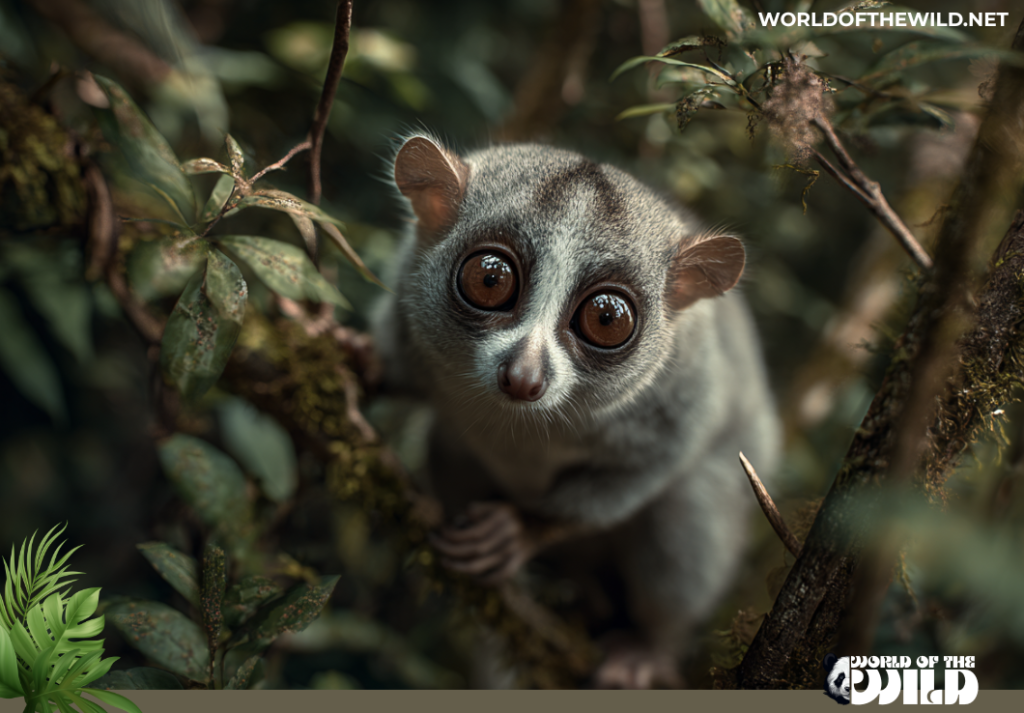
The Gray Slender Loris is a study in elegant minimalism. Measuring just 6 to 10 inches in total body length and weighing a mere 3 to 12 ounces depending on the subspecies and sex, it is one of the smallest primates in Asia. Its body is slender and elongated, with extraordinarily long, spindly limbs — proportionally, it resembles a tiny primate version of a daddy longlegs spider.
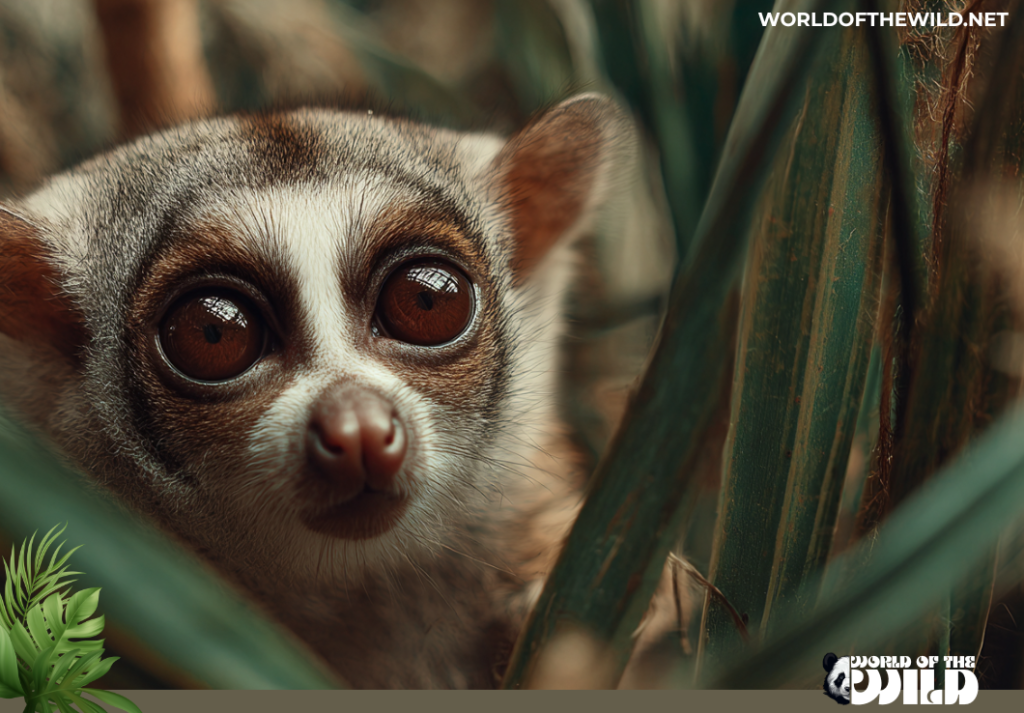
Its fur is soft and dense, typically a grayish-brown to reddish-gray on the dorsal surface, while the underparts are pale cream or whitish. A dark dorsal stripe often runs from the crown of the head down the back. The face is arguably the loris’s most arresting feature: dominated by two enormous, forward-facing eyes ringed with dark patches of fur that create the impression of permanent, wide-eyed astonishment. These eyes can measure up to 1.5 centimeters in diameter — disproportionately huge relative to the animal’s head — and contain a specialized reflective layer called the tapetum lucidum that causes them to glow brilliantly in torchlight or camera flash. The muzzle is short and pointed, the ears rounded and mobile, and the face typically sports a light-colored stripe running between the eyes from forehead to nose.
The hands and feet are highly adapted for arboreal life — the fingers and toes are long, with highly dexterous opposable digits and nails (rather than claws on most digits) suited for gripping. The tail is vestigial, barely visible beneath the fur, reflecting the animal’s fully arboreal lifestyle where a balancing tail offers little advantage.
Behavior
The Gray Slender Loris is primarily nocturnal and solitary in its foraging habits, spending the daylight hours curled into a tight ball — head tucked between its knees, limbs gripping a branch — hidden in dense vegetation or hollow trees. Come nightfall, however, it transforms into an active, surprisingly social creature.
While individuals forage alone, Gray Slender Lorises maintain complex social networks. They sleep in communal groups of two to seven individuals, often family members or familiar neighbors, and engage in extensive mutual grooming sessions that reinforce social bonds. Communication is multifaceted: in addition to scent-marking via urine washing, they use a range of vocalizations including whistles, chirps, and low growls, as well as tactile communication during social interactions.
Their locomotion is deliberate and almost hypnotic to observe. Rather than leaping between branches like most small primates, lorises move hand-over-hand along branches in a slow, fluid motion, rarely breaking contact with the substrate. This caution serves both as a predator-avoidance strategy — slow-moving animals are harder for visually-triggered predators to detect in dense forest at night — and as a stalking mechanism when hunting.
Intelligence-wise, lorises demonstrate impressive problem-solving abilities and spatial memory, remembering the locations of productive feeding sites, sleeping trees, and territorial boundaries across their home ranges. They have also been observed using their toxic bite defensively against predators, and mothers have been documented applying venom to their infants before leaving them alone on a branch, effectively deterring would-be predators from consuming the young while the mother forages.
Evolution
The Lorisidae family belongs to the suborder Strepsirrhini — the “wet-nosed” primates — a lineage that diverged from the ancestors of monkeys, apes, and humans very early in primate evolutionary history, approximately 63 to 74 million years ago, near the end of the Cretaceous period or the very beginning of the Paleogene. Strepsirrhines, which also include lemurs, bushbabies, and pottos, represent some of the most ancient primate lineages still living today.
The lorisid lineage specifically is thought to have originated in Africa, with fossil evidence suggesting that early lorisid ancestors dispersed into Asia sometime during the Eocene epoch, roughly 40 to 50 million years ago. The genus Loris — the slender lorises — diverged from the slow lorises (Nycticebus) of Southeast Asia relatively early, likely 20 to 30 million years ago, with the slender lorises becoming specialized for the drier, more seasonal forest environments of the Indian subcontinent while slow lorises adapted to the denser tropical rainforests of Southeast Asia.
The evolutionary development of the loris’s unique venom system is particularly fascinating. The brachial gland exudate (BGE) responsible for the loris’s toxic secretion appears to have evolved as a convergent adaptation to chemical defense — a remarkable rarity among mammals. Some researchers hypothesize it may have evolved partly as a mimicry of the spectacled cobra (Naja naja), a fellow inhabitant of the same forests, as the defensive posture of a threatened loris — raising its arms above its head — strikingly resembles the spread hood of a cobra.
The retention of ancestral primate features — the large eyes adapted for nocturnal vision, the grasping hands and feet, the reliance on olfactory communication — makes the Gray Slender Loris a living window into what early primates may have looked and behaved like tens of millions of years ago.
Habitat
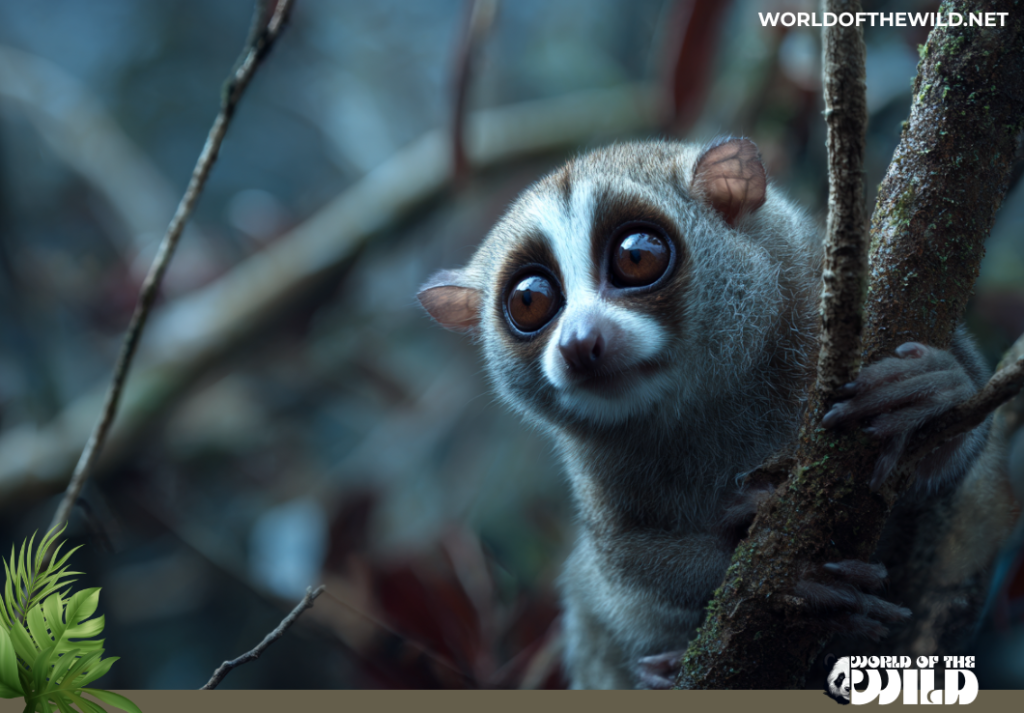
The Gray Slender Loris is endemic to southern India and Sri Lanka. In India, its range encompasses the Western Ghats mountain range along the southwestern coast, as well as parts of the Eastern Ghats, the Deccan Plateau scrublands, and much of Tamil Nadu, Karnataka, Kerala, and Andhra Pradesh. In Sri Lanka, it occupies both the dry zone forests of the north and northwest and the wet zone forests of the south and central highlands, with different subspecies adapted to each.
The species is remarkably habitat-versatile compared to many primates. It occupies a broad spectrum of forest types including tropical dry deciduous forests, scrub forests, thorn forests, moist evergreen forests, riverine forest strips, and even degraded secondary forest and forest fragments adjacent to agricultural land. This adaptability has helped it persist in some areas where other forest-dependent primates have been extirpated — though it is far from immune to habitat degradation.
Key habitat features include a dense canopy or subcanopy providing both foraging opportunities and daytime shelter, the presence of specific tree species that host high densities of insects and gum-producing trees (the loris’s primary food sources), and access to sleeping sites such as dense vine tangles, hollow branches, or thorny vegetation that offers protection from predators. Home range sizes vary considerably by habitat quality but typically span 0.5 to 2.5 hectares for females and somewhat larger areas for males.
Diet
The Gray Slender Loris is classified as an omnivore with a strong insectivorous bias — insects and other invertebrates form the backbone of its diet, supplemented by plant material and occasional small vertebrates. Primary food sources include:
- Insects and invertebrates: Beetles, moths, ants, crickets, caterpillars, and slugs make up the majority of the diet. The loris is particularly adept at locating and consuming slow-moving or chemically defended insects that other predators avoid, aided by its apparent tolerance for toxic compounds.
- Plant exudates: Tree gum, sap, and nectar from flowering trees are consumed opportunistically, particularly during dry seasons when insects are scarce. Lorises have been observed gouging tree bark to stimulate gum flow.
- Small vertebrates: Small lizards, geckos, and occasionally bird eggs or nestlings are taken when available.
- Fruits and vegetation: Soft fruits and occasionally leaves round out the diet, though plant material typically constitutes a minor component.
Hunting technique is a masterclass in patience. The loris uses its enormous eyes to spot prey in near-darkness, then approaches with slow, deliberate movements — often freezing completely for several seconds at a time — before striking with a sudden, precise lunge of both hands. This “slow stalk and rapid grab” strategy is highly effective against chemically defended insects, as the loris’s grip immobilizes prey before it can deploy defensive secretions.
Predators and Threats
Natural Predators
In its natural forest environment, the Gray Slender Loris faces predation from a range of species. Raptors — particularly the changeable hawk-eagle (Nisaetus cirrhatus) and brown fish owl (Ketupa zeylonensis) — pose aerial threats. Ground and arboreal predators include the Indian palm civet, jungle cat, and various species of snakes, most notably the spectacled cobra and rat snakes, which are adept at raiding sleeping sites. The loris’s primary defenses are its camouflage, its cryptic slowness, and its toxic bite — along with the strategy of coating infants in venom before leaving them unattended.
Human-Caused Threats
The far greater and more existential threats to the Gray Slender Loris are those created by humans:
- Habitat loss and fragmentation represent the most severe threat. Widespread deforestation driven by agricultural expansion (particularly for coffee, tea, and rubber plantations), logging, and urban development has reduced and fragmented loris habitat across both India and Sri Lanka at an alarming rate. Forest fragments isolate populations, impede gene flow, and expose lorises to edge effects including increased predator access and desiccation.
- Illegal wildlife trade is a significant and deeply troubling driver of population decline. Lorises are captured for the exotic pet trade, driven in large part by viral social media videos showing lorises in domestic settings — videos that misrepresent the animal’s welfare and actively fuel demand. Captured individuals often have their teeth painfully clipped or removed to make them “safe” as pets, a procedure that causes infection, malnutrition, and early death.
- Road mortality is an underappreciated threat, as road networks cutting through forest habitats cause direct mortality and further fragment populations.
- Persecution and use in traditional medicine occurs in parts of their range, with lorises captured for use in folk remedies.
- Climate change threatens to alter the phenology and structure of their forest habitats, potentially disrupting insect availability and tree flowering cycles upon which lorises depend.
Reproduction and Life Cycle
The Gray Slender Loris does not adhere to a strictly seasonal breeding pattern, though peaks in reproductive activity are observed in some populations. Mating behavior involves considerable vocalizing and scent-marking in the period leading up to copulation, with males traveling wider ranges to locate receptive females. Courtship is characterized by extended social grooming sessions and urine-marking of shared branches.
Females give birth to one or occasionally two offspring after a gestation period of approximately 166 to 169 days — notably long for such a small mammal, reflecting the primates’ general trend toward producing fewer, more developed young rather than large litters of altricial offspring. Twins occur in roughly 20 to 30 percent of births depending on the population and subspecies.
Infants are born relatively well-developed, clinging immediately to the mother’s fur. For the first weeks of life, the mother carries the infant constantly, except when foraging, when she “parks” the infant on a branch — often after applying her toxic saliva mixture to its fur as a chemical deterrent to predators. Weaning occurs at approximately six to seven months, though young lorises may remain in association with their mother or family group for considerably longer as they learn foraging routes and develop independent competence.
Sexual maturity is reached at approximately 10 to 12 months for females and slightly later for males. In the wild, lifespans are estimated at 8 to 12 years, though individuals in well-managed captive situations have lived beyond 15 years. The relatively slow reproductive rate — typically no more than one or two offspring per year — makes population recovery following decline a slow, precarious process.
Population
The Gray Slender Loris (Loris lydekkerianus) is currently listed as Least Concern on the IUCN Red List in its overall assessment, though this designation masks significant concern at the subspecies level. The Highland Slender Loris (Loris lydekkerianus nycticeboides) — the montane Sri Lankan subspecies — is listed separately as Endangered, with an estimated population that may number in only the low thousands, making it one of the most imperiled primates in Asia.
Precise global population figures for the species as a whole are not available, as comprehensive surveys are extraordinarily difficult to conduct for nocturnal, cryptic, and forest-dwelling animals. Population density estimates from survey work suggest figures ranging from 0.3 to 2.5 individuals per hectare in suitable habitat, implying a total population likely in the hundreds of thousands across the full range — though with very significant uncertainty and with populations in many areas in clear decline.
Population trends are downward across most of the range, driven by the habitat pressures and trade threats described above. Populations in the Western Ghats are increasingly fragmented, and surveys in parts of Sri Lanka have documented significant population contraction over the past two to three decades. The species lacks the large, well-protected contiguous forest reserves that would allow large, stable populations to persist in the long term.
Conclusion
The Gray Slender Loris is a creature that seems to have been assembled from the best parts of a nature documentary fever dream — enormous liquid eyes that see in near-darkness, a venomous bite delivered through a unique chemical alchemy, the strength to hang motionless for hours, and a social intelligence wrapped inside a package small enough to fit in the palm of your hand. It is a living relic of primate prehistory, a nocturnal phantom that has been quietly navigating the forests of South Asia for tens of millions of years.
And yet, it is disappearing. Not with a roar or a headline, but silently — forest fragment by forest fragment, individual by individual captured for a pet trade fueled by uninformed social media shares, road by road cutting through what little habitat remains. The Gray Slender Loris does not have the charisma economy of a tiger or an elephant to rally public attention and conservation funding to its cause. It has only those enormous eyes, blinking in the darkness, asking — in the only way it knows how — to be left alone in its forest.
The most important thing any reader can do is simple: never share, like, or watch videos of lorises as pets. Never purchase one, and report sellers to wildlife authorities. Support verified conservation organizations working in the Western Ghats and Sri Lanka. And perhaps most powerfully of all — tell people that this animal exists, that it is extraordinary, and that it needs us to pay attention before the forests go quiet for good.
Quick Reference
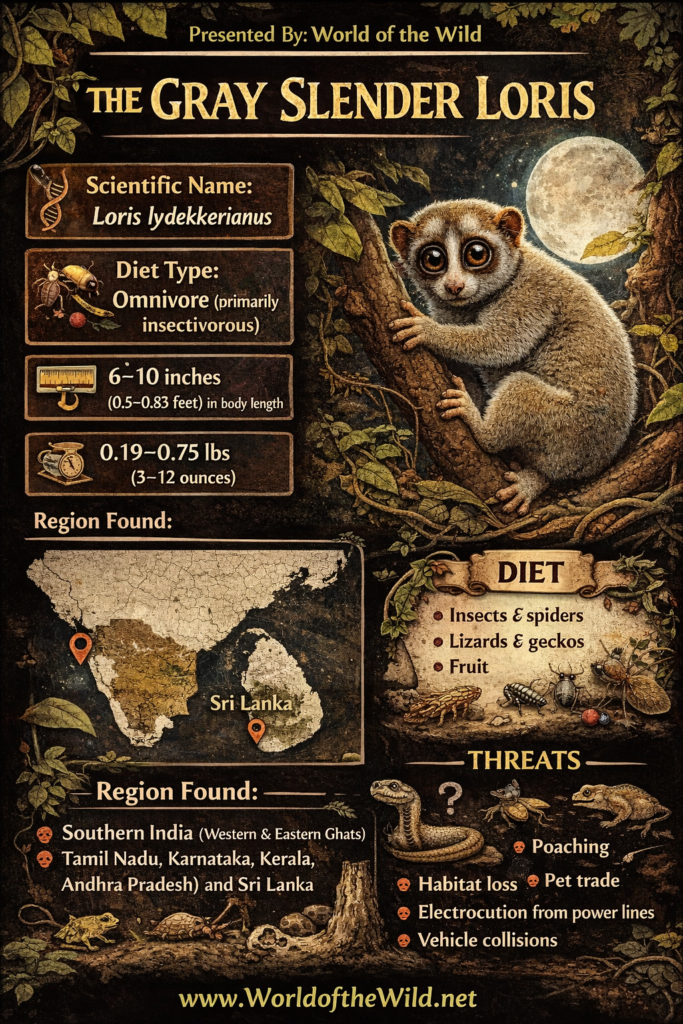
| Scientific Name | Loris lydekkerianus |
| Diet Type | Omnivore (primarily insectivorous) |
| Size | 6–10 inches (0.5–0.83 feet) in body length |
| Weight | 0.19–0.75 lbs (3–12 ounces) |
| Region Found | Southern India (Western & Eastern Ghats, Tamil Nadu, Karnataka, Kerala, Andhra Pradesh) and Sri Lanka |