
Imagine watching a bird so fast, so precise, so utterly masterful in the air that it can snatch a dragonfly mid-flight — and eat it while still flying. This is the Eurasian Hobby, a small but ferocious falcon that has been inspiring awe in birdwatchers, naturalists, and falconers for centuries. Despite being smaller than many of its falcon relatives, the Hobby punches far above its weight class. Its bullet-shaped silhouette, scythe-like wings, and breathtaking aerial maneuvers make it one of the most electrifying birds of prey on the planet.
The Eurasian Hobby is not a bird that announces itself loudly. It does not have the imposing size of a Golden Eagle or the celebrity of a Peregrine Falcon. And yet, those lucky enough to witness one hunting — a flickering dark crescent slicing through the summer sky — rarely forget the experience. This is a bird built by evolution to be the perfect flying machine: fast enough to run down swallows, agile enough to outmaneuver dragonflies, and durable enough to migrate thousands of miles each year. In short, the Eurasian Hobby is one of nature’s most extraordinary small predators, and it deserves far more of the spotlight than it typically receives.
Facts
- The Eurasian Hobby is one of the few birds of prey fast enough to regularly catch swallows and swifts — birds that have themselves evolved almost entirely around speed and aerial agility.
- Despite its small size, the Hobby is a long-distance migrant, traveling from its breeding grounds in Europe and Asia all the way to sub-Saharan Africa and South Asia for the winter — a round trip that can exceed 6,000 miles.
- Hobbies are known to time their breeding season specifically to coincide with the peak of fledgling swallow and swift populations, ensuring a rich food supply for their chicks.
- Rather than building their own nests, Hobbies are kleptoparasitic nesters — they take over the abandoned nests of other birds, particularly crows, magpies, and buzzards, without contributing a single twig.
- The Hobby’s incredible aerial dexterity allows it to drink and bathe on the wing, skimming low over the surface of water like a giant swift.
- In falconry, the Hobby has historically been used to hunt skylarks and other small passerines, and its name is thought to derive from the Old French word hobet, meaning a small bird of prey.
- Eurasian Hobbies have been recorded hunting well into dusk, taking advantage of the large evening emergences of insects — particularly mayflies and flying ants — that most other raptors ignore entirely.
Species
The Eurasian Hobby occupies a well-defined position within the broader bird of prey family:
- Kingdom: Animalia
- Phylum: Chordata
- Class: Aves
- Order: Falconiformes
- Family: Falconidae
- Genus: Falco
- Species: Falco subbuteo
The species name subbuteo has a curious claim to fame beyond ornithology — it was borrowed by British inventor Peter Adolph for his tabletop football game, Subbuteo, because he was reportedly not allowed to trademark the name “Hobby.”
Within Falco subbuteo, two subspecies are generally recognized. The nominate subspecies, Falco subbuteo subbuteo, covers the vast majority of the species’ range across Europe and into central and eastern Asia. The second subspecies, Falco subbuteo streichi, is found in southern China and mainland Southeast Asia and is sometimes considered a distinct species in its own right — the Chinese Hobby — due to differences in size, plumage tone, and migratory behavior.
The Eurasian Hobby belongs to a group of small, fast falcons often referred to as “hobbies,” a cluster of closely related species spread across the Old World. Its nearest relatives include the African Hobby (Falco cuvierii), the Oriental Hobby (Falco severus), and the Australian Hobby (Falco longipennis), all of which share its characteristic slim build, pointed wings, and insectivorous tendencies. Together, these species form a fascinating ecological guild of aerial insect and bird hunters that have colonized almost every corner of the globe.
Appearance
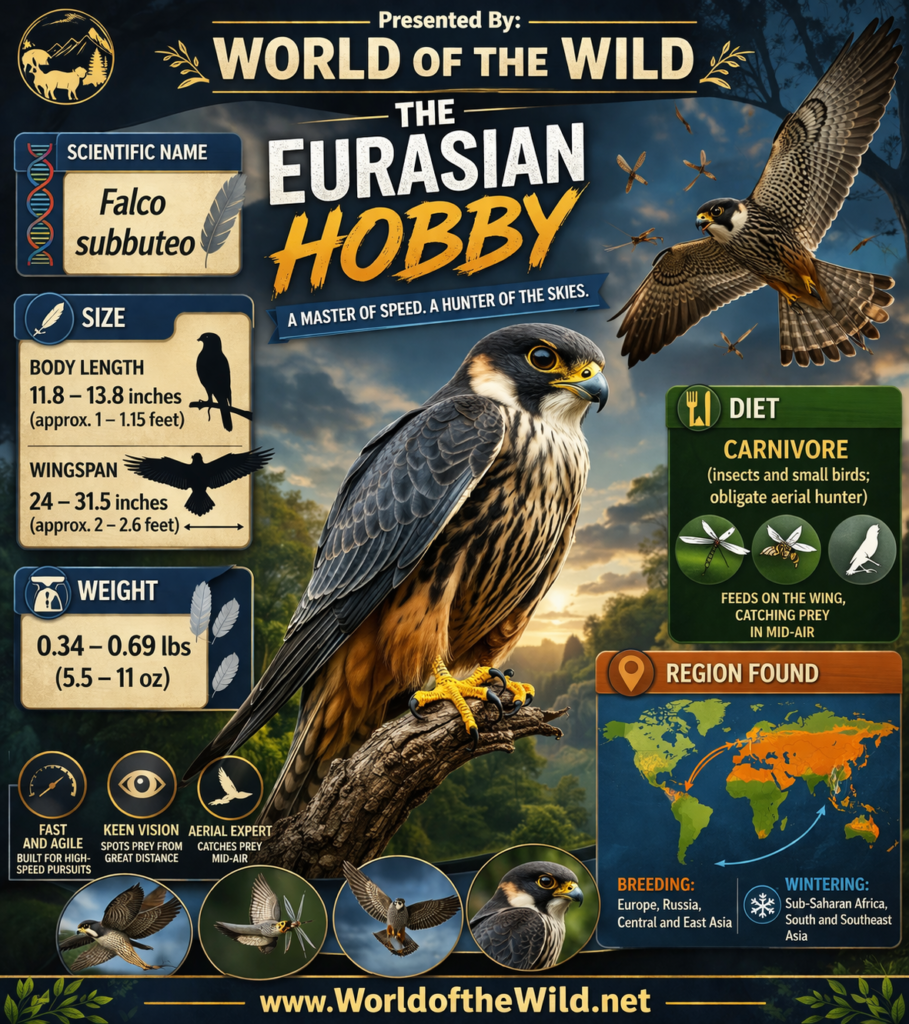
The Eurasian Hobby is a study in elegant design. It is a small to medium-sized falcon, noticeably slimmer and more streamlined than a Kestrel, yet more compact than a Peregrine. Adults measure between 11.8 and 13.8 inches (roughly 1 to 1.15 feet) in body length, with a wingspan stretching from 24 to 31.5 inches. Females, as is common in raptors, are noticeably larger than males. Body weight typically ranges from 5.5 to 11 ounces, with females again outpacing their male counterparts.
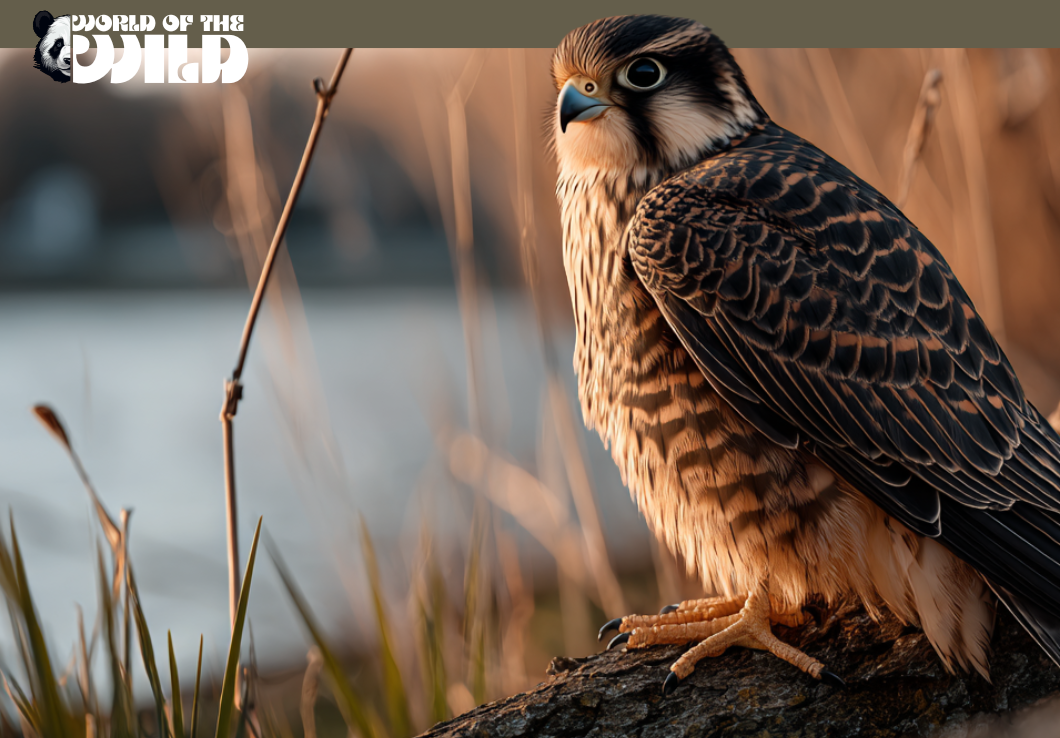
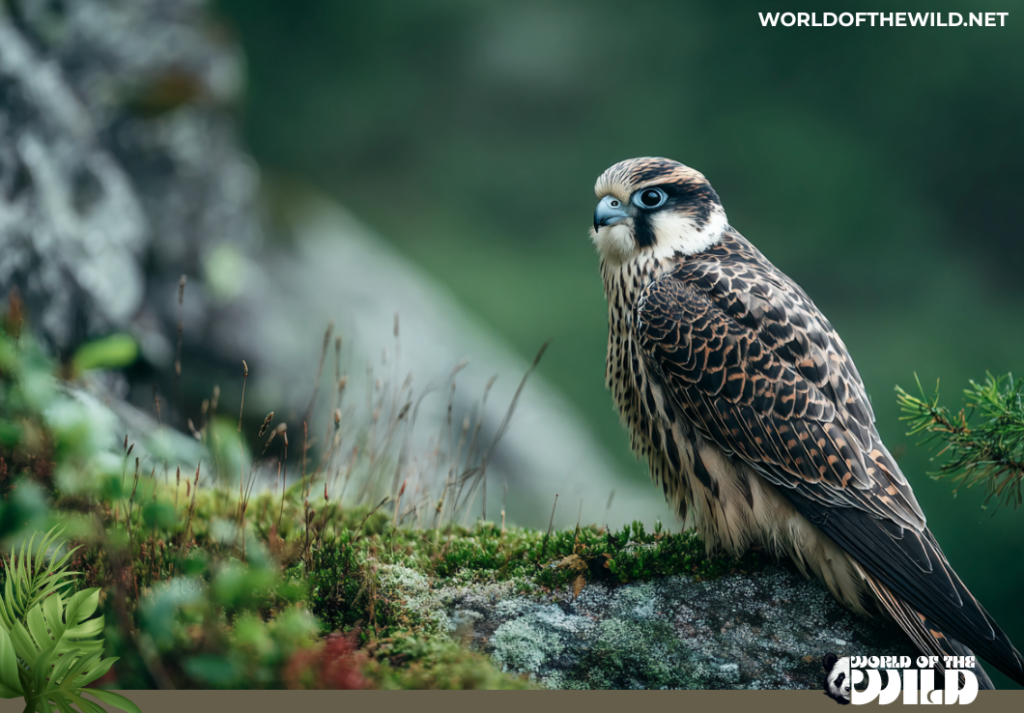
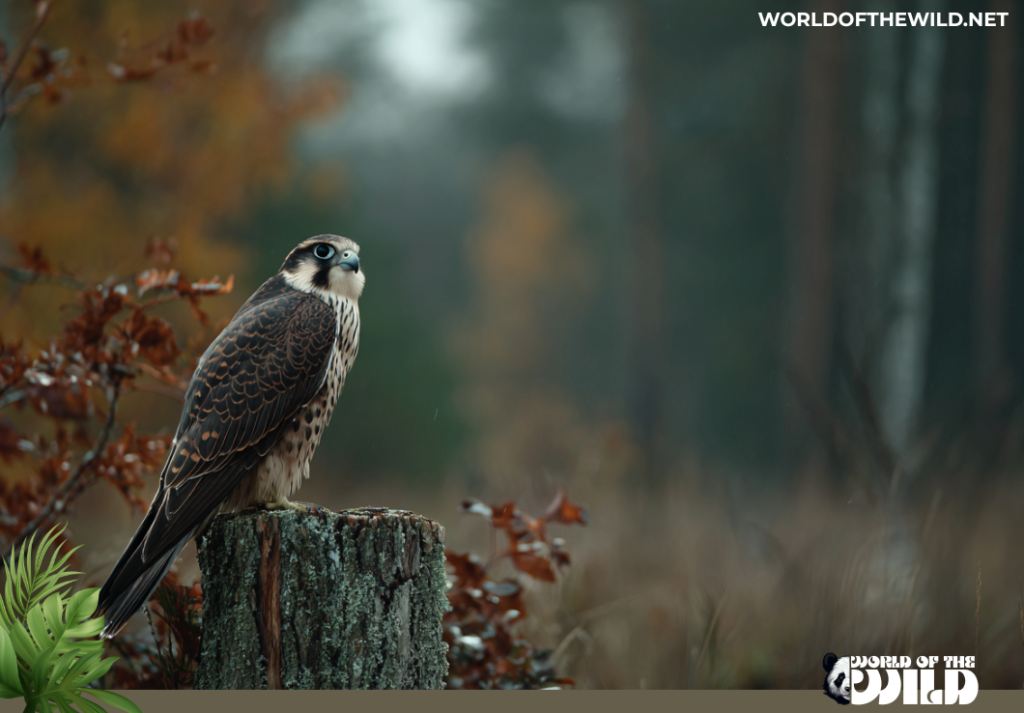
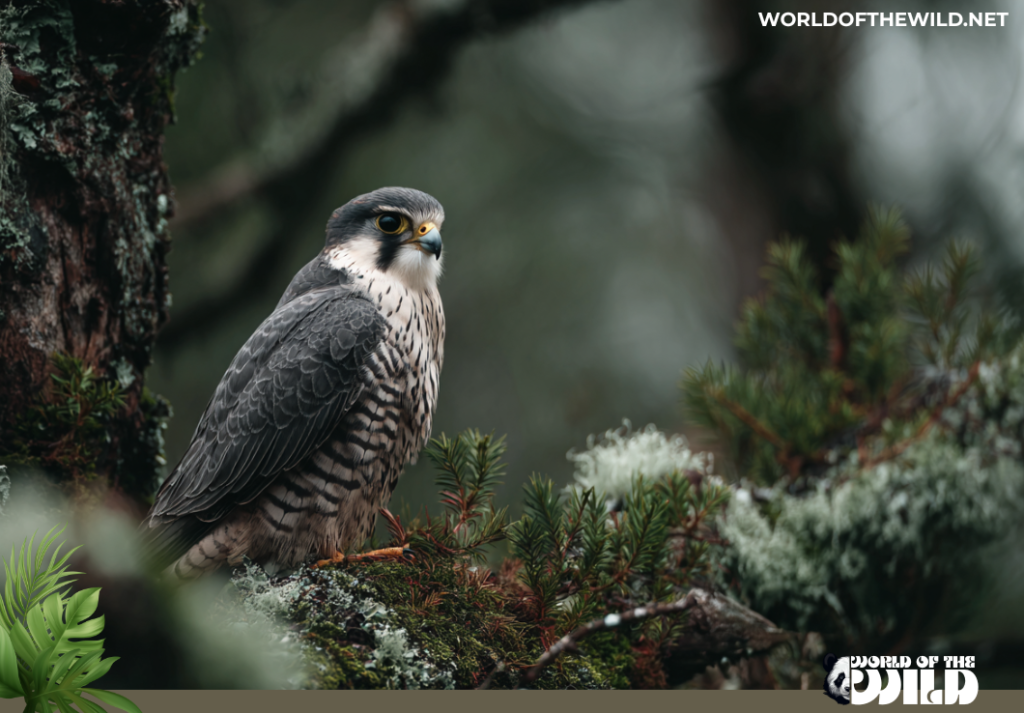
The adult’s plumage is immediately striking. The upperparts — back, wings, and tail — are a deep, uniform slate-gray, almost approaching black in some individuals, giving the bird a sharply defined silhouette from above. The underparts are pale creamy white, heavily streaked with bold, dark brown to black vertical streaking across the breast and belly. The face is dominated by a white cheek patch that contrasts dramatically with a dark cap and two broad, prominent dark moustachial stripes — the classic “bandit mask” of the falcon family, drawn particularly thick and bold on the Hobby.
Perhaps the most visually arresting feature, and the one that earns the bird admiring glances from birdwatchers, is the adult’s rich chestnut-red “trousers” — the feathering on the thighs and lower belly — which glow like embers against the streaked underparts. These rusty-red patches, along with the similarly colored undertail coverts, make an adult Hobby unmistakable when seen from below.
Juveniles lack this chestnut coloring, showing instead pale buff fringes to their upperpart feathers, creating a scaly appearance, and a more heavily streaked underside. Their eyes are brown rather than the dark, gleaming eye of the adult. The wings, long and deeply swept back in a crescent shape, give the bird a silhouette that is sometimes compared to a giant swift — a comparison that speaks directly to just how aerodynamically refined this bird has become.
Behavior
The Eurasian Hobby is an almost exclusively diurnal hunter, though it readily extends its hunting into the twilight hours, a behavior that sets it apart from many of its falcon relatives. It is a largely solitary species outside of the breeding season, though loose aggregations can occur at particularly rich hunting sites — a large emergence of flying ants, for example, may attract several Hobbies simultaneously.
Its hunting style is the behavior most often cited as remarkable, and with good reason. When pursuing insects, particularly large dragonflies and damselflies, the Hobby combines raw speed with astonishing maneuverability. It stoops, swerves, accelerates, and brakes with a fluidity that seems to defy physics. Captured insects are transferred to the talons and then passed to the bill while the bird continues to fly, the meal consumed entirely on the wing. This behavior is not merely incidental — it reflects a fundamental adaptation to hunting prey in open airspace where landing to eat would be both inefficient and dangerous.
When targeting birds, the Hobby shifts tactics. It typically hunts from height, using a high-speed stoop — a diving attack — to intercept fast-flying species like swallows, house martins, and swifts. Its speed in a direct chase is genuinely impressive; the Hobby is considered one of the fastest birds in level flight among small raptors, and its acceleration over short distances can overcome prey species that most predators would have no hope of catching. Prey is caught with the feet and killed quickly.
Communication in the Hobby is relatively understated outside of the breeding season. Its calls include a sharp, rapid kew-kew-kew or ki-ki-ki — typical falcon alarm notes — and a more melodic, whining call used around the nest. Males perform spectacular aerial displays during courtship, including steep dives, loop-like maneuvers, and food-pass flights in which prey is transferred from the male to the female mid-air. This behavior is thought to demonstrate the male’s hunting prowess as part of mate selection — a very direct form of showing off.
Hobbies are also notably bold for their size. They will readily mob and drive off much larger raptors — including Buzzards and even Sparrowhawks — that venture too close to their nesting territory. This courage is not recklessness but a calculated defense of a critically important resource: the nest and chicks.
Evolution
The falcon family, Falconidae, diverged from other birds of prey earlier than most people realize — indeed, modern research has established that falcons are not closely related to eagles, hawks, or buzzards at all, but instead represent an independently evolved lineage whose nearest living relatives are parrots and passerine birds. This was one of the more surprising revisions in avian taxonomy of the early 21st century, driven by advances in molecular phylogenetics.
The genus Falco itself is ancient by bird standards, with fossil evidence suggesting that falcon-like birds were present by the Miocene epoch, roughly 10 to 23 million years ago. The hobby group — those small, fast, long-winged falcons to which Falco subbuteo belongs — is believed to have originated in the Old World tropics and then radiated outward, colonizing Europe, Asia, Australia, and Africa as climates shifted and new ecological niches opened.
The Eurasian Hobby’s particular suite of adaptations — its long, swept-back wings, its light body, its speed, and its insectivorous habits — reflect a long evolutionary pressure toward aerial specialization. The co-evolutionary “arms race” between fast-flying prey insects like dragonflies and the predators that hunt them has driven both groups toward increasingly refined aerial capabilities over millions of years. The Hobby’s ability to catch dragonflies — themselves among the most agile flying insects on Earth, with a hunting success rate exceeding 90% — is a testament to just how far this evolutionary refinement has progressed.
The species as we recognize it today, Falco subbuteo, is relatively modern in evolutionary terms, having differentiated from its closest relatives probably during the Pleistocene, when glacial cycles repeatedly isolated and reconnected populations across the Palearctic region, driving speciation in numerous bird lineages.
Habitat
The Eurasian Hobby is a bird of open and semi-open landscapes, and its habitat preferences reflect its hunting style: it needs open airspace to pursue prey, scattered woodland or trees for nesting, and proximity to wetlands, meadows, or other insect-rich foraging areas.
Its breeding range is enormous, extending from western Europe — including the British Isles, where it is a summer visitor — eastward across the continent through Russia and Central Asia, reaching as far as China and the Pacific coast of Asia. In the north, its range pushes into Scandinavia and Siberia; in the south, it breeds across the Mediterranean and into parts of the Middle East. Within this vast range, it favors lowland agricultural landscapes interspersed with woodlands, heathlands, downland, river valleys, and the edges of forests. It shows a particular affinity for areas with scattered tall trees — old oaks, pines, or poplar stands — surrounded by open ground, which provide both nesting opportunities and elevated perches from which to survey hunting territories.
During migration, Hobbies pass through a wide band of Africa and South Asia, and their wintering grounds span sub-Saharan Africa — particularly eastern and southern Africa — as well as parts of the Indian subcontinent and Southeast Asia. In these wintering areas, they again favor open woodland, savanna, and grassland habitats where large insect populations persist through the winter months.
Altitude is not typically a barrier for the Hobby — it has been recorded breeding at considerable elevations in mountainous regions — but it consistently avoids dense forest interiors, urban cores, and high-arctic tundra. The species has shown some capacity to adapt to agricultural and even suburban landscapes, provided that suitable nesting trees and foraging areas remain available.
Diet
The Eurasian Hobby is a carnivore and a highly specialized aerial predator with a diet divided broadly into two categories: insects and small birds.
Insects form the backbone of the diet for much of the year and are particularly dominant in the diet of wintering birds and during migration. Dragonflies and damselflies are the quintessential Hobby prey — large, calorie-rich, and challenging enough to test the bird’s full aerial capabilities. Beyond dragonflies, Hobbies take a wide variety of other large flying insects including beetles, moths, mayflies, flying ants, termites (particularly during mass emergence events in Africa), and crane flies. In years or seasons of insect abundance, a single Hobby may consume dozens of large insects in a single afternoon session, each one caught and eaten entirely in flight.
Small birds constitute the second major component of the diet, and their importance increases particularly during the chick-rearing period, when the higher protein content of vertebrate prey becomes advantageous. Swallows, house martins, and swifts are the iconic Hobby prey species, and their capture demands the very highest levels of flight performance the bird can muster. Beyond these aerial specialists, Hobbies also take larks, pipits, buntings, and occasionally bats at dusk — again, always caught in the air.
The Hobby almost never takes prey from the ground. It is an obligate aerial hunter, and this specialization runs so deep that even prey caught in the talons is consumed while the bird remains airborne. This efficiency minimizes time spent stationary and vulnerable, and maximizes hunting time during the peak periods when prey is most abundant.
Predators and Threats
For a bird as fast and agile as the Eurasian Hobby, natural predation is a relatively modest pressure on adult birds, though it is far from zero. Large Accipiters — particularly the Northern Goshawk (Accipiter gentilis) — are capable of taking adult Hobbies in surprise ambushes in woodland. Tawny Owls and other large owls may occasionally take roosting Hobbies at night. At the nest, eggs and chicks are vulnerable to a wider range of predators, including corvids (crows and jays) and mammalian nest predators such as pine martens and squirrels.
Human-induced threats are more complex and, over the long term, more significant for the species. Habitat loss through agricultural intensification is perhaps the most pervasive concern. Modern farming practices — the reduction of hedgerows, the draining of wetlands, the use of pesticides, and the shift to monoculture — dramatically reduce insect abundance, striking at the very foundation of the Hobby’s food supply. A landscape stripped of dragonflies and large flying insects is a landscape that cannot support Hobbies.
Pesticide use deserves specific mention. The catastrophic decline of the Peregrine Falcon in the mid-20th century due to organochlorine pesticides like DDT — which accumulated through food chains and caused eggshell thinning — serves as a sobering reminder of what chemical contamination can do to apex aerial predators. While Hobby populations were less severely impacted, they are not immune to bioaccumulation of environmental contaminants, and ongoing pesticide use in both breeding and wintering areas remains a background concern.
Climate change poses an emerging threat through its effects on the timing and abundance of insect emergences, potentially disrupting the carefully timed match between Hobby breeding seasons and peak prey availability. Longer-term shifts in land use across Africa — where enormous expanses of savanna and open woodland are being converted to agriculture — could affect wintering habitat.
In parts of Central Asia, the Middle East, and North Africa, illegal trapping during migration remains a localized but persistent problem. Hobbies, like many raptors, can fall victim to illegal bird markets or indiscriminate trapping methods.
Reproduction and Life Cycle
The Eurasian Hobby is a summer visitor to its northern breeding grounds, typically arriving in Europe from late April through May after its long migration from Africa. Courtship begins almost immediately upon arrival and is a spectacular affair. Males perform dramatic aerial displays over the intended nesting territory, including steep dives, rolling flights, and the highly ritualized food-pass — in which the male catches prey and then transfers it to the female mid-air, sometimes after a brief aerial chase between the pair. These food-passes serve both a nutritional function (the female requires significant energy reserves to produce eggs) and a display function, allowing females to assess the hunting competence of potential mates.
As noted, Hobbies do not build their own nests. They select and take over an existing structure — almost always the old nest of a crow, rook, magpie, or Buzzard, positioned in a prominent tree with good visibility of the surrounding landscape. The female lays a clutch of typically two to four eggs, with three being the most common clutch size in productive years. Eggs are pale buff to yellowish-white, densely spotted with reddish-brown markings, and incubation is shared between both parents over approximately 28 to 31 days, with the female taking the larger share.
Chicks hatch covered in white down and are entirely dependent on parental care. The male is the primary hunter during the early weeks, delivering prey to the female who then feeds the chicks at the nest. As the chicks grow and their food demands escalate, the female resumes hunting and both parents work to supply the nest. Young Hobbies fledge at around 28 to 34 days of age but remain dependent on parental feeding for several more weeks as they develop their hunting skills — a critical period during which the carefully timed overlap with peak swallow and martin populations becomes essential.
Most Hobbies breed for the first time at one to two years of age. In the wild, average lifespans are typically in the range of five to seven years, though ringed birds have been recorded living considerably longer — up to ten or more years in exceptional cases. Breeding success is highly variable and strongly influenced by weather (prolonged cold or wet spells during chick-rearing can be catastrophic) and prey availability.
Population
The Eurasian Hobby is currently classified as Least Concern on the IUCN Red List, reflecting a global population that, while not without pressures, remains large and relatively stable across much of its range.
Global population estimates place the total number of mature individuals somewhere in the range of 1 to 3 million birds, though precise figures are difficult to establish for a migratory species with such a vast breeding range. European populations, which are among the best monitored, appear to be broadly stable or even showing modest increases in some regions, partly attributed to a recovery from the pesticide-related declines of the mid-20th century. In the United Kingdom, where the Hobby was historically rare and confined to southern England, populations have expanded northward in recent decades — a trend that may in part reflect climate warming making more of Britain suitable for this summer visitor.
In other parts of its range, particularly in Central and Eastern Asia and across its African wintering grounds, population trends are less well understood due to more limited monitoring capacity. The species’ broad habitat tolerance and its ability to utilize agricultural and semi-urban landscapes to some degree provides a buffer against the most acute forms of habitat loss, though as noted above, the ongoing collapse of insect populations across much of Europe and Asia represents a slower-burning but potentially serious long-term threat.
Conclusion
The Eurasian Hobby is proof that greatness does not require size. In a world that often celebrates the largest, the loudest, and the most conspicuous, this small, swift, and supremely skilled falcon goes about its extraordinary life with an elegance that demands attention. From the flickering speed of a dragonfly hunt to the breathtaking courtship passes above a sunlit meadow, every aspect of this bird’s existence reflects millions of years of refinement toward aerial perfection.
Its current Least Concern status should not breed complacency. The insect-rich landscapes the Hobby depends on are eroding quietly beneath our feet — drained, sprayed, paved, and simplified by modern agriculture. A world with fewer dragonflies is a world with fewer Hobbies, and the loss of such a bird — even if it happens gradually and without fanfare — would represent an irreplaceable diminishment of the natural world.
The next time you find yourself near an open meadow on a warm summer evening, scan the sky. If you are lucky, you may see a dark crescent of a bird banking hard against the blue — a Eurasian Hobby, eating dragonflies for dinner at sixty miles an hour. It will be gone before you fully register what you have witnessed. But it will stay with you far longer.
Quick Reference
| Scientific Name | Falco subbuteo |
| Diet Type | Carnivore (insects and small birds; obligate aerial hunter) |
| Size (Body Length) | 11.8 – 13.8 inches (approximately 1 – 1.15 feet) |
| Wingspan | 24 – 31.5 inches (approximately 2 – 2.6 feet) |
| Weight | 0.34 – 0.69 lbs (5.5 – 11 oz) |
| Region Found | Breeding: Europe, Russia, Central and East Asia; Wintering: Sub-Saharan Africa, South and Southeast Asia |