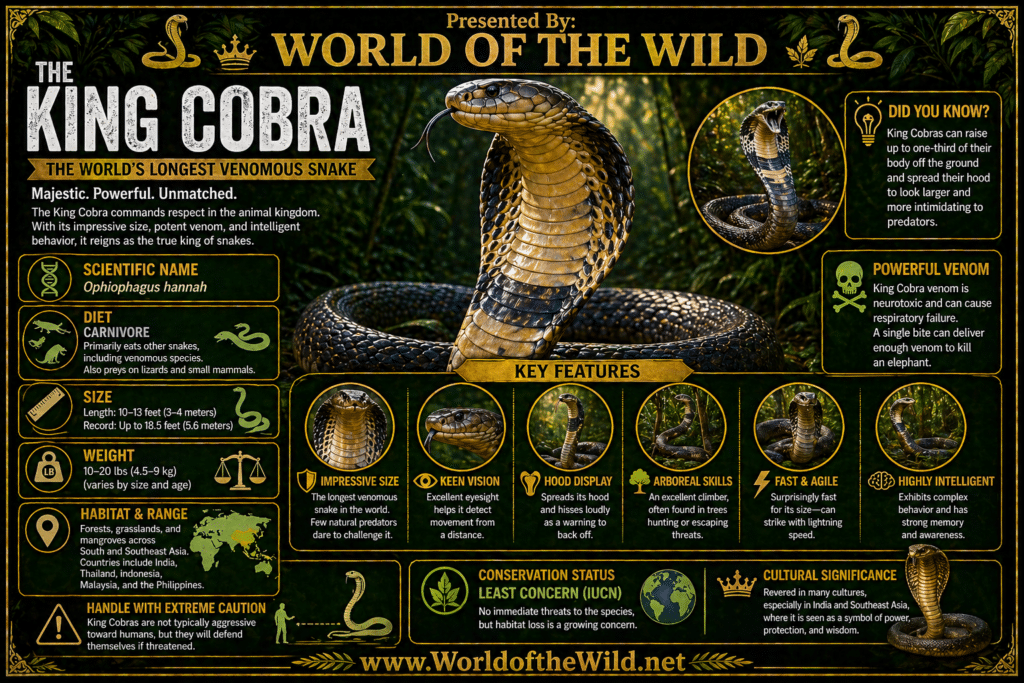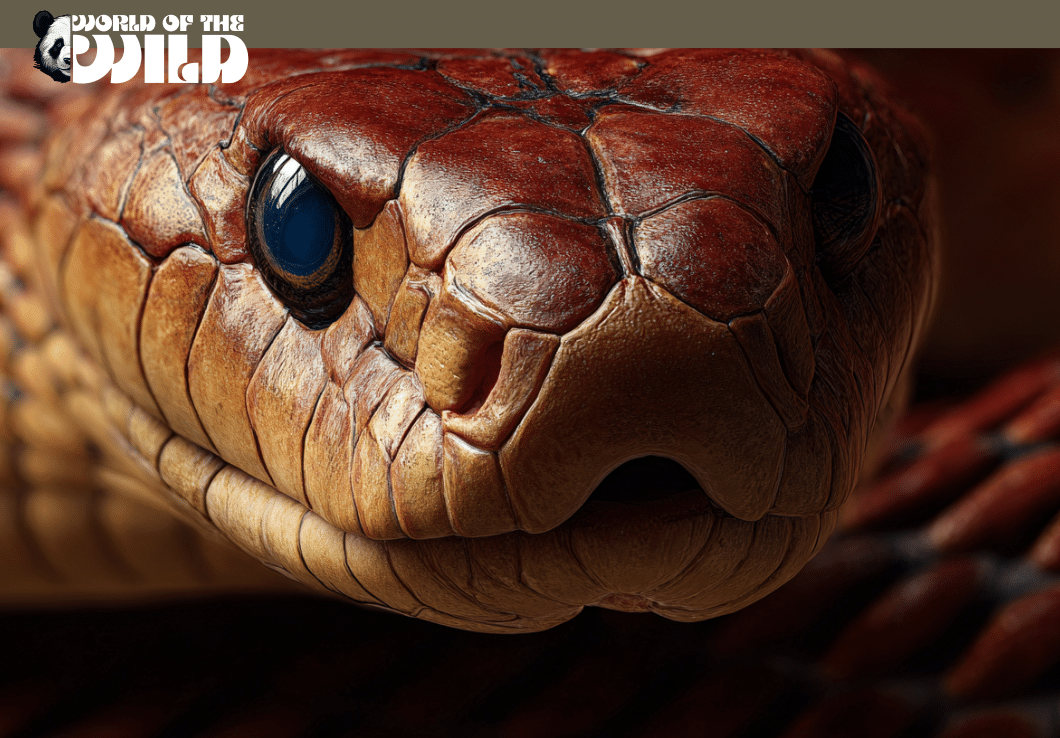

There is a moment — frozen in time, heart suspended mid-beat — when a King cobra rises from the forest floor, spreads its iconic hood, and fixes you with a gaze that feels disturbingly ancient. It is not merely a snake. It is a symbol of power so deeply embedded in human culture that entire religions have been shaped around it. The King cobra (Ophiophagus hannah) is the longest venomous snake on Earth, a creature of extraordinary intelligence, haunting beauty, and ecological importance. It is the apex of its world — a living paradox that is both feared and revered, both devastatingly lethal and surprisingly nurturing. To understand the King cobra is to peer into one of nature’s most breathtaking evolutionary achievements. So let’s look this monarch in the eye — carefully.
Facts
- The King cobra is the only snake in the world that builds a nest for its eggs — a behavior that speaks to a level of parental investment almost unheard of among reptiles.
- A single bite from a King cobra can deliver enough venom to kill an Asian elephant — or up to 20 adult humans — within hours.
- Despite their fearsome reputation, King cobras are surprisingly shy and will almost always choose to flee rather than confront a human unless cornered or protecting a nest.
- King cobras have been observed “growling” — a low, hissing rumble produced by specialized tracheal sacs — making them one of the very few snakes capable of producing a sound other than a standard hiss.
- Their name Ophiophagus literally translates from Greek to “snake-eater,” a direct reference to the fact that their diet consists almost exclusively of other snakes.
- King cobras possess a rudimentary form of binocular vision, allowing them to track moving prey at distances of up to 330 feet (100 meters) — exceptional for a snake.
- In parts of India, King cobras are considered sacred to the god Shiva, and harming one is regarded as a serious spiritual offense in many Hindu communities.
Species
The King cobra occupies a unique and solitary position in the tree of life, classified as follows:
| Taxonomic Rank | Classification |
|---|---|
| Kingdom | Animalia |
| Phylum | Chordata |
| Class | Reptilia |
| Order | Squamata |
| Family | Elapidae |
| Genus | Ophiophagus |
| Species | Ophiophagus hannah |
One of the most remarkable things about the King cobra from a taxonomic standpoint is that it is the sole member of its genus — Ophiophagus. It stands completely alone, a genetic island, with no close relatives sharing its name. While it belongs to the family Elapidae alongside other cobras, mambas, and sea snakes, it is not a “true cobra” of the genus Naja. It earned the cobra designation through its ability to spread a hood and its broadly similar appearance, but evolutionarily it is its own distinct lineage.
Recent genetic research has suggested that what we call the “King cobra” may actually represent multiple cryptic species — populations so geographically isolated that they have diverged significantly at the genetic level. Preliminary studies have proposed up to five distinct genetic lineages, distributed across the Indian subcontinent, mainland Southeast Asia, the Malay Peninsula, the Philippine islands, and the Indonesian archipelago. As of now, these remain scientifically grouped under a single species, but future taxonomic revisions may elevate some populations to full species status — a development that would have significant implications for conservation strategies.
Appearance
The King cobra is, by any measure, a visually commanding animal. Adults regularly reach lengths of 10 to 13 feet (3 to 4 meters), with exceptional individuals recorded at over 18 feet (5.5 meters) — a length that surpasses every other venomous snake on the planet. Despite their length, King cobras are relatively slender, with adults typically weighing between 13 and 20 pounds (6 to 9 kilograms), though larger specimens can exceed this range.
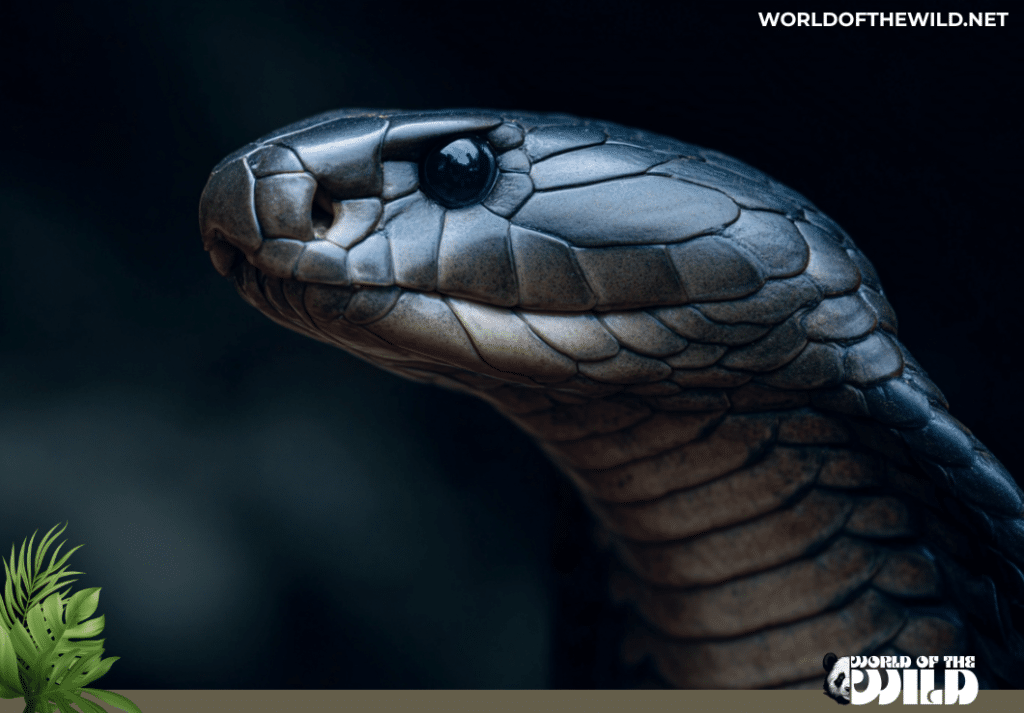
Their coloration varies considerably across their geographic range, which is itself a clue to their underlying genetic diversity. Most individuals display a rich olive-green, brown, or black dorsal surface, often accented with pale yellow or cream-colored crossbands that are more vivid in juveniles and fade with age. The underside is typically a pale yellow or cream. The scales have a smooth, almost polished quality that gives the snake a sleek, muscular appearance.
The defining feature — the one that has made the King cobra iconic — is the hood. When threatened, the snake flattens and spreads its cervical ribs, expanding the loose skin of the neck into a wide, flattened disc. The King cobra’s hood is notably narrower and more elongated than that of the true cobras of genus Naja, giving it a more angular, almost regal look. The inside of the hood may display distinctive markings used in threat displays.
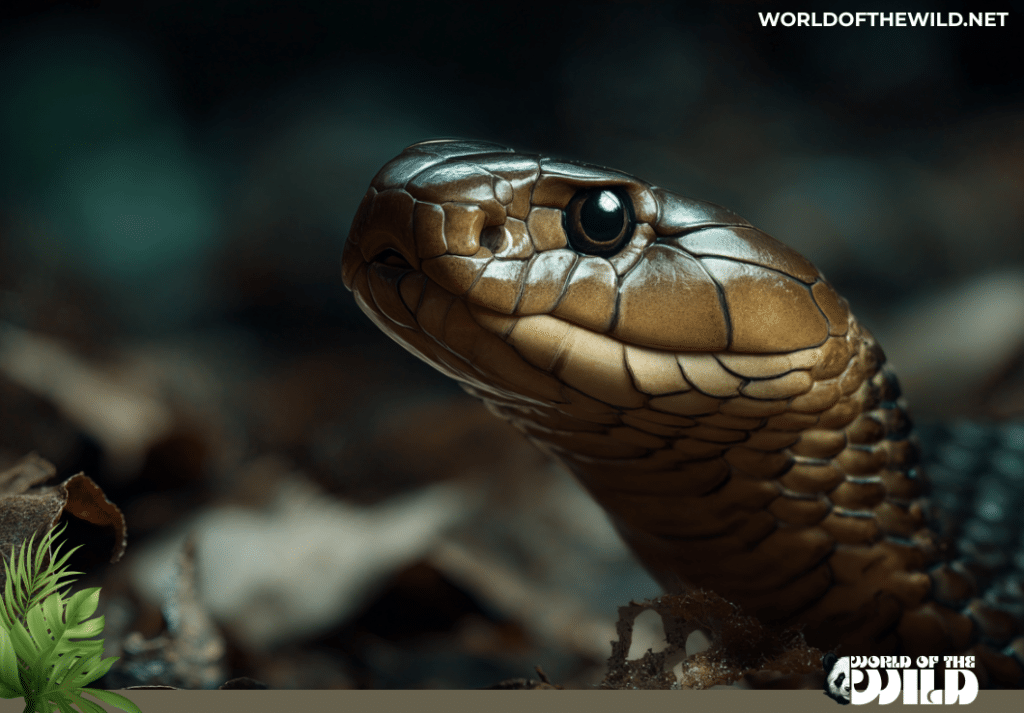
Juveniles are strikingly different from adults — jet black with bright yellow or white crossbands and a vivid yellow tip on the tail, coloration that fades as they mature. Their large, round, golden eyes give them an alert, intelligent expression quite unlike most other snakes, and their forked, dark tongue is in near-constant motion, tasting the chemical landscape of the world around them.
Behavior
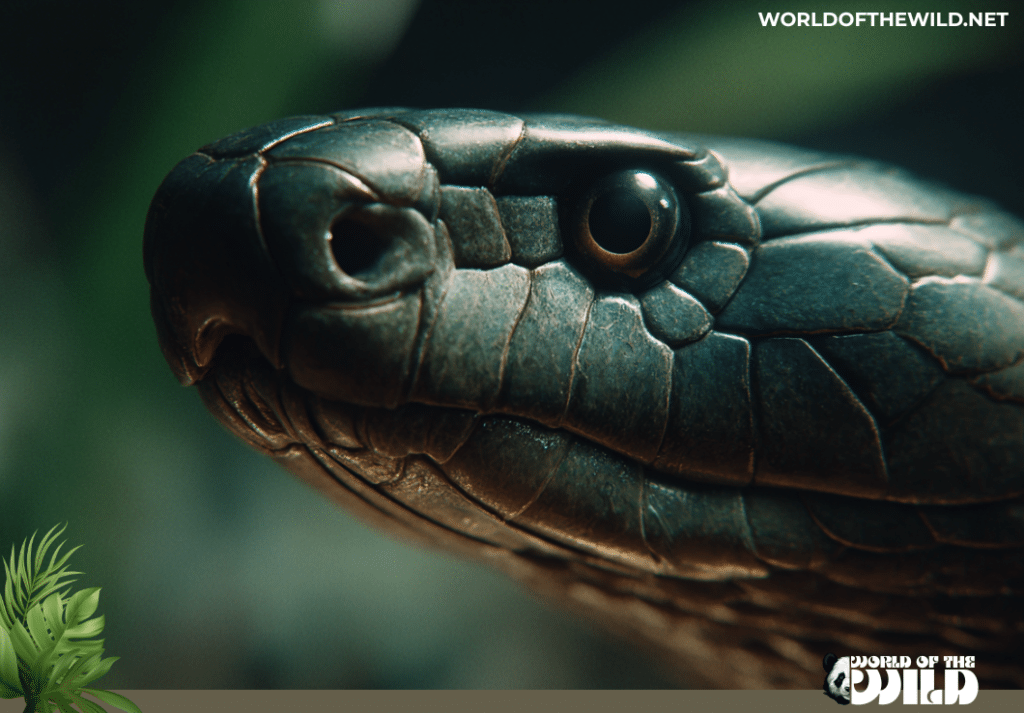
The King cobra is widely regarded as one of the most intelligent snakes in the world, and behavioral research has borne this out in compelling ways. Captive individuals have been observed solving simple spatial problems, demonstrating memory of specific locations and individuals, and displaying clear personality differences — some individuals are markedly more curious or bold than others.
In the wild, King cobras are solitary and largely secretive, spending much of their time hidden in dense vegetation or underground retreats. They are diurnal hunters, most active during the cooler hours of morning and late afternoon, though they will hunt at dusk when prey is abundant. When not hunting, they thermoregulate carefully — basking in filtered sunlight to raise body temperature, retreating to shade or water to cool down.
Communication among King cobras relies primarily on chemosensory signals — the forked tongue collects chemical particles from the air and transfers them to the Jacobson’s organ in the roof of the mouth, essentially “smelling” the environment in three dimensions. This system is so refined that King cobras can track another snake’s trail through dense forest with remarkable precision.
Their defensive displays are theatrical and highly effective. When cornered, a King cobra will raise the front third of its body upright — sometimes bringing its head to the level of a standing adult human’s chest — spread its hood, emit that characteristic low growl, and maintain steady, unblinking eye contact. This display is not mere bluster; it represents a genuine and immediate threat. However, most herpetologists who have worked closely with King cobras emphasize that these displays are warnings, not aggression — the snake is communicating, not attacking.
One of the most remarkable behavioral traits of the King cobra is its swimming ability. It is a strong and confident swimmer, capable of crossing wide rivers and navigating flooded forest terrain — an adaptation that has aided its dispersal across the island chains of Southeast Asia.
Evolution
The evolutionary history of snakes stretches back roughly 100 million years, to the era of the dinosaurs, and the lineage that would eventually produce the King cobra has been shaped by a relentless arms race between predator and prey across the forests and grasslands of Asia.
Snakes are believed to have evolved from burrowing or aquatic lizard ancestors during the Cretaceous period. The earliest snakes were already venomous to some degree — venom appears to have evolved from modified salivary proteins, a development that occurred remarkably early in snake evolution. The family Elapidae — which includes the King cobra — is considered a relatively modern group in evolutionary terms, with its origins traced to the late Eocene or early Oligocene, roughly 30 to 40 million years ago.
The genus Ophiophagus diverged from its closest elapid relatives in a period of significant biogeographic flux in Southeast Asia, as tectonic activity, sea level changes, and forest dynamics repeatedly connected and isolated landmasses. This pattern of isolation and reconnection is likely what drove the genetic divergence observed between regional King cobra populations today.
The King cobra’s specialization on other snakes as prey — a dietary niche called ophiophagy — is a particularly notable evolutionary development. It required the evolution of a resistance to the venom of its prey (particularly other elapids), a refined chemosensory system capable of tracking snakes specifically, and a behavioral repertoire suited to subduing fast-moving, dangerous quarry. This specialization is so complete that Ophiophagus hannah is now physiologically and behaviorally optimized for a niche that virtually no other large predator on Earth exploits in the same way.
Habitat
The King cobra’s range spans a remarkable swath of Asia, from the foothills of the Himalayas in northern India and southern Nepal, east through Bangladesh, Myanmar, Thailand, Laos, Cambodia, Vietnam, southern China, and the Malay Peninsula, and south and east through the archipelagos of Indonesia and the Philippines.
Within this broad range, King cobras show a strong preference for dense, moist forest environments — tropical and subtropical rainforests, bamboo thickets, mangrove swamps, and forested hillsides at elevations up to approximately 6,500 feet (2,000 meters). They are closely associated with areas near streams, rivers, and other water sources, both because water regulates their body temperature and because aquatic environments attract the prey snakes they depend upon.
King cobras are also occasionally found at the edges of agricultural land and human settlements, particularly where forest fragments persist. This brings them into frequent conflict with people — a dynamic that is increasingly relevant as deforestation fragments their habitat. They tend to avoid open terrain, requiring the structural complexity and humidity of intact or near-intact forest to thrive.
The snake’s nesting behavior is closely tied to habitat — females select specific locations with precisely the right combination of decomposing leaf litter (which generates heat for incubation), humidity, and concealment, and they construct their nests by coiling their bodies around loose debris and pulling it into a mound. The availability of such sites is becoming increasingly limited as forest floors are disturbed by logging and human activity.
Diet
The King cobra is a specialist carnivore and, among large predators, a remarkably selective one. Its genus name, Ophiophagus — “snake-eater” — tells the whole story. The vast majority of its diet consists of other snakes, including rat snakes, pythons, and, with striking boldness, other venomous species such as kraits and even smaller cobras of the genus Naja.
To consume prey that is itself venomous, the King cobra has evolved a partial resistance to elapid venoms, though the degree of this resistance varies and it is not invulnerable to envenomation. The immunity appears to be conferred by specific blood proteins that neutralize certain venom components — an evolutionary innovation driven by millions of years of predator-prey coevolution.
Hunting strategy is a patient, sensory-driven affair. The King cobra uses its Jacobson’s organ to trail the chemical signature of a snake through the environment, sometimes following a trail for considerable distances before closing in. Once within range, it strikes rapidly, delivering a powerful bite and injecting venom that acts on the nervous system — specifically blocking acetylcholine receptors at neuromuscular junctions, causing paralysis and respiratory failure in prey within minutes.
The King cobra then swallows its prey whole and headfirst, aided by highly flexible jaws and expandable skin. Because snakes are nutrient-dense prey, a King cobra may need to eat only once every few weeks during periods of inactivity, though more frequent meals are taken during periods of high energy demand such as mating season or nesting.
Juveniles, being smaller, supplement their diets with lizards and small mammals until they grow large enough to tackle snake prey effectively.
Predators and Threats
Despite being one of the most formidable predators in its environment, the King cobra is not without natural enemies — particularly when young. Mongooses are perhaps the most famous adversaries of cobras in general, and while the King cobra’s size and aggression make it a much more dangerous opponent than a common cobra, mongooses — with their partial venom resistance and extraordinary agility — have been documented successfully attacking juvenile and even subadult King cobras.
Large birds of prey, particularly serpent-eagles (Spilornis spp.), pose a significant threat to juvenile King cobras, snatching them before they have grown to a size that affords real protection. Monitor lizards and large wild pigs may raid King cobra nests and consume eggs.
However, by far the most significant threats to King cobras are those imposed by human activity:
Habitat destruction is the primary driver of King cobra population decline. Rapid deforestation across South and Southeast Asia — driven by logging, agricultural expansion, palm oil plantations, and urban development — is eliminating and fragmenting the dense forest habitat that King cobras require. A snake that needs large, intact home ranges cannot persist in a landscape of isolated forest patches.
Persecution and killing remains widespread. King cobras are killed on sight in many rural communities, driven by fear and misunderstanding, and are frequently caught and killed on roads as expanding infrastructure cuts through their habitat.
The wildlife trade exerts significant pressure on wild populations. King cobras are harvested for their skin (used in leather goods), their bile and blood (used in traditional medicine across Southeast Asia), and as exotic pets — a trade that is both harmful to wild populations and dangerous to buyers unequipped to handle such animals.
Road mortality is an increasingly significant cause of death as highway networks expand through forested regions.
Reproduction and Life Cycle
Breeding season for King cobras occurs during the cooler, drier months — typically between January and April across most of their range. Males engage in ritualized combat wrestling matches, rearing up and attempting to pin each other to the ground in contests of strength and leverage that can last for hours. These battles are striking to witness — two enormous snakes entwined in vertical combat — but they rarely result in serious injury, as neither male attempts to bite the other.
Once a female selects a mate, copulation may last for several hours to a full day. Approximately one to two months after mating, the female constructs her nest — a behavior unique among snakes and one that represents an extraordinary investment of energy. She gathers leaves, bamboo stems, and other organic debris by looping her body around the material and pulling it into a mound, which can be up to 3 feet (1 meter) tall and 5 feet (1.5 meters) wide. The decomposition of this organic material generates heat, helping to incubate the eggs at a relatively stable temperature.
The female lays between 20 and 50 eggs in the lower chamber of the nest and then positions herself in the upper chamber — lying directly above the clutch — for the entire 60 to 90 day incubation period. This is one of the most dedicated examples of parental care in the snake world. The female rarely leaves the nest, going without food for weeks, and will aggressively defend her clutch against any intruder — including humans. Notably, in the days just before the eggs are due to hatch, the female typically abandons the nest, likely driven by the instinct to avoid consuming her own offspring.
Hatchlings emerge fully venomous and entirely independent, typically measuring 18 to 24 inches (45 to 60 cm). They receive no parental care after hatching and must immediately begin fending for themselves. Growth is rapid in the first few years. King cobras reach sexual maturity at around 5 to 6 years of age and can live for up to 20 years in the wild, with some captive individuals exceeding this lifespan under optimal conditions.
Population
The King cobra is currently listed as Vulnerable on the IUCN Red List of Threatened Species — a status that reflects a demonstrably declining population across much of its range and a set of ongoing threats that show no sign of abating.
Precise global population figures are difficult to establish for any wide-ranging, secretive forest reptile, and the King cobra is no exception. No comprehensive census exists. Population assessments rely primarily on survey data, roadkill records, and trade monitoring, all of which point in the same direction: numbers are falling. The IUCN assessment notes that the population is suspected to have declined by more than 30% over the past 75 years, with continued decline projected.
The species has been extirpated from much of its former range in highly deforested areas, particularly in parts of India, Bangladesh, and lowland areas of Southeast Asia that have been cleared for agriculture. Remaining populations are increasingly fragmented, reducing genetic exchange between groups and making local populations more vulnerable to stochastic extinction events.
Some degree of legal protection exists across the King cobra’s range — it is listed under CITES Appendix II, meaning international trade requires permits — but enforcement is inconsistent, particularly in countries with limited conservation resources and high levels of informal wildlife trade.
Conservation efforts are underway in several countries, including King cobra radio-tracking programs in Thailand and India that have dramatically improved our understanding of the species’ habitat requirements, movement patterns, and nesting ecology — information that is essential for designing effective protected areas and wildlife corridors.
Conclusion
The King cobra is not a villain in the story of the natural world. It is an architect of ecological balance — a specialist predator that regulates snake populations across some of the most biodiverse forests on Earth. It is an animal of remarkable intelligence, complex behavior, and evolutionary uniqueness that has no peer among living reptiles. And it is an animal in trouble.
The forces bearing down on the King cobra — the chainsaw, the road, the poacher’s bag — are the same forces threatening forests and wildlife across the entire planet. Protecting the King cobra means protecting the intact, primary forests it depends upon, and those forests are worth protecting not merely for the sake of one iconic snake, but for the incalculable biodiversity they shelter, the carbon they store, and the communities — human and animal — that depend on them.
The next time you encounter an image of a King cobra rearing up with its hood spread wide, resist the reflex of fear. Look instead with the recognition that you are facing one of evolution’s most extraordinary achievements — a creature that has ruled these forests for millions of years and deserves the chance to rule them for millions more. What we do in the next few decades will determine whether it gets that chance.
Quick Reference
| Scientific Name | Ophiophagus hannah |
| Diet Type | Carnivore (ophiophagous — primarily snake-eating) |
| Size | 120–156 inches (10–13 feet); exceptional individuals up to 216 inches (18 feet) |
| Weight | 13–20 pounds (up to ~26 lbs in larger individuals) |
| Region Found | South and Southeast Asia — India, Nepal, Bangladesh, Myanmar, Thailand, Laos, Cambodia, Vietnam, southern China, Malaysia, Indonesia, Philippines |