World of the Wild — Endangered Species Series

The temperature has already fallen to minus twenty-two degrees Celsius before the sun fully surrenders to the horizon. In the Primorsky Krai, Russia’s wild southeastern wedge of land wedged between China and the Sea of Japan, winter does not arrive — it detonates. The Korean pine forests, ancient and cathedral-quiet, stand wrapped in ice so clear it makes the bark look like glass. Nothing moves. Everything listens.
Then she appears.
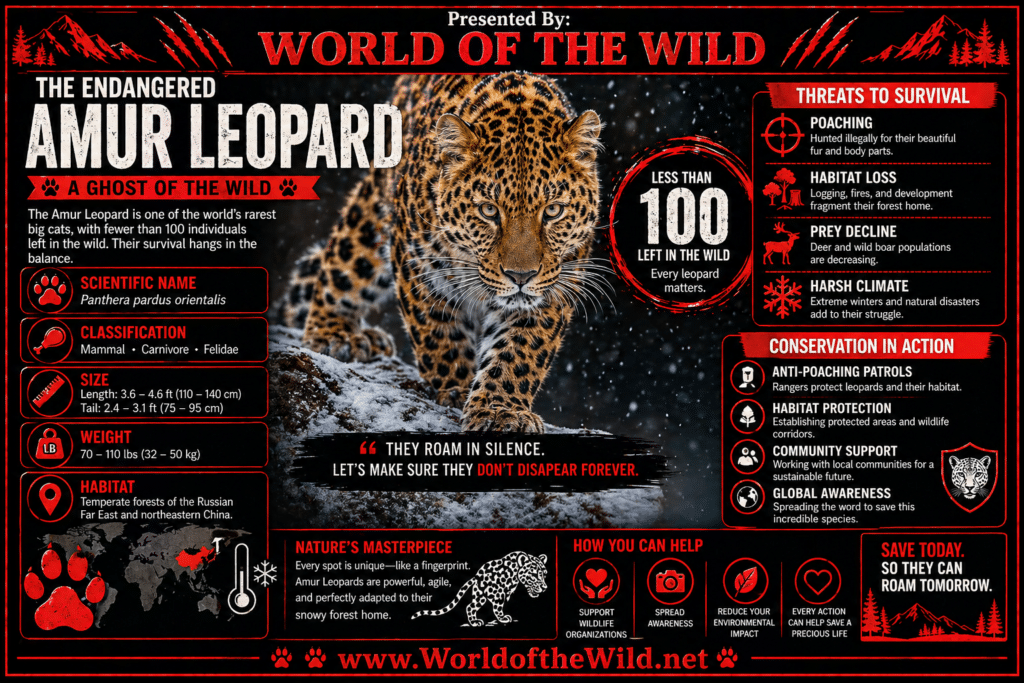
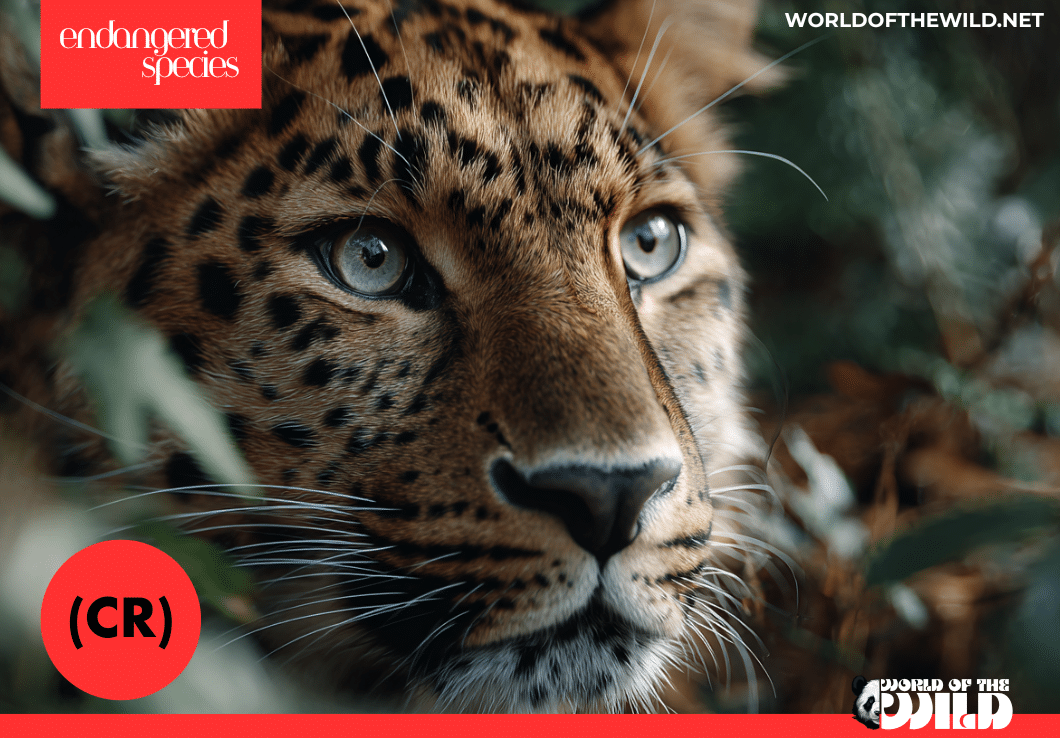
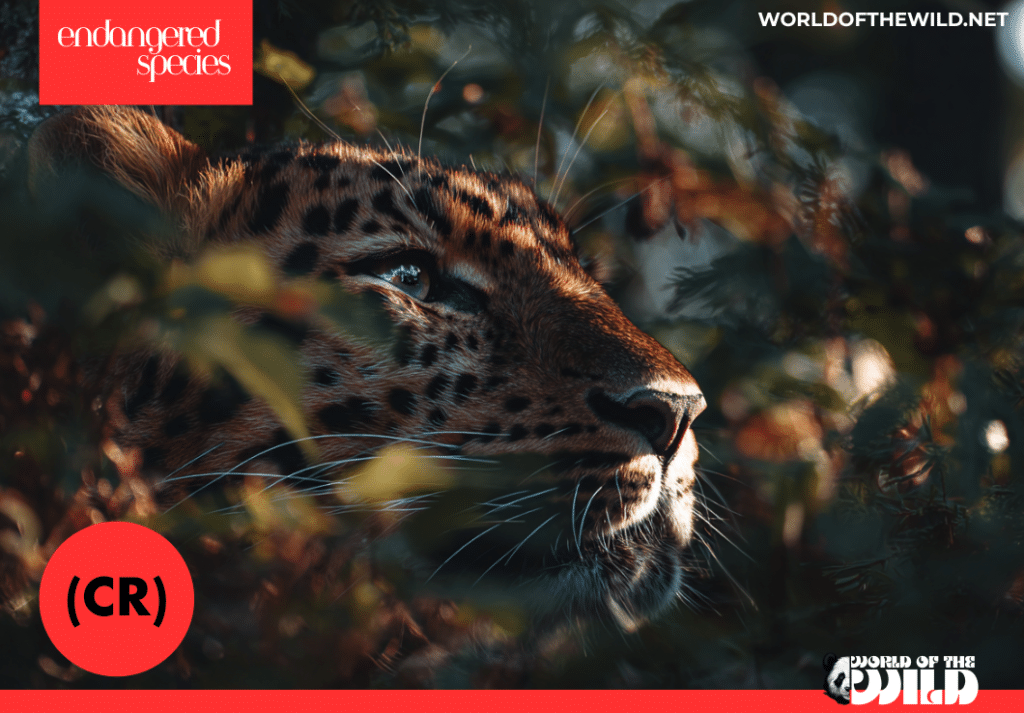
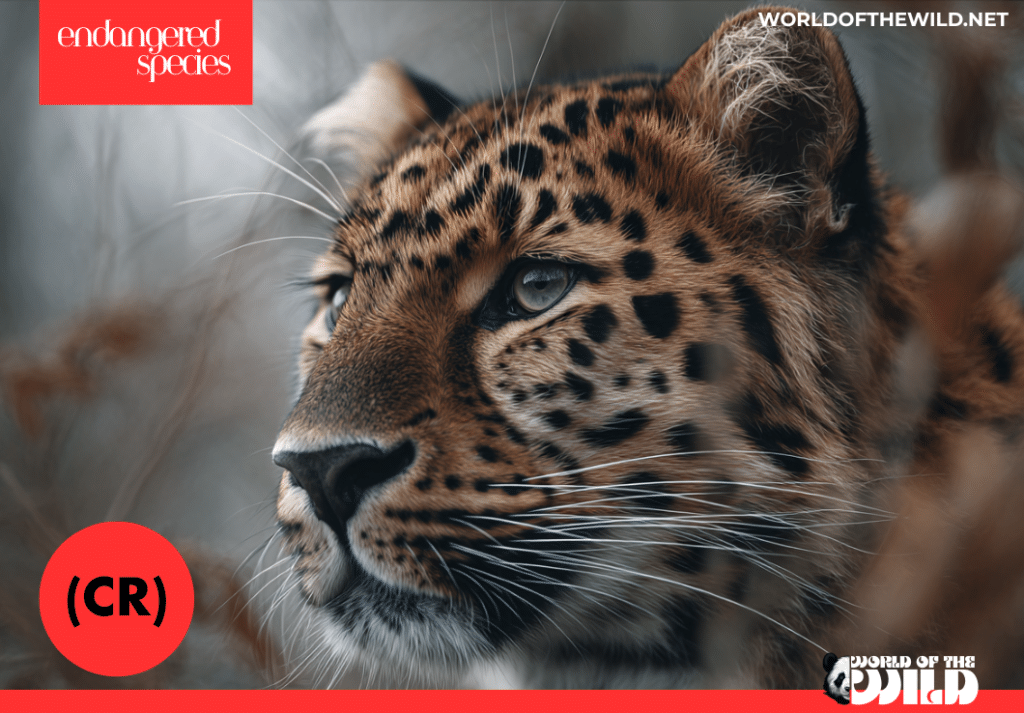
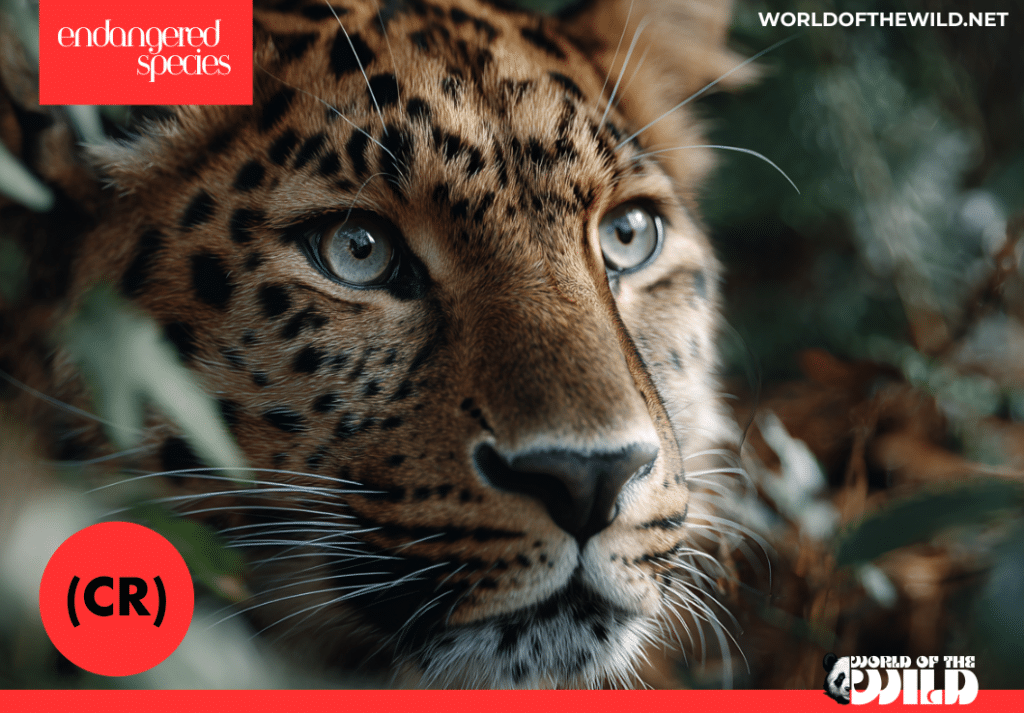
She materializes at the tree line the way smoke does — present before you can point to the moment it began. A female Amur leopard, perhaps six years old, perhaps the most critically endangered large cat alive on Earth, steps onto a snow-covered ridge with the casual authority of something that does not believe in its own extinction. Her coat — a pale, almost cream gold — blazes against the white ground even in failing light, yet somehow she never reads as visible. The rosettes on her flanks are large and widely spaced, darker than those of her African or Persian cousins, like ink dropped into cream. Her legs are longer in proportion to her body than other leopard subspecies, evolved to carry her through snow that would exhaust a smaller-limbed animal. Her tail — nearly as long as her torso — sweeps a slow, hypnotic arc as she pauses, lifts her broad muzzle, and reads the wind.
She smells the frozen creek below. She smells the resin in the pines. She smells something else — sika deer, a group of three, bedded perhaps three hundred meters northeast in a depression where wind has kept the snow shallow. Every muscle in her body reorganizes itself around that information without any visible signal of urgency. She descends the ridge in a controlled, flowing stalk that looks almost leisurely, each paw placed with the deliberateness of a chess piece.
The forest has sounds now — a branch crack forty meters to her left. A raven calling once, then going silent. The distant, crystalline percussion of a frozen stream somewhere deeper in the valley. She reads all of it, logs it, dismisses it, and continues. The deer are upwind of her and haven’t moved. She drops into a low creep across an exposed hillside, belly close to the snow, using a topographic seam in the terrain the way a magician uses a curtain.
The kill, when it happens, happens in seconds. It is not cruel — it is efficient in the way only millions of years of co-evolution can produce. She drags the animal twice her own weight back toward the ridge, caches it high in the fork of a Korean pine with the ease of something doing a thing it has done a thousand times in a thousand past lives. Then she retreats, and within minutes the forest looks exactly as it did before she entered it.
Somewhere in the world, a database records one more confirmed sighting. The count of known Amur leopards in the wild ticks forward by one, though most researchers who devote their careers to this animal would tell you that tick feels less like hope and more like borrowed time.
Status of Survival
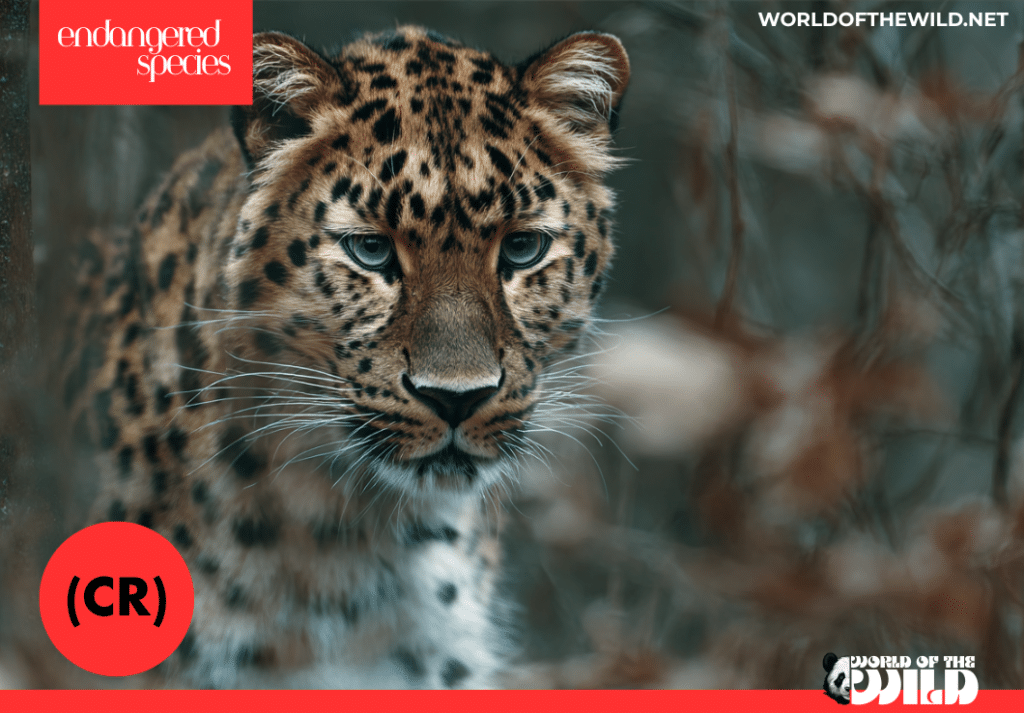
IUCN Red List: Critically Endangered
The Amur leopard (Panthera pardus orientalis) carries the heaviest designation the IUCN Red List assigns to a living species: Critically Endangered — one category above extinct in the wild. It has held this classification without interruption since 1996, a grim tenure that underscores the chronic, structural nature of the threats it faces rather than any single catastrophic event.
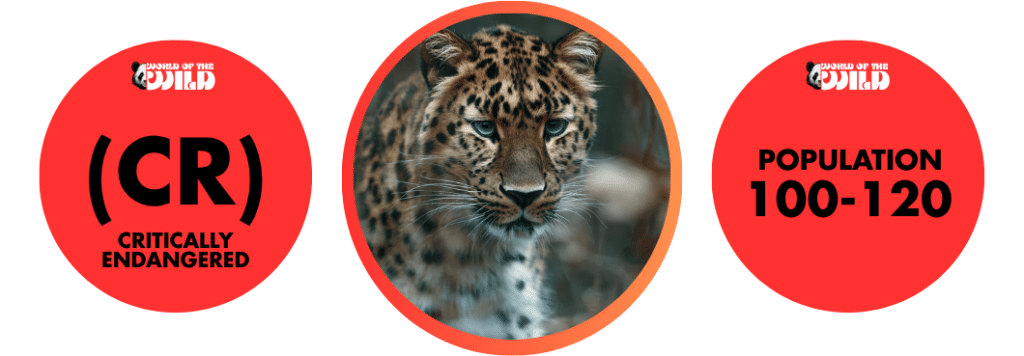
The most current population estimates, compiled through camera trap surveys, genetic sampling, and field research coordinated by organizations including WWF-Russia and the Land of the Leopard National Park authority, place the wild Amur leopard population at approximately 100 to 110 individuals as of 2024–2025. This figure represents a genuine improvement from the population low of roughly 25–35 animals recorded in the mid-2000s and is routinely cited as a conservation success story. It should be celebrated — and interrogated.
A population of 100 individuals is not a recovery. It is, by the scientific standards of population viability analysis, a critically small group. Conservation biologists generally consider 500 individuals the minimum viable population (MVP) for long-term survival without significant inbreeding depression — the point at which a species retains enough genetic diversity to adapt to disease, environmental shifts, and random demographic disasters like a disease outbreak wiping out a cluster of breeding females.
The Amur leopard’s current genetic diversity is already compromised. Decades of range compression have meant that the wild population is essentially confined to a single interconnected habitat patch, which creates what population geneticists call a genetic bottleneck. Animals within the population are breeding with relatives. Immune system heterozygosity — the variation in immune genes that allows a species to fight new pathogens — is measurably reduced. Sperm quality in Amur leopard males has been observed to be lower than in more genetically diverse leopard populations.
What this means practically: even if the population holds at 100 individuals, it is not 100 healthy, genetically distinct animals. It is a community under compounding biological pressure — surviving, yes, but fragile in ways that raw headcount obscures. Every year that passes without a significant increase in range and breeding diversity is a year the species moves closer to what scientists call a mutational meltdown — the slow, generational accumulation of harmful genetic mutations that cannot be purged by natural selection in a population too small to generate sufficient variation.
The Map of the Vanishing
Where the Leopard Lives — and What It Holds Together
The Amur leopard’s world is a narrow crescent of temperate broadleaf and mixed forest along the Sino-Russian border. Primorsky Krai in Russia’s Far East contains the species’ last significant stronghold, centered on the Land of the Leopard National Park, a protected area of approximately 262,000 hectares established in 2012. Across the border in Jilin and Heilongjiang provinces of northeastern China, the Northeast China Tiger and Leopard National Park, established in 2017 and expanded significantly since, offers contiguous or near-contiguous habitat that has been the subject of intense cross-border conservation diplomacy.
This landscape is defined by Korean pine and oak temperate forest, dissected by river valleys, steep ridges, and seasonal snowpack that can exceed a meter in depth. It sits at a biological crossroads — the southern edge of Siberian ecology, the northern edge of continental East Asian forest, a place where cold-weather adaptations meet remarkable biodiversity. The Amur leopard shares this ecosystem with the Amur (Siberian) tiger (Panthera tigris altaica), the largest cat on Earth, with which it has a complicated co-existence. Tigers dominate where prey is abundant; leopards persist in the steeper, more rugged terrain where tigers find movement difficult.
The Keystone Factor
To understand what disappears with the Amur leopard, you have to understand what it does while it’s here.
As an apex mesopredator — below tigers in the hierarchy but above all else — the Amur leopard regulates roe deer, sika deer, and hare populations across terrain that tigers do not efficiently patrol. This suppression of herbivore populations prevents overgrazing of forest understory, which in turn protects soil stability, water retention, and the regeneration of Korean pine — a tree of extraordinary ecological value that produces seeds critical for dozens of other species including birds, rodents, and bears.
Remove the leopard, and the cascade begins. Deer populations surge in the rugged terrain the leopard occupied. Understory browse is stripped. Pine regeneration fails. Soil erosion increases along slopes. The hydrological cycles that maintain valley creek systems — systems that sustain fish, amphibians, and migratory waterfowl — degrade. An ecosystem that took thousands of years to equilibrate begins to unravel along seams that are invisible until they’re open.
This is what ecologists call a trophic cascade, and the Amur leopard sits at its hinge point in a region of forest the tiger simply does not reach.
The Descent: How We Got Here
A History Written in Loss
The Amur leopard’s catastrophic decline did not happen overnight, and it cannot be attributed to a single villain. It is the product of compounding forces that accelerated across the twentieth century with brutal consistency.
Habitat Fragmentation and Deforestation
At the turn of the twentieth century, Amur leopards ranged across a vastly larger territory — the Korean Peninsula, significant portions of northeastern China, and a broad swathe of the Russian Far East. The industrialization of northeastern China through the mid-1900s, combined with Soviet-era logging programs that cleared enormous swaths of Primorsky Krai’s temperate forest for timber and agricultural development, compressed that range dramatically. By the 1970s, the animal had vanished from Korea entirely. By the 1980s, its Chinese range had been reduced to isolated fragments.
The critical infrastructure development of the post-Soviet period then bisected what remained. Roads, railways, and pipeline corridors cut through the remaining forest, creating hard barriers to movement that isolated subpopulations from one another. An Amur leopard can cover enormous distances — males have been documented traveling territories of up to 300 square kilometers — but a six-lane highway with heavy truck traffic is not a barrier a leopard can negotiate on instinct alone. Gene flow between groups ceased. Inbreeding began.
Poaching: The Market for Extinction
Poaching operates along two parallel tracks, each devastating in its own way.
The first is direct killing for the illegal wildlife trade. Amur leopard pelts — those remarkable, pale-gold coats with their dramatic rosettes — command significant prices on black markets in Russia, China, and East Asia. A single pelt was documented selling for the equivalent of USD $500–1,000 as recently as the 2010s. Bones, claws, and organs also enter traditional medicine markets, where all big cat derivatives are prized. Exact figures are, by the nature of the trade, impossible to compile, but researchers estimate that poaching may have removed several individuals per year at the population’s nadir — a catastrophic off-take rate for an animal with such a slow reproductive cycle.
The second track is prey depletion. Amur leopards require substantial wild ungulate populations to sustain themselves. Intensive hunting of sika deer and roe deer by local human communities — both subsistence hunters and commercial poachers supplying venison and antler markets — collapsed prey base across the leopard’s range. A big cat without prey does not simply migrate; it comes into contact with livestock, triggering retaliatory killing by farmers.
Climate Disruption
This is the emerging threat that conservation models increasingly flag as potentially decisive. The Russian Far East is warming at roughly twice the global average rate, a pattern consistent with other high-latitude ecosystems. For Amur leopards, the consequences are multifactorial:
- Snowpack reduction alters prey distribution and behavior in ways that disrupt established leopard hunting strategies
- Warmer winters increase the risk of forest fires, which have already burned significant portions of potential leopard habitat in Primorsky Krai
- Shifting vegetation zones may reduce the extent of suitable Korean pine forest over the coming decades
- Disease transmission dynamics for feline diseases including canine distemper virus (CDV) — which has been documented killing Amur tigers and poses a theoretical risk to leopards — may intensify as temperatures rise
The Genetic Feedback Loop
As the population shrank, the compounding effects of inbreeding created a feedback mechanism: smaller populations breed with closer relatives, reducing immune diversity, increasing susceptibility to disease and reproductive failure, which further reduces effective population size. This spiral is not hypothetical; it has driven multiple large mammal populations to extinction even after direct persecution ended.
The Front Lines of Conservation
Who Is Fighting — and How
The conservation infrastructure around the Amur leopard, once dangerously thin, has matured substantially over the past two decades into a multi-actor network of genuine complexity and, increasingly, genuine results.
Land of the Leopard National Park (LLNP), Russia
Established in April 2012 after sustained advocacy from WWF-Russia and international partners, the LLNP represents the most consequential structural conservation intervention in the species’ history. Covering 262,000 hectares of prime leopard habitat in southwest Primorsky Krai, the park enforces anti-poaching patrols, manages fire prevention programs, and operates one of the most comprehensive camera trap networks in the world for big cat monitoring — over 400 camera stations producing thousands of individually identifiable leopard images annually. This is how the population count has moved from guesswork to genuine science.
WWF-Russia and WWF International
WWF has operated continuous Amur leopard programs since the 1990s, funding anti-poaching ranger units, prey species restoration programs (including supplemental feeding stations for deer during hard winters), and community engagement initiatives that provide economic alternatives to poaching. Critically, WWF played a key role in the diplomatic work that produced a joint Russian-Chinese conservation corridor — a land-use agreement ensuring that the border region between the two countries functions as connected habitat rather than a jurisdictional dead zone.
The Amur Leopard and Tiger Alliance (ALTA)
ALTA coordinates the work of thirteen conservation organizations including WCS, the Zoological Society of London, and multiple Russian and Chinese NGOs. Its integrated approach — combining anti-poaching with habitat management, prey recovery, and genetic monitoring — has been a model for multi-species recovery programs globally.
Captive Breeding and the Insurance Population
The global captive population of Amur leopards, maintained across accredited zoos through coordinated Species Survival Plans (SSPs) and European Endangered Species Programs (EEPs), currently stands at approximately 200–250 animals — more than double the wild population. This captive group serves as a genetic insurance policy: if the wild population suffers a catastrophic event, the captive population preserves the subspecies’ gene pool.
More ambitiously, researchers are now exploring genetic rescue strategies — introducing carefully selected captive-born animals into the wild to inject genetic diversity and correct the inbreeding trajectory. This is not theoretical; similar interventions have succeeded in Florida panther and Arabian oryx recovery programs.
Drone and AI Monitoring: The New Frontier
In 2022 and 2023, the Land of the Leopard park piloted drone-assisted patrol programs using thermal imaging to detect both leopards and potential poachers in remote terrain that foot patrols cannot efficiently cover. Simultaneously, AI-assisted pattern recognition software is being applied to the camera trap image archive to track individual animals, estimate age and reproductive status, and flag behavioral changes that might indicate health issues or territorial disruption. The processing of what once required months of expert analyst time now takes days.
A Hero of the Species: Dr. Dale Miquelle
If one figure represents the sustained, unglamorous scientific backbone of Amur leopard conservation, it is Dr. Dale Miquelle, the Director of the Russia Program for the Wildlife Conservation Society (WCS), who has worked in the Russian Far East for over three decades. Miquelle helped design and implement the camera trap monitoring systems that transformed Amur leopard population science from educated guesswork into rigorous, reproducible data. His long-term research on tiger-leopard coexistence dynamics has shaped habitat management policy across the entire Russian Far East protected area network. He represents a category of conservation hero that rarely gets celebrated: the field scientist who stays, decade after decade, building the evidence base that everything else depends on.
The Odds of Tomorrow
A Realistic Reckoning with a Fragile Future
The Amur leopard is not doomed. That is the most honest and most important thing to say at the outset of any realistic assessment. The species has moved from the very edge of arithmetic extinction — thirty individuals cannot sustain a population — to a number that permits cautious optimism. But optimism that is not stress-tested against the actual threat landscape is just sentiment dressed up as science.
Best Case: 2026–2076
In the best-case trajectory, several things happen in concert over the next five decades:
Range expansion succeeds. The cross-border corridor between Land of the Leopard National Park and China’s Northeast China Tiger and Leopard National Park functions as genuinely connected habitat. Leopards — particularly dispersing young males — move freely across the border, breeding with animals from neighboring territories and introducing new genetic variation into what has been a closed population. Camera traps in previously unoccupied areas of Jilin Province begin recording resident animals. The effective range doubles within twenty years.
Genetic rescue is implemented. A carefully managed introduction of several captive-bred animals with divergent genetic profiles successfully widens the wild population’s immune gene diversity without triggering behavioral disruption. Reproductive success rates in females improve. Cub survival increases.
The population reaches 200 wild individuals by 2040. At this number, demographic resilience improves substantially. The probability of a single catastrophic event — a disease outbreak, a severe fire season — driving the species below functional viability drops from terrifying to manageable. By 2076, with continued protection, the population could approach 400–500 animals across a restored range, still critically small by global standards but biologically viable for the first time in a century.
In this scenario, the Amur leopard’s IUCN status shifts from Critically Endangered to Endangered — a milestone that would represent one of the most remarkable large carnivore recoveries in conservation history.
Worst Case: 2026–2076
The worst-case scenario is not dramatic. It does not involve a single catastrophe. It involves the slow failure of political will.
Anti-poaching enforcement degrades as funding cycles shift, as the Russian political landscape deprioritizes conservation spending, as international conservation funding is redirected to other crises. Poaching rates, which have been suppressed by strong enforcement, creep back upward. Two or three breeding females are killed in a single year. The population stalls.
Climate disruption intensifies beyond projections. A sequence of severe fire seasons, fueled by warming and drought, burns through critical forest patches in Primorsky Krai. Prey populations collapse locally. Leopards, finding insufficient food in their traditional territories, move toward human settlements and are killed in retaliatory strikes. The habitat quality of the entire LLNP degrades faster than management can compensate.
The cross-border corridor fails politically. Sino-Russian conservation diplomacy, which has been genuinely productive in recent years, becomes a casualty of broader geopolitical shifts. The Chinese and Russian programs operate in isolation rather than coordination. The gene flow opportunity that the border corridor represents goes unrealized.
In this trajectory, the wild population fails to breach 130–150 individuals. Inbreeding depression intensifies. By mid-century, the population is once again in functional decline, and the conservation community faces the brutal arithmetic of a species that survived the twentieth century’s assault only to be defeated by the twenty-first’s indifference.
What Determines the Outcome
The uncomfortable truth is that the Amur leopard’s future is not primarily a biological question. Biology has given this animal every tool it needs to survive — intelligence, adaptability, extraordinary physical capability, and a reproductive rate that, in a stable environment, could rebuild a population. The question is a political and economic one: whether the governments, institutions, and communities that hold the fate of this ecosystem in their hands will continue, year after year, to choose the harder path.
The leopard does not understand this. On a frozen ridge in Primorsky Krai, beneath a sky so clear the stars look close enough to touch, she is doing exactly what leopards have done for two million years — moving through the dark, reading the wind, surviving. She does not know she is critically endangered. She does not know that her photograph on a camera trap ten kilometers east was the subject of a scientific paper, a fundraising campaign, a government briefing.
She knows there is a sika deer bedded in a snow-shallow depression to the northeast.
The rest is up to us.
Sources and Methodology: This article draws on population data from WWF-Russia’s Amur Leopard Program, Land of the Leopard National Park annual reports, IUCN Red List assessments (2020, updated 2024), Wildlife Conservation Society field research, and peer-reviewed literature on population viability analysis for Critically Endangered felids. All population estimates reflect the most current published data available as of early 2026.
World of the Wild | Endangered Species Series Reporting from the edge of what remains.