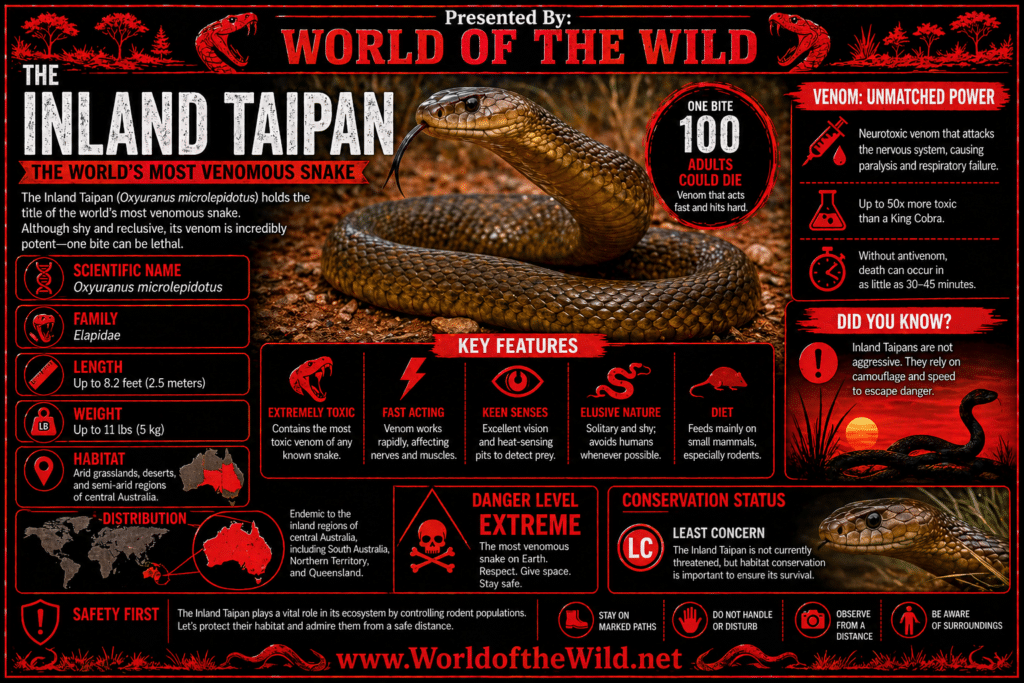

Somewhere in the remote, sun-scorched heart of Australia, a snake moves silently across cracked clay plains. It is sleek, swift, and almost impossibly lethal. Meet the Inland Taipan — Oxyuranus microlepidotus — a creature so venomous that a single bite carries enough toxin to kill over 100 adult humans. And yet, despite holding the title of the world’s most venomous land snake, most people have never seen one in the wild, and those who have rarely lived to tell a tale of aggression.
The Inland Taipan is one of nature’s most extraordinary paradoxes: breathtakingly dangerous, yet remarkably shy. Perfectly engineered by millions of years of evolution, this reclusive predator inhabits one of the planet’s harshest environments and has mastered survival in a way few animals can rival. It is a snake that demands both our awe and our respect — and frankly, our protection.
Facts
- The venom of a single Inland Taipan bite contains enough neurotoxic and hemotoxic compounds to theoretically kill 100 adult humans or 250,000 mice — making it the most toxic venom of any land snake ever recorded.
- Unlike most dangerously venomous snakes, the Inland Taipan is considered docile and reclusive by nature; there are no confirmed human fatalities attributed to it in modern recorded history.
- The snake can change the color of its scales seasonally — darkening in winter to absorb more sunlight and lightening in summer to reflect heat, a rare thermoregulatory trick among reptiles.
- Each venom strike is delivered with near-perfect accuracy; the Inland Taipan can land multiple bites in a single rapid strike sequence, maximizing venom delivery.
- It is sometimes called the “fierce snake” — a name that refers to the potency of its venom, not its temperament, which is widely misunderstood.
- The Inland Taipan was virtually unknown to Western science until 1972, when herpetologist Frederick McCoy formally described the species, though Indigenous Australians had long known of its existence.
- Its venom is rich in paradoxin, a unique compound that can paralyze skeletal muscles almost instantly, setting it apart biochemically from its coastal taipan cousin.
Species
The Inland Taipan belongs to one of the most elite families in the reptile world. Here is its full taxonomic classification:
| Rank | Classification |
|---|---|
| Kingdom | Animalia |
| Phylum | Chordata |
| Class | Reptilia |
| Order | Squamata |
| Family | Elapidae |
| Genus | Oxyuranus |
| Species | O. microlepidotus |
The genus Oxyuranus contains three recognized species, all native to Australia and New Guinea. The Coastal Taipan (Oxyuranus scutellatus) is the Inland Taipan’s most well-known relative and, while less venomous, is considered more aggressive and is responsible for the majority of serious taipan-related human envenomations in Australia. The third member of the genus, the Central Ranges Taipan (Oxyuranus temporalis), was only formally described in 2007 and remains one of the least-studied snakes on Earth, known from just a handful of specimens collected in Western Australia.
There are no recognized subspecies of the Inland Taipan itself, though geographic variation in scale coloration and size has been noted across different parts of its range. The Elapidae family to which it belongs is one of the most dangerous in the animal kingdom, also encompassing cobras, mambas, and sea snakes.
Appearance
The Inland Taipan is a study in elegant minimalism. Adults typically reach lengths of 5.9 to 8.2 feet (71 to 98 inches), with occasional large individuals approaching or slightly exceeding that range. Despite its fearsome reputation, it is not a particularly heavy snake; most adults weigh between 3.3 and 6.6 pounds, giving it a lean, highly aerodynamic build perfectly suited for rapid strikes and swift movement across open terrain.
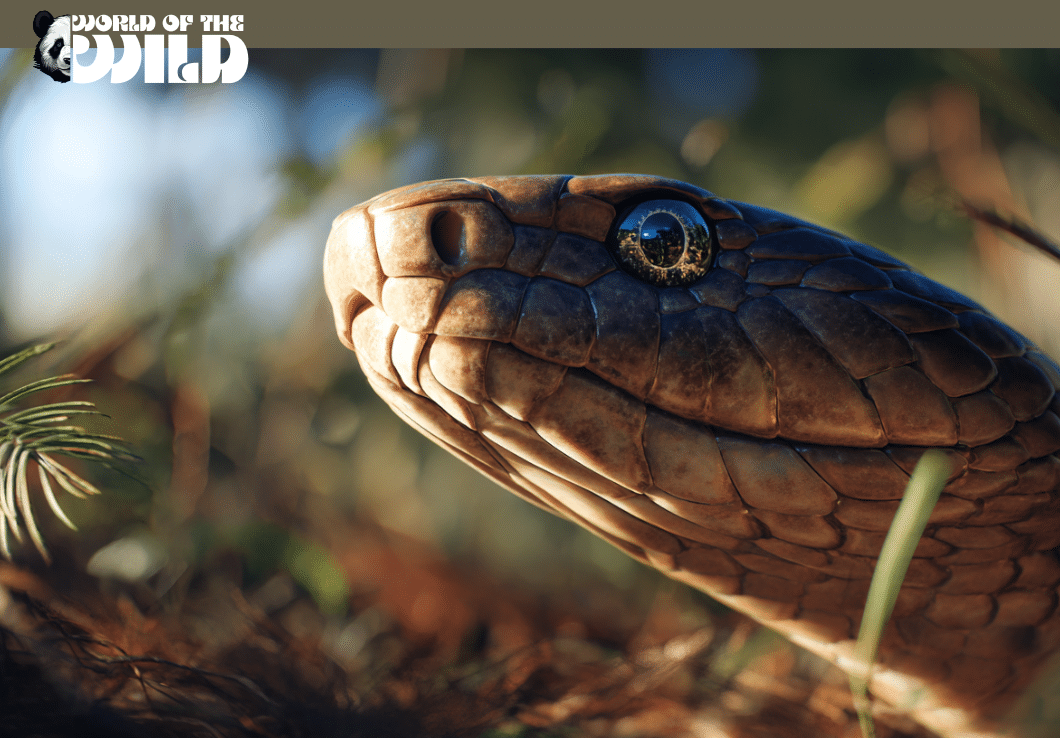
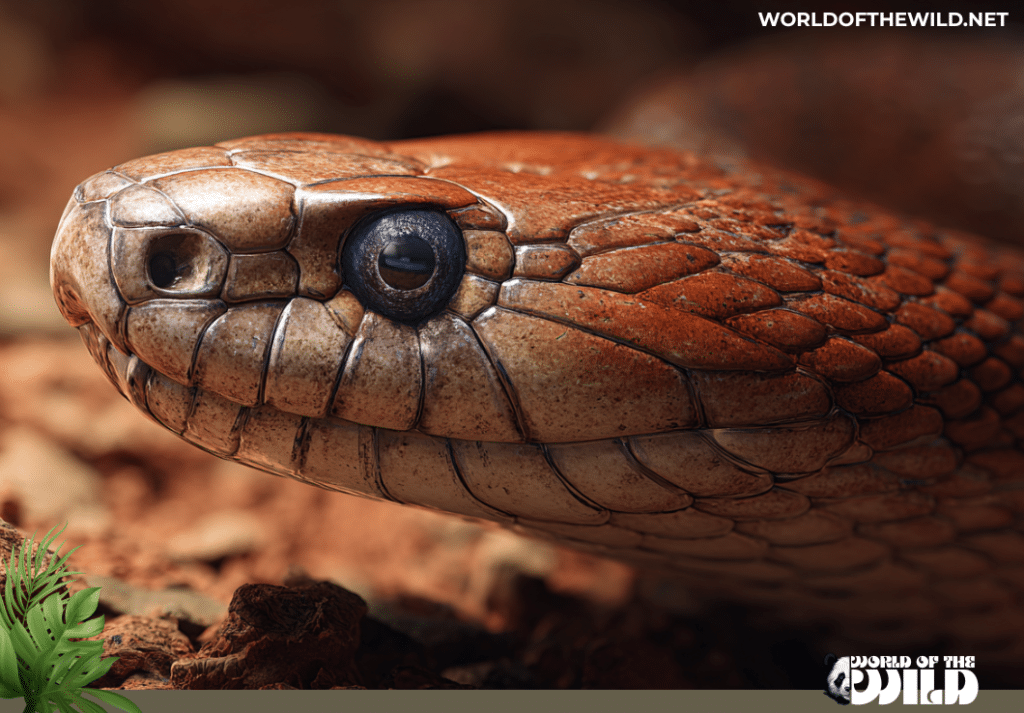
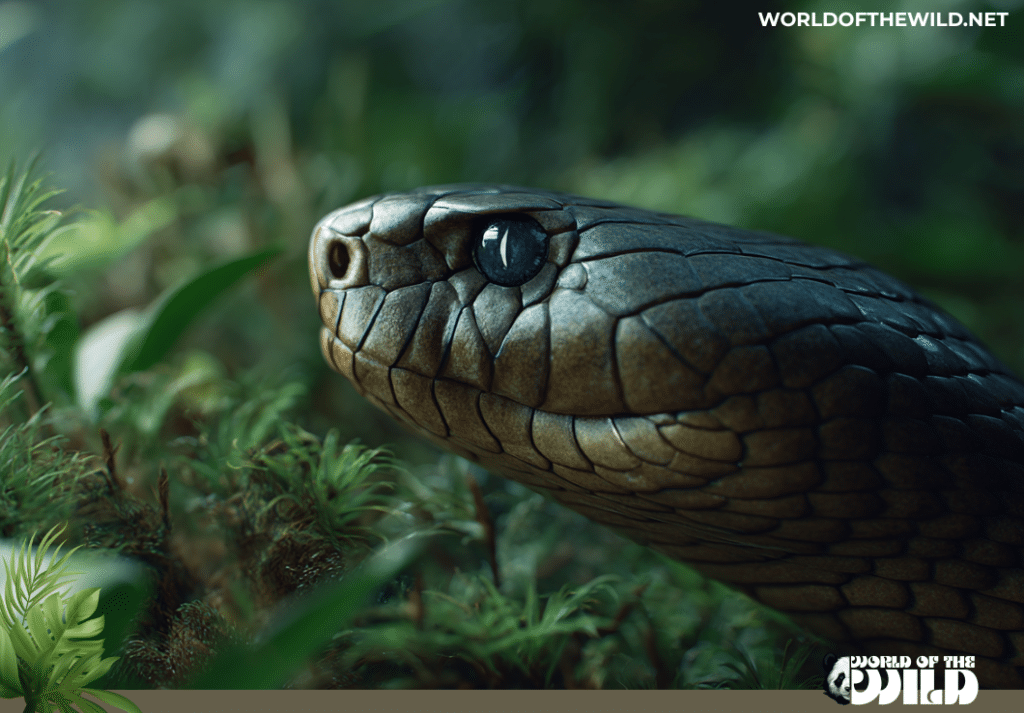
Its scales are smooth and tightly arranged — hence the species name microlepidotus, meaning “small-scaled” — giving the body a glossy, almost polished appearance up close. The coloration is where things get particularly interesting. During cooler months, the Inland Taipan’s dorsal surface deepens into a rich, dark brownish-black, sometimes approaching jet black. As temperatures rise in the brutal Australian summer, those same scales fade to a warm, pale olive-brown or straw yellow, a subtle but genuinely remarkable physiological shift.
The head is notably rounded and distinct from the neck, a feature common in elapids. The eyes are large relative to the head, with round pupils and a striking amber-to-dark-brown iris that gives the animal an alert, almost contemplative expression. The belly is pale yellow or cream, sometimes with orange-tinged spots along the edges of the ventral scales. There are no elaborate patterns, no hood, no rattle — just clean, functional beauty in every detail.
Behavior
The Inland Taipan is, above all else, a creature of habit and caution. It is highly secretive and solitary, spending the most dangerous hours of the day sheltered in deep rock crevices, burrows abandoned by other animals, or beneath the surface of the deeply cracked clay soils of its arid homeland. When the desert sun climbs to its apex, this snake is nowhere to be seen.
Activity peaks during the cooler morning hours, when the Inland Taipan emerges to hunt and regulate its body temperature. It is a diurnal species for much of the year, though behavior shifts seasonally depending on temperature extremes. During winter, it may bask more openly; during intense summer heat, it becomes largely crepuscular or even nocturnal.
Despite its reputation, the Inland Taipan is extraordinarily reluctant to engage with humans or large animals. When threatened, its first and almost universal response is retreat. If cornered, it will flatten its body, form an S-shaped coil as a warning posture, and hiss audibly — but even then, a strike is a last resort. This temperament is fundamentally different from many other venomous snakes of comparable lethality.
What is perhaps most remarkable about its behavior is the precision of its hunting strike. Rather than striking and retreating like a viper waiting for venom to work, the Inland Taipan tends to hold onto its prey and deliver multiple rapid bites, ensuring maximum venom delivery — a technique well-adapted to quickly incapacitating agile, biting prey like rats that could injure the snake during a prolonged struggle.
Evolution
The taipans and their elapid relatives represent one of the most successful evolutionary experiments in the history of reptiles. The family Elapidae is thought to have originated in Africa or Asia sometime during the Eocene epoch, roughly 35 to 45 million years ago, before dispersing across the globe via ancient land bridges and continental drift.
Australia’s isolation following the breakup of Gondwana created a unique evolutionary laboratory. As the continent drifted northward and dried out over tens of millions of years, the elapid lineages that arrived on the continent underwent extraordinary adaptive radiation — diversifying into an astonishing variety of forms that now dominate the Australian snake fauna. Today, approximately 75% of all Australian snake species are elapids, a proportion unlike any other continent on Earth.
The genus Oxyuranus itself is believed to have diverged from other Australian elapids somewhere between 12 and 24 million years ago, during the Miocene epoch, as the continent’s interior became increasingly arid. The development of the Inland Taipan’s extreme venom potency is thought to be an evolutionary arms race with its primary prey — rodents, which have their own rapid evolutionary pace and can develop resistance to venom compounds over time. The extraordinary toxicity of O. microlepidotus venom may, in part, be an escalating response to prey species that periodically developed partial resistance to earlier, less potent formulations.
Fossil evidence for the direct lineage of taipans remains sparse, as snake fossils are fragile and rarely preserved with the completeness needed for precise identification. However, molecular phylogenetic studies have confirmed the deep divergence between the Inland and Coastal taipans, suggesting they adapted to their dramatically different environments over millions of years of independent evolution.
Habitat
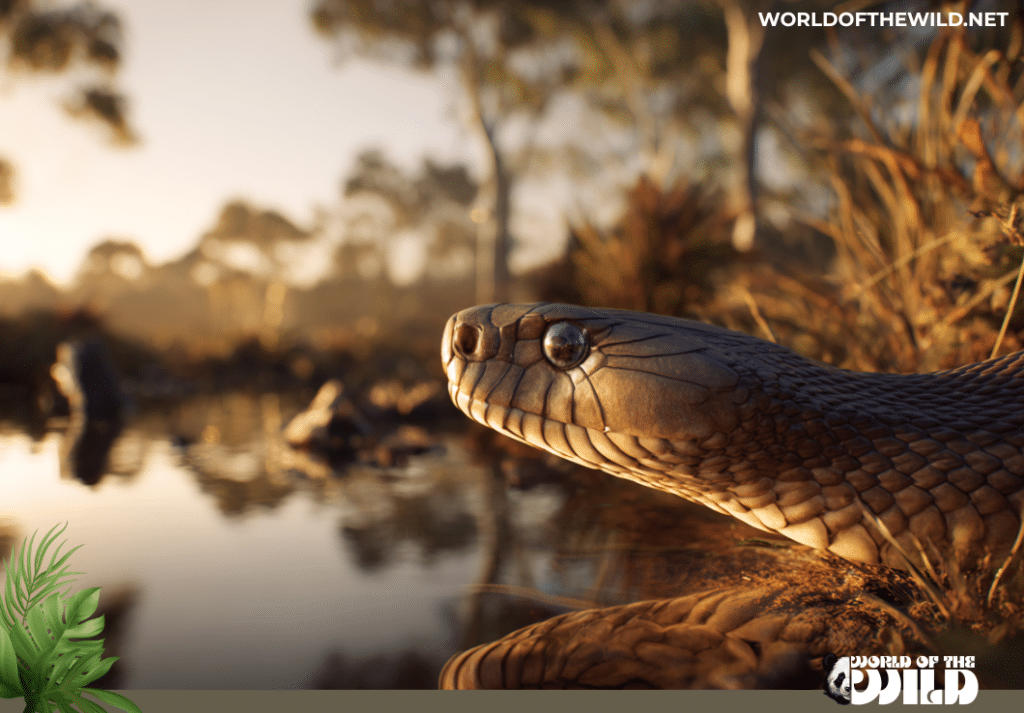
The Inland Taipan occupies one of the most forbidding landscapes on the planet. Its range is concentrated in the Channel Country of far southwestern Queensland and neighboring areas of South Australia and the Northern Territory — a vast, semi-arid to arid region centered around the floodplains and drainage systems of rivers like the Georgina, Diamantina, and Cooper Creek.
This is a land of extremes. The terrain consists primarily of gibber plains, black soil floodplains, and deeply cracked clay soils punctuated by low shrubland. Temperatures can exceed 120°F (49°C) in summer and drop below freezing on winter nights. Rainfall is scarce and wildly unpredictable. Much of the year, the landscape appears utterly lifeless.
The Inland Taipan thrives precisely because of — not in spite of — this harshness. The deep, labyrinthine cracks in the drying clay soil provide excellent insulation from temperature extremes and offer ready-made shelter from both predators and the elements. The same flood-drought cycles that define the region also drive boom-and-bust population cycles in native rodents, the snake’s primary prey, ensuring periodic food abundance when conditions align.
Human settlement in this region is minimal, which has historically afforded the Inland Taipan a degree of isolation and protection simply through geographic remoteness. The species is rarely encountered by anyone outside of dedicated herpetologists and the Indigenous communities whose lands overlap with its range.
Diet
The Inland Taipan is a specialist carnivore with a heavily focused diet. The vast majority of its nutritional intake comes from small to medium-sized rodents, particularly the long-haired rat (Rattus villosissimus) and the plains rat (Pseudomys australis) — both species that experience dramatic population explosions following the seasonal flooding of the Channel Country.
The snake is an active forager, using its highly sensitive forked tongue to pick up chemical signals in the environment and track prey through burrow systems and ground-level runways. Its venom is specifically adapted to work with devastating speed on warm-blooded prey: the neurotoxic components cause rapid paralysis while the hemotoxic elements disrupt blood clotting, together ensuring that even an agile, biting rat has little time to fight back or escape.
As mentioned, the Inland Taipan often holds onto prey after striking, delivering multiple bites rather than releasing and waiting. This is a calculated behavioral adaptation — in the close quarters of a burrow, a wounded rat still capable of movement could disappear into the tunnel network, or turn and bite the snake. By immobilizing prey almost immediately, the Inland Taipan minimizes both energy expenditure and the risk of injury.
Outside of rodents, there is some evidence that the Inland Taipan will opportunistically consume small lizards, particularly when rodent populations are in a crash phase between boom cycles. Water is obtained largely through prey consumption and possibly from the surface of damp soil following rains, though the species’ precise water acquisition strategies in the wild remain incompletely documented.
Predators and Threats
Given the extraordinary potency of its venom, the Inland Taipan has relatively few natural predators willing to attempt predation on an adult specimen. The most notable is the mulga snake (Pseudechis australis), another Australian elapid with a documented resistance to the venom of various other snakes, including taipans. Large monitor lizards, particularly the perentie (Varanus giganteus) — Australia’s largest lizard — are also known to occasionally prey on snakes including taipans, using sheer size and resistance to overwhelm the danger. Birds of prey, including wedge-tailed eagles and various hawks, may take juveniles.
From a conservation standpoint, the Inland Taipan faces a complex mix of threats, none of which are immediate enough to have triggered crisis-level concern, but several of which warrant ongoing attention:
Habitat degradation from overgrazing by livestock has altered the structure of clay-pan floodplain ecosystems significantly. When vegetation is stripped and soil is compacted by cattle, the deep cracking patterns the snake relies on for shelter are disrupted.
Invasive species pose a layered threat. Feral cats and foxes prey on the same native rodent species that the Inland Taipan depends upon, potentially compressing food availability during rodent bust cycles. The cane toad (Rhinella marina), a toxic invasive amphibian devastating to Australian predators, has not yet reached the core of the Inland Taipan’s range, but its continued westward spread is a subject of genuine concern among herpetologists.
Climate change is perhaps the most insidious long-term threat, as increasing temperatures and altered rainfall patterns in central Australia threaten to disrupt the flood-driven rodent boom cycles the snake has evolved around. A permanently altered hydrological regime in the Channel Country could decouple the predator-prey relationship the Inland Taipan depends on.
Reproduction and Life Cycle
The reproductive biology of the Inland Taipan remains one of the least-studied aspects of the species, owing to the difficulty of observing animals in such remote terrain. What is known comes largely from captive individuals and occasional field observations.
The Inland Taipan is oviparous (egg-laying), as are all members of the genus Oxyuranus. Mating typically occurs in late winter to early spring (July to September in the Southern Hemisphere), timed so that eggs hatch when warmer temperatures and peak rodent availability coincide. Males engage in combat rituals during the breeding season, intertwining their bodies and attempting to pin one another to the ground in a display of dominance — a behavior seen across many elapid species.
Females typically lay clutches of 12 to 20 eggs, depositing them in deep soil crevices or abandoned animal burrows where temperature and humidity are more stable. Incubation lasts approximately 60 to 70 days, and unlike some reptile species, female Inland Taipans do not appear to provide extended maternal care following laying; hatchlings are entirely independent from birth.
Hatchlings emerge at approximately 14 to 18 inches in length and are already equipped with fully functional venom glands containing potent venom from day one — there is no juvenile grace period where the snake is less dangerous. Growth is relatively rapid in the early years when food is plentiful, slowing considerably in adulthood.
In the wild, average lifespan estimates for the Inland Taipan are believed to fall in the range of 10 to 15 years, though captive individuals have reportedly lived beyond that. Sexual maturity is thought to be reached at approximately 3 to 4 years of age.
Population
The Inland Taipan is currently listed as Least Concern on the IUCN Red List of Threatened Species, which reflects the fact that no severe, documented population decline has been recorded and its remote habitat has largely shielded it from the worst of human encroachment.
However, precise global population figures are unknown, and the species is considered difficult to survey accurately. Its secretive nature, remote habitat, and the sheer vastness of its range make population estimation highly challenging. Herpetologists generally believe the population is stable but naturally sparse, consistent with the ecology of a top predator in an arid environment where prey populations fluctuate dramatically.
The species is considered endemic to Australia, with its entire global range falling within the country’s borders. It receives legal protection under Australian federal and state wildlife legislation, and much of its core habitat falls within or adjacent to protected areas and Indigenous land holdings, the latter of which have historically served as informal refuges.
Ongoing monitoring by Australian conservation agencies and university research groups continues, though the Inland Taipan receives considerably less research attention and public conservation advocacy than more charismatic megafauna. The lack of dramatic population crisis should not be confused with an absence of risk — the long-term effects of climate change, invasive species, and hydrological alteration in central Australia are poorly understood and could prove consequential before their impact becomes obvious.
Conclusion
The Inland Taipan stands as one of nature’s most astonishing achievements — a creature so perfectly adapted to its world that it has mastered the extremes of heat, aridity, and predatory efficiency that would challenge nearly any other animal. Its venom is the most potent of any land snake on Earth, yet it wears this power with extraordinary restraint, preferring retreat over confrontation and stillness over spectacle.
What the Inland Taipan offers us, if we are willing to look beyond fear, is a window into the profound ingenuity of evolution and the delicate interconnectedness of arid ecosystems. Its fate is tied to the fate of the cracking plains, the seasonal floods, the native rodents, and the climate patterns of central Australia — a web of relationships that humans are actively reshaping, often without fully understanding the consequences.
The Inland Taipan does not need our fear. It needs our attention, our respect, and our commitment to protecting the wild places it calls home. In a world where biodiversity is contracting at an alarming rate, this secretive, extraordinary animal reminds us that the most fascinating creatures are often the ones we never see — and the ones we stand to lose before we ever truly know them.
Quick Reference
| Scientific Name | Oxyuranus microlepidotus |
| Diet Type | Carnivore (primarily small rodents) |
| Size | 71–98 inches (approximately 5.9–8.2 feet) |
| Weight | 3.3–6.6 pounds |
| Region Found | Southwestern Queensland, South Australia, Northern Territory (Australia) |