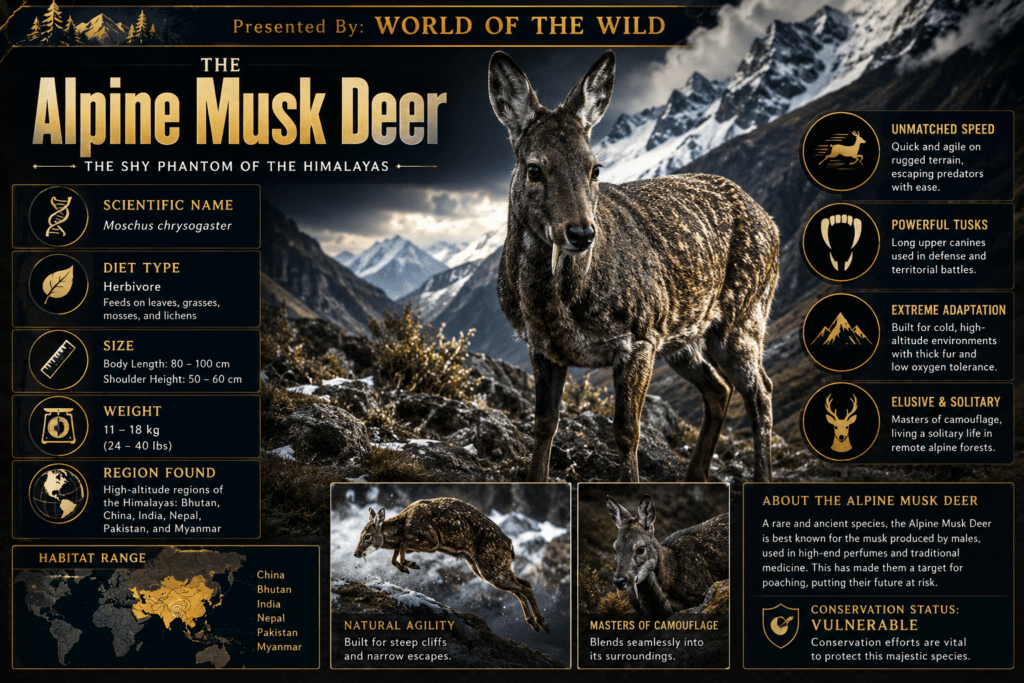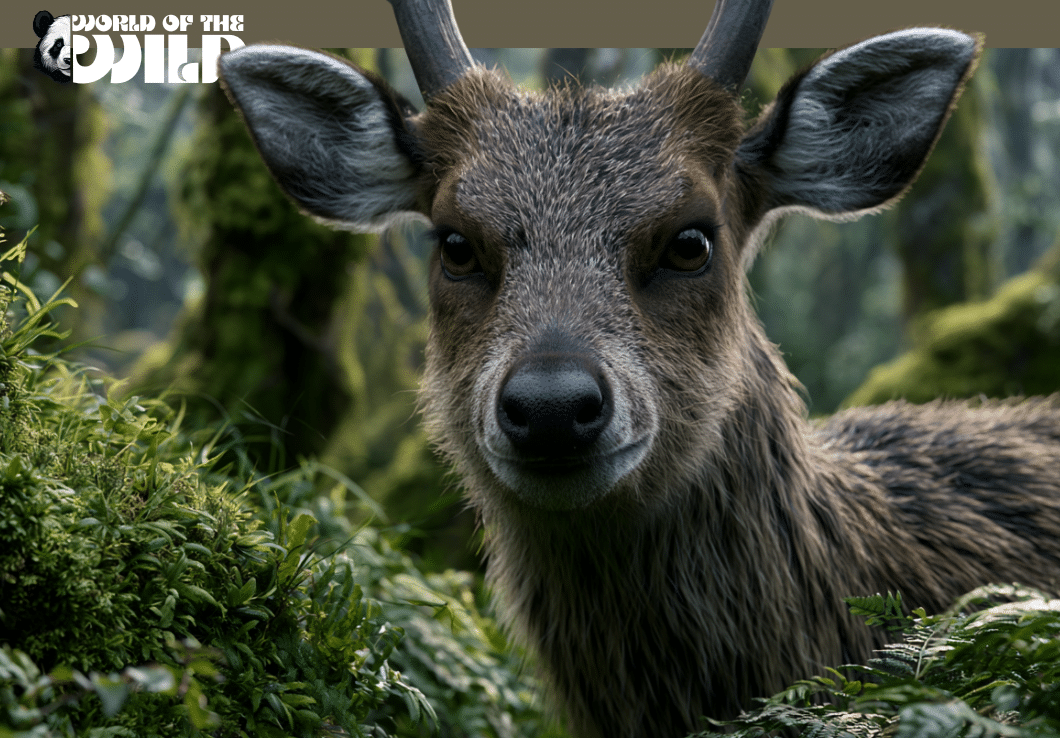

There are creatures in this world that seem almost too extraordinary to be real — animals that blur the line between myth and biology, between the ancient past and the fragile present. The Alpine Musk Deer is one of them. Haunting the steep, fog-draped slopes of the Himalayas and the mountain ranges of Central Asia, this small, secretive ungulate has survived for millions of years in some of the harshest terrain on Earth. It carries no antlers, poses no great threat, and makes almost no sound — yet it has been hunted to the edge of existence for a single gland hidden beneath its belly. That gland produces musk: one of the most coveted and expensive natural substances on the planet, ounce for ounce more valuable than gold. To understand the Alpine Musk Deer is to understand the extraordinary tension between nature’s ingenuity and humanity’s appetite — and why that tension must be resolved before it’s too late.
Facts
- The musk produced by male Alpine Musk Deer is worth approximately $45,000 per kilogram on the black market, making it one of the most expensive animal-derived substances in the world.
- Despite resembling a small deer, the Alpine Musk Deer is considered a primitive ungulate — it lacks antlers entirely and instead sports a pair of curved, sabre-like upper canine teeth that can extend several centimeters below the jaw.
- A single musk pod from an adult male contains only 25–30 grams of raw musk — meaning dozens of deer must be killed to produce even a modest commercial quantity.
- The Alpine Musk Deer has no facial scent glands, which are common in many deer species. Its primary mode of chemical communication is almost entirely through the musk pod.
- These deer are remarkably surefooteded mountaineers, capable of navigating near-vertical rocky terrain and cliffs with a dexterity that rivals mountain goats.
- The Alpine Musk Deer has a four-chambered stomach and is a true ruminant, yet its digestive anatomy is considered more ancestral than that of modern cervids (true deer).
- Males are solitary and fiercely territorial, using their fangs not for predation but for combat against rival males during the breeding season.
Species
The Alpine Musk Deer occupies a fascinating — and somewhat contentious — position in the tree of life. Its full taxonomic classification is as follows:
- Kingdom: Animalia
- Phylum: Chordata
- Class: Mammalia
- Order: Artiodactyla (even-toed ungulates)
- Family: Moschidae
- Genus: Moschus
- Species: Moschus chrysogaster
The family Moschidae stands apart from Cervidae (the true deer family) as a separate and ancient lineage. There are currently seven recognized species within the genus Moschus, and the boundaries between them have been debated and revised repeatedly as genetic tools have improved. The Alpine Musk Deer (Moschus chrysogaster) is sometimes treated as a species complex, with several populations previously grouped under this name now reclassified.
Closely related and frequently confused species include the Himalayan Musk Deer (Moschus leucogaster), which occupies overlapping terrain and shares many physical traits, and the Kashmir Musk Deer (Moschus cupreus), critically endangered and one of the rarest mammals in Asia. The Siberian Musk Deer (Moschus moschiferus) is the most widely studied member of the genus and ranges across boreal forests much farther north. Together, these species form a group of primitive, fanged ruminants unlike anything else walking the Earth today.
Appearance
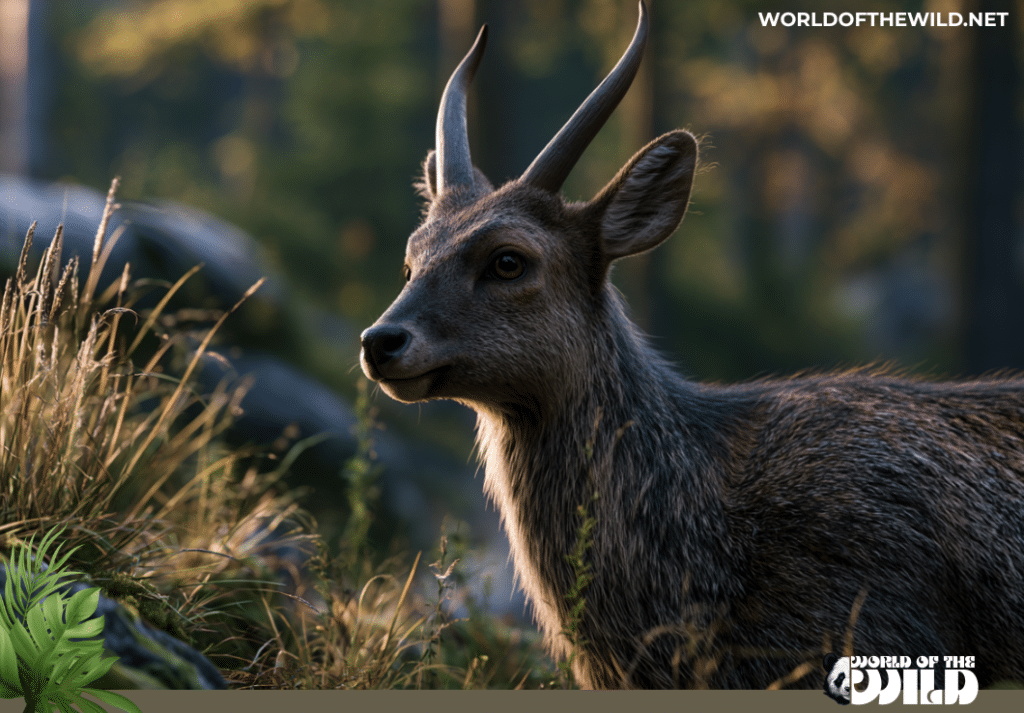
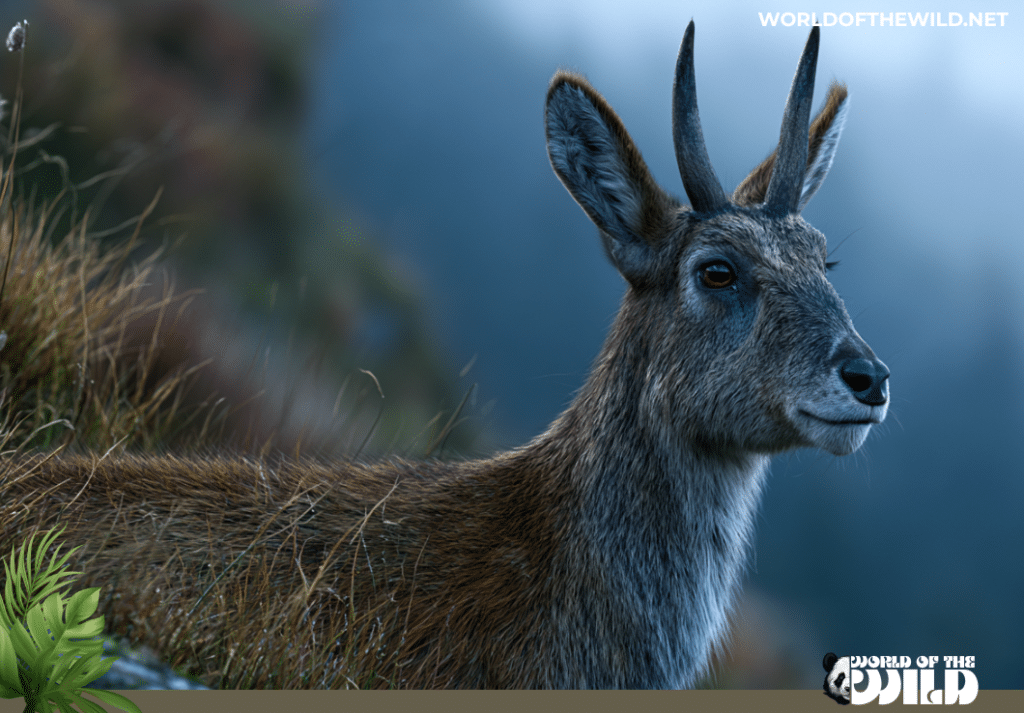
At first glance, the Alpine Musk Deer looks like a small, compact deer with an almost rabbit-like quality — hunched at the shoulders, with hind legs noticeably longer than the front, giving it a distinctly arched back and a slightly crouched posture. This unusual body plan is not accidental; it allows the animal to move with extraordinary agility across boulder fields and steep alpine slopes.
Adults stand roughly 20 to 24 inches (about 1.6 to 2 feet) at the shoulder and measure between 35 and 40 inches in body length. They are lightweight animals, typically weighing between 15 and 38 pounds, with males tending to be slightly heavier than females. The coat is coarse, dense, and hollow-shafted — an adaptation for insulation at high altitude — and ranges in color from dark brown to grayish-brown, often with a slightly golden or tawny wash across the flanks and underparts, which is reflected in the species name chrysogaster (meaning “golden belly” in Greek).
The most immediately striking feature of adult males is their elongated upper canine teeth, which curve downward and outward from the upper jaw, sometimes reaching 2.5 to 3 inches in length. These “fangs” give the animal an almost prehistoric appearance and are used exclusively in male-on-male combat. Both sexes lack antlers entirely. Males also possess the musk pod — a hairless, glandular sac located between the navel and the genitals — which swells and becomes functional as the animal matures. The eyes are large and dark, well-suited for detecting movement in dim mountain light, and the ears are long and mobile, constantly rotating to pick up the faintest sounds.
Behavior
The Alpine Musk Deer is a creature of shadow and stillness. Predominantly crepuscular — most active at dawn and dusk — it spends the heat of the day resting in dense shrubby cover or beneath rocky overhangs, emerging cautiously to feed during the cooler, dimmer hours when visibility favors a prey animal over its predators.
These deer are fundamentally solitary, with adult males maintaining exclusive territories that they mark obsessively using musk secretions deposited on rocks, tree bark, and vegetation. The size of a male’s territory can vary considerably depending on the quality of the habitat, but ranges of 150 to 300 acres have been documented. Female home ranges tend to be smaller and may overlap with those of other females and a dominant male.
Communication is primarily chemical. The musk gland plays a central role in signaling reproductive status, territorial boundaries, and individual identity. Unlike many ungulates, the Alpine Musk Deer rarely vocalizes — it is a nearly silent animal, which is itself an adaptation for avoiding detection in an exposed alpine environment. When alarmed, it may produce a faint hiss or a series of sharp sneezes, before bounding away with a remarkable burst of speed, using its powerful hind legs to propel itself across impossible terrain.
During winter, these deer demonstrate impressive behavioral thermoregulation, becoming less active and retreating to sheltered south-facing slopes where sunlight and reduced wind allow some relief from the brutal Himalayan cold. Their thick, hollow-shafted fur provides exceptional insulation, functioning much like the down jacket of the mammal world.
Evolution
The evolutionary story of the musk deer is one of the oldest in the ungulate world. The family Moschidae diverged from the ancestors of modern deer (Cervidae) during the Oligocene epoch, roughly 30 to 35 million years ago — making musk deer among the most ancient of living ruminants. Fossil evidence suggests that the earliest musk deer-like animals were widespread across Europe, Asia, and even North America, roaming forests and grasslands long before the Himalayas reached their current dramatic heights.
As the Tibetan Plateau rose through the Miocene and Pliocene epochs — a geological process that dramatically reshaped the climate of all of Asia — ancestral musk deer populations were pushed into increasingly isolated mountain refugia. This geographic fragmentation is thought to have driven the speciation we see today, with different populations adapting to distinct high-altitude environments and diverging into the seven recognized species of Moschus.
One of the most intriguing evolutionary features of the musk deer lineage is what it lacks. While most members of Cervidae evolved complex antler structures that are shed and regrown annually, musk deer retained the more ancestral trait of permanent upper canines for combat and display. This suggests that the evolutionary pressures on musk deer males diverged fundamentally from those acting on true deer — or that the ancestral canine simply proved so effective that there was no selective advantage in replacing it with antlers.
The musk gland itself is a remarkable evolutionary novelty with no true analog in other ungulates. Its precise evolutionary origin remains incompletely understood, but it is thought to have developed and intensified as a mate-attraction and territory-marking mechanism over millions of years of sexual selection, becoming progressively more complex and potent in the male lineage.
Habitat
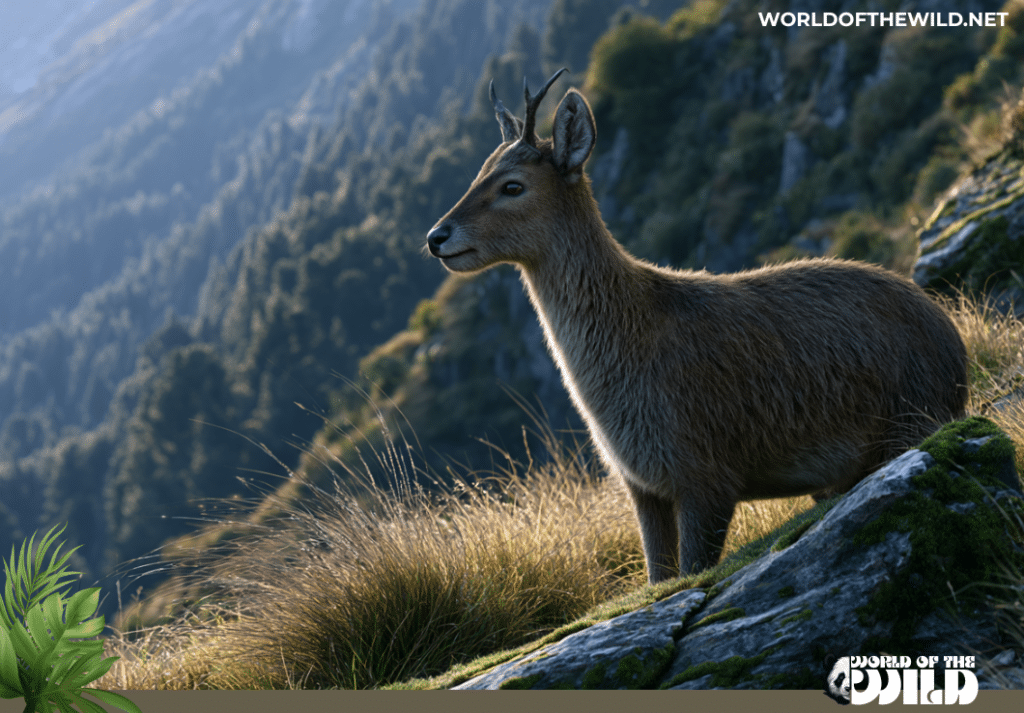
The Alpine Musk Deer is a specialist of extreme elevation. It inhabits the subalpine and alpine zones of the Himalayas, the Hindu Kush, the Karakoram, and associated mountain ranges across parts of China, Nepal, India, Pakistan, Afghanistan, Bhutan, and Myanmar. Within China, significant populations persist in the provinces of Sichuan, Yunnan, Qinghai, and Tibet.
Typically found at elevations between 8,200 and 14,800 feet (2,500 to 4,500 meters) above sea level, these deer favor terrain that most large mammals actively avoid: steep, rocky slopes covered with a mosaic of coniferous forest, rhododendron thickets, juniper scrub, and alpine meadows. They are particularly associated with birch and fir forests where dense ground cover provides concealment and rocky outcrops offer escape routes from predators.
Seasonally, Alpine Musk Deer make modest altitudinal migrations — moving to lower elevations in winter to avoid deep snow and access food, then ascending again in spring as the snowpack retreats and fresh vegetation flushes across the high slopes. These seasonal movements can cover only a few miles vertically but represent crucial shifts in resource availability.
The habitat of the Alpine Musk Deer is as beautiful as it is unforgiving. Winters are long, brutally cold, and snow-laden. Summers are brief, with intense solar radiation and dramatic temperature swings between day and night. Yet within these extremes, a rich and specialized community of plants and animals has co-evolved — and the Alpine Musk Deer is one of its most quietly remarkable members.
Diet
The Alpine Musk Deer is a herbivore and a selective browser, favoring quality over quantity in its dietary choices. Rather than grazing on grasses like many ungulates, it picks carefully through the vegetation of its alpine environment, seeking out the most nutritious available plant material.
Its diet varies considerably by season. During the warmer months, the deer feeds on forbs (broad-leaved herbaceous plants), tender grasses, leaves, and the young shoots of shrubs. As temperatures drop and plant diversity collapses under snow and frost, it shifts to lichens, mosses, twigs, dried grasses, and the needles of coniferous trees — a fibrous, low-nutrient diet that it sustains itself on through the long mountain winter.
Like other ruminants, the Alpine Musk Deer relies on a complex, multi-chambered digestive system populated by specialized gut microbes to ferment and extract nutrition from plant material that would be indigestible to many other mammals. It is a relatively slow feeder, spending significant time ruminating — re-chewing previously swallowed plant matter — while resting in sheltered spots during the day.
The species’ foraging strategy is inherently cautious. It feeds in short, alert bouts, frequently pausing to lift its head and scan its surroundings. This vigilance is not paranoia — it is survival.
Predators and Threats
Natural Predators
In its rugged mountain homeland, the Alpine Musk Deer faces several natural predators. The Snow Leopard (Panthera uncia) is its most significant natural enemy — an ambush predator supremely adapted to the same terrain the deer navigates. Wolves (Canis lupus) also prey on musk deer where their ranges overlap, pursuing them across open alpine terrain. Red foxes, golden eagles, and the occasional lynx may take fawns or weakened individuals. Against these predators, the deer’s primary defenses are its phenomenal agility, its cryptic coloration, its silent behavior, and its preference for the most rugged, difficult-to-navigate sections of its habitat.
Human-Caused Threats
Natural predation, however, pales next to the existential threat posed by humans. The Alpine Musk Deer faces a convergence of pressures that has driven it to steep population decline across much of its range.
Poaching is by far the most severe and immediate threat. The musk pod of a single adult male can fetch extraordinary prices on black markets supplying the traditional medicine industries of China, Japan, South Korea, and beyond. Musk has been used for centuries in perfumery and traditional medicine as a treatment for heart and nervous system conditions. Though synthetic musk compounds exist and are widely used by the fragrance industry today, demand for natural musk persists, and that demand continues to drive illegal hunting. Poachers typically use wire snares set indiscriminately across deer trails — a method that kills females and young animals just as readily as adult males, dramatically reducing reproductive potential across entire populations.
Habitat loss and degradation compound the poaching crisis. Expanding livestock grazing in alpine zones increases competition for limited forage and exposes deer to increased disturbance. Deforestation at lower elevations removes the winter habitat these deer depend on for survival during the harshest months. Climate change is altering snowpack dynamics, shifting vegetation zones upslope, and compressing the already limited high-altitude habitat into ever-smaller pockets. For a specialist of extreme elevation, there is no higher ground left to retreat to.
Reproduction and Life Cycle
The Alpine Musk Deer’s breeding season — known as the rut — occurs during winter, typically from November through January. This timing ensures that fawns will be born in late spring and early summer, when alpine vegetation is at its most nutritious and fawns have the maximum time to grow before the following winter.
During the rut, otherwise solitary males become intensely active, traveling widely through their territories and beyond in search of receptive females. Male competition can be fierce: rival males engage in close-quarters combat using their elongated canine teeth, slashing and stabbing at each other’s faces, necks, and flanks. These fights can cause significant wounds and occasionally prove fatal.
Females undergo a gestation period of approximately 185 to 195 days. Most commonly they give birth to one or two fawns, with twins being relatively frequent in healthy habitat. Newborns are tiny, spotted, and almost entirely helpless — a condition known as altricial. The mother hides her fawn or fawns in dense vegetation immediately after birth, returning periodically to nurse them while spending the rest of her time feeding at a distance, a strategy that minimizes the scent trail leading predators to the young.
Fawns begin nibbling on vegetation within a few weeks of birth but continue nursing for several months. They achieve near-adult size by autumn and reach sexual maturity at around 18 months. In the wild, Alpine Musk Deer typically live for 10 to 14 years, though in captivity, individuals have reached 20 years.
Population
The Alpine Musk Deer is currently listed as Vulnerable on the IUCN Red List, though some taxonomic authorities argue that parts of this species complex warrant a more severe Endangered classification when populations are assessed individually. The global population is extremely difficult to estimate with precision given the inaccessibility of the terrain and the animal’s secretive behavior, but current estimates suggest that fewer than 10,000 mature individuals may remain across the species’ entire range, with some regional populations — particularly in Afghanistan and parts of northern India — having declined to critically low numbers.
Population trends are broadly negative across most of the range. Decades of intensive poaching, combined with habitat degradation, have eliminated the Alpine Musk Deer from large portions of its historical distribution. China, which holds the largest remaining populations, has made significant legal and institutional efforts to protect the species through national reserves and anti-poaching enforcement, but illegal trade networks remain active and adaptive.
There are cautious reasons for hope. Several musk deer farms have been established in China in an attempt to harvest musk without killing animals through surgical extraction — reducing, in theory, the economic incentive for wild poaching. However, farmed musk has not yet successfully displaced wild-caught musk in all markets, and the welfare and conservation value of these operations remain debated. Conservation organizations continue to push for stronger international trade controls, better habitat protection, and community-based conservation programs that give local people economic alternatives to poaching.
Conclusion
The Alpine Musk Deer is a study in contradictions. It is one of the most ancient of living ungulates and one of the most imperiled. It is physically small but biologically extraordinary. It is hunted relentlessly for a substance that modern chemistry can now replicate, yet black-market demand for the real thing has never fully collapsed. It lives in some of the most remote and beautiful terrain on Earth — and that remoteness has not saved it.
What the story of the Alpine Musk Deer ultimately tells us is that no animal is too hidden, no habitat too extreme, and no creature too obscure to be placed beyond the reach of human exploitation. The forces that threaten this remarkable fanged deer — greed, tradition, indifference, and the slow grinding pressure of a warming climate — are the same forces threatening thousands of other species across the planet.
Protecting the Alpine Musk Deer requires action on multiple fronts: stronger enforcement of international wildlife trade laws, sustainable livelihoods for mountain communities that border deer habitat, continued investment in synthetic musk to undercut the economics of poaching, and aggressive climate mitigation to slow the loss of alpine ecosystems. These are not small asks. But the alternative — watching a 35-million-year-old lineage vanish within our lifetimes for a gland no larger than a lemon — is a moral failure we cannot afford to commit.
The Himalayas still hold secrets. Let’s make sure the Alpine Musk Deer remains one of them.
Quick Reference
| Scientific Name | Moschus chrysogaster |
| Diet Type | Herbivore (browser) |
| Size | 35–40 inches long; 20–24 inches tall at shoulder (approx. 1.7–3.3 ft body length) |
| Weight | 15–38 pounds |
| Region Found | Himalayas, Hindu Kush, Karakoram; China, Nepal, India, Pakistan, Bhutan, Afghanistan, Myanmar |