
Table of Contents
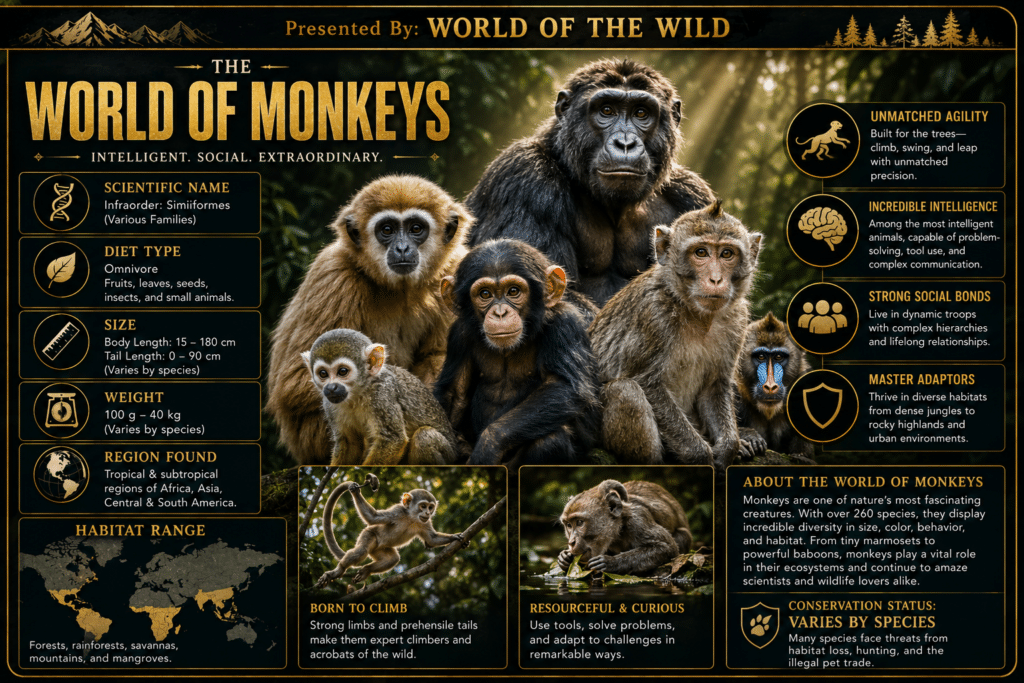
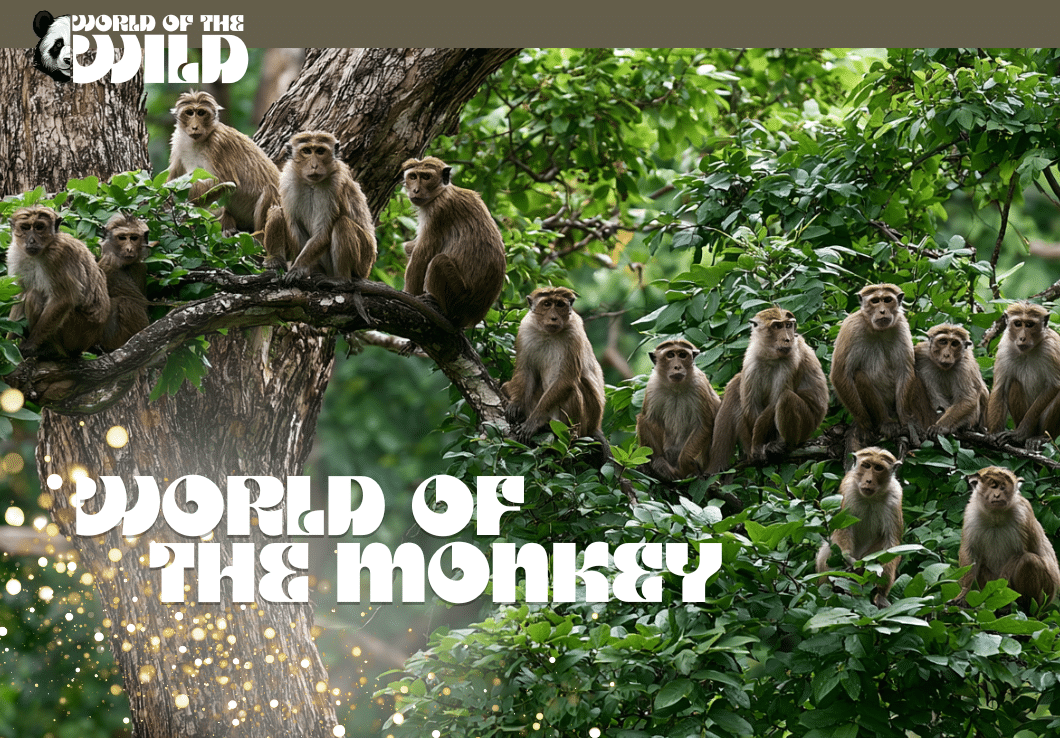
They swing through forest canopies with breathtaking agility. They gather in boisterous troops that scheme, squabble, and care for one another with startling tenderness. They peel fruit with nimble fingers, groom their companions with patient devotion, and occasionally pause to stare back at a human observer with an expression that feels uncannily familiar. Monkeys, central figures in The World of Monkeys, are among the most captivating animals on Earth — and among the most misunderstood.
When most people think of monkeys, they picture something generic: a small, furry primate dangling from a jungle vine. But the reality is far richer. There are more than 260 recognised species of monkey alive today, each shaped by millions of years of evolution into a creature finely tuned for its particular corner of the world. From the frigid mountain forests of Japan to the scorching savannahs of sub-Saharan Africa, from the cloud forests of the Andes to the steaming mangrove swamps of Southeast Asia, monkeys have made themselves at home in some of the planet’s most demanding environments.
This is the story of who they are, where they came from, how they live, and why they matter.
In this exploration, we delve into The World of Monkeys, examining their unique characteristics and behaviors.
Origins: A Deep Evolutionary Story
To understand monkeys, we must travel back roughly 60 to 65 million years, to the turbulent aftermath of the mass extinction event that ended the reign of the non-avian dinosaurs. With ecological niches suddenly vacant, the small, tree-dwelling mammals that would eventually give rise to primates began to diversify rapidly. These earliest primates were diminutive, insect-eating creatures, not so different in appearance from today’s tree shrews. But they possessed traits that would prove decisive: forward-facing eyes providing depth perception, grasping hands capable of manipulating objects, and relatively large brains compared to their body size.
Over tens of millions of years, this lineage split and diversified. One branch eventually gave rise to the prosimians — the lemurs, lorises, and galagos. Another branch produced the group known as the simians, or higher primates, which today includes monkeys, apes, and humans.
The story of monkeys specifically involves one of the most remarkable events in evolutionary history: a transoceanic journey. About 35 to 40 million years ago, the ancestors of today’s New World monkeys somehow crossed the Atlantic Ocean from Africa to South America. At that time, the Atlantic was considerably narrower than it is today, though still a formidable barrier. Scientists believe these ancestral monkeys may have rafted across on natural mats of vegetation — uprooted islands of forest debris carried westward by equatorial currents. It sounds implausible, but the fossil evidence supports it: the earliest known South American primates appear in the fossil record around 35 to 38 million years ago, and they share unmistakable ancestry with African primates of the same period.
Once in South America, these colonists diversified enormously, eventually producing the extraordinary range of New World monkeys we know today. Meanwhile, the monkey lineages that remained in Africa and Asia continued on their own evolutionary path, giving rise to the Old World monkeys — a group that would eventually spread from West Africa all the way to Japan.
The two major groups — Old World and New World monkeys — are formally distinguished as separate superfamilies within the primate order: Catarrhini (Old World) and Platyrrhini (New World). They share a common ancestor, but they have been evolving independently for tens of millions of years, and the differences between them are more than skin-deep.
New World vs. Old World: Two Primate Empires
The distinction between New World monkeys (found in the Americas) and Old World monkeys (found in Africa and Asia) is one of the most fundamental in primatology.
New World monkeys belong to the parvorder Platyrrhini, meaning “flat-nosed” — a reference to their broad, widely separated nostrils, which open to the sides rather than downward. They are found exclusively in Central and South America, inhabiting tropical and subtropical forests from southern Mexico to Argentina. One of their most celebrated adaptations is the prehensile tail, possessed by several families within this group. A prehensile tail functions essentially as a fifth limb, capable of gripping branches with muscular strength and providing a secure anchor while the monkey uses all four limbs to feed or groom. Not all New World monkeys have prehensile tails — marmosets and tamarins, for example, do not — but in species like spider monkeys and howler monkeys, the tail is a remarkable tool that greatly expands their range of movement through the forest canopy.
Old World monkeys belong to the family Cercopithecidae and are found across Africa and Asia. They are distinguished by their downward-pointing, close-set nostrils, and none of them possess truly prehensile tails. However, Old World monkeys have their own suite of remarkable adaptations. Many species have developed cheek pouches — internal storage chambers in which they can stuff large quantities of food to be digested later in a safer location, away from predators or competitors. Old World monkeys also tend to have more complex social structures, with many species living in large, multi-male, multi-female troops governed by elaborate dominance hierarchies.
It is worth noting what monkeys are not. Apes — chimpanzees, gorillas, orangutans, gibbons, and humans — are not monkeys. Apes are a separate group within the primate order, more closely related to one another than to any monkey. The most reliable anatomical distinction is the tail: monkeys (with a few exceptions) have tails, while apes do not. Apes also tend to have larger bodies, larger brains relative to body size, and more flexible shoulders adapted for hanging and brachiation.
Where Monkeys Live
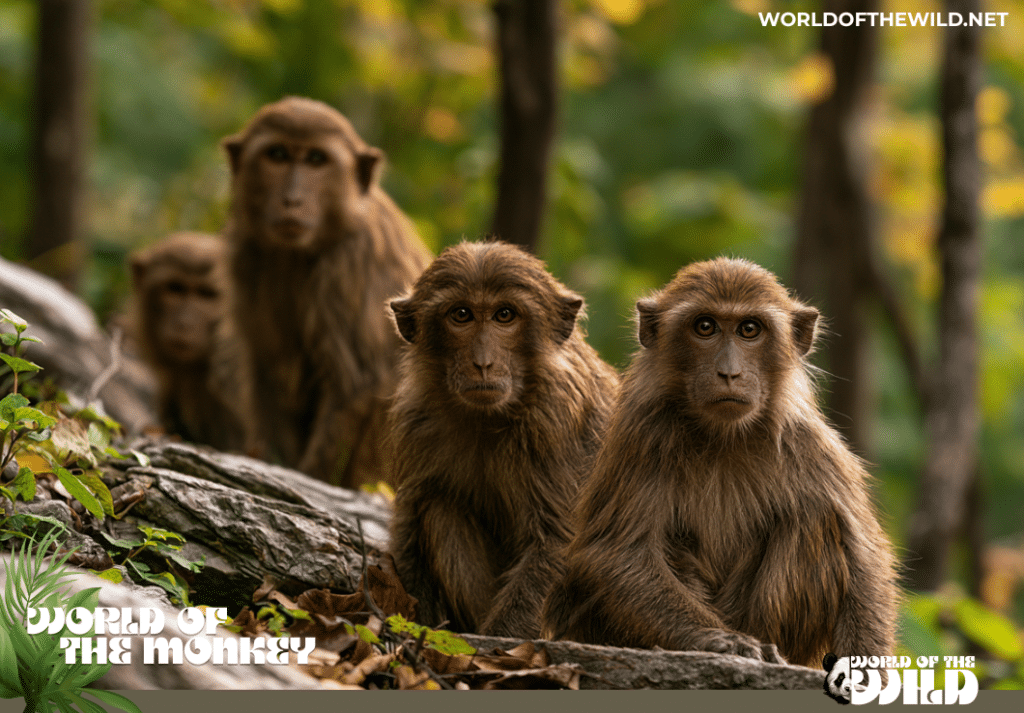
Monkeys are creatures of the tropics and subtropics, and the vast majority of species are tied to forested environments — but the specifics vary enormously.
Tropical rainforests are the heartland of monkey diversity. The Amazon Basin alone hosts an extraordinary concentration of species, with dozens of monkey types occupying different vertical layers of the forest. Spider monkeys and woolly monkeys patrol the highest canopy, while capuchins and squirrel monkeys operate in the middle levels, and smaller species like marmosets cling to the understory and lower trunks. This vertical partitioning of habitat allows many species to coexist in the same forest by exploiting different resources at different heights.
In Africa, the rainforests of the Congo Basin serve a similar role, sheltering an abundance of colobus monkeys, mangabeys, guenons, and forest-dwelling baboons. But African monkeys have also pushed into more open environments. Baboons in particular are among the most ecologically flexible primates on the planet, thriving in savannah, scrubland, semi-desert, and even the margins of human settlements. Geladas have adapted to the high-altitude grasslands of the Ethiopian highlands, spending their days grazing on grass — an extremely unusual diet for a primate. Hamadryas baboons have successfully colonised the rocky desert margins of the Horn of Africa and the Arabian Peninsula.
In Asia, macaques are the ecological equivalents of baboons in terms of their flexibility and range. The rhesus macaque has spread from Afghanistan across South and Southeast Asia, thriving in forests, agricultural landscapes, and cities alike. The Japanese macaque, or snow monkey, is the northernmost-living primate apart from humans, enduring winters in which temperatures regularly drop well below freezing in the mountain forests of Honshu. These monkeys are famous for warming themselves in natural hot springs — a behaviour first observed in the 1960s and now iconic in wildlife photography.
Several monkey species have also adapted to mangrove forests and coastal habitats. The proboscis monkey of Borneo is a striking example, inhabiting mangrove swamps and riverine forests along the coasts of the island. Proboscis monkeys are strong swimmers and will readily leap into rivers to escape predators or cross waterways, a capability unusual among primates.
How Monkeys Live: Society, Intelligence, and Survival
Social Life
With very few exceptions, monkeys are profoundly social animals. The solitary primate is a rarity; the vast majority of monkey species spend their entire lives embedded within complex social groups, and their psychological wellbeing depends on it. Being part of a group confers enormous advantages: more eyes to spot predators, greater collective knowledge of food sources, cooperative defence of territory, and shared care of young.
The structure of these groups varies widely. Some species, like marmosets and tamarins, live in small family groups of fewer than a dozen individuals, with a breeding pair at the core and older offspring helping to raise younger siblings — a system of cooperative breeding. Others, like baboons and macaques, live in much larger troops of several dozen to several hundred individuals, with complex, multi-generational dominance hierarchies.
Dominance — the social ordering of individuals by rank — is a central feature of many monkey societies. In species with linear dominance hierarchies, high-ranking individuals enjoy preferential access to food, mates, and resting sites, while lower-ranking animals defer to their superiors. But dominance is rarely simply a matter of physical strength. Social relationships, alliances, and even political maneuvering play a crucial role. A low-ranking male baboon can improve his position by forming coalitions with other males, while a dominant female macaque derives much of her status from the rank of her mother — a remarkable inheritance of social position.
Grooming is the social glue that holds these groups together. When one monkey grooms another — carefully parting the fur to remove parasites, dead skin, and debris — it is doing far more than providing a hygiene service. Grooming is a form of social bonding, a currency of alliance, and a signal of trust. High-ranking individuals receive more grooming than they give; close allies spend long periods grooming each other. Studies of baboon and macaque societies have shown that females with the largest and most stable social networks live longer, raise more surviving offspring, and weather adversity more successfully than their more socially isolated counterparts.
Intelligence and Problem-Solving
Monkeys are significantly more intelligent than their popular portrayal often suggests. They are capable of learning from observation, using simple tools, understanding cause and effect, and — in some species — demonstrating a rudimentary grasp of numerical concepts.
Capuchin monkeys, the stocky, robust primates of South American forests, are frequently cited as the most cognitively sophisticated of all New World monkeys. In the wild, capuchins have been observed using stones as hammers and anvils to crack open hard-shelled nuts — a behaviour that requires not just physical dexterity but the ability to select appropriate tools, transport them to suitable anvil sites, and strike with sufficient force and accuracy. This tool use is not instinctive but learned socially, with young capuchins watching adults for months or even years before successfully acquiring the technique.
Macaques, too, have demonstrated impressive cognitive flexibility. Japanese macaques at Koshima Island famously learned to wash sweet potatoes in the sea before eating them — a practice that spread through the troop by social learning and persists in the population today. In laboratory settings, various macaque species have shown the ability to categorise objects, understand numerical relationships, and even grasp certain abstract rules.
Some monkey species communicate with considerable sophistication. Vervet monkeys, studied extensively in the savannahs of East Africa, produce distinct alarm calls for different predator types: a specific call for eagles causes the troop to look upward and seek cover in undergrowth; a different call for snakes causes them to stand on their hind legs and scan the ground; yet another call for leopards sends them scrambling into the trees. This referential signalling — using different sounds to convey different specific meanings — is one of the closest analogues in the animal kingdom to the semantic function of human language.
Diet and Foraging
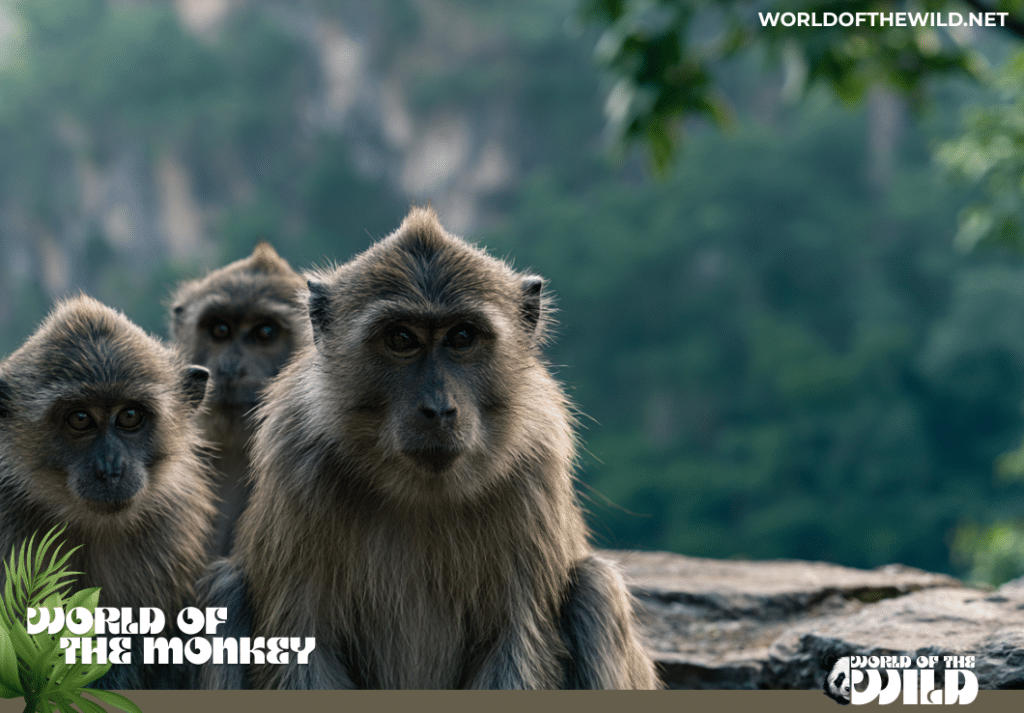
The dietary range across monkey species is impressive. Most monkeys are omnivores to some degree, combining plant material with animal protein, but the balance varies enormously between species and environments.
Colobine monkeys — a subfamily of Old World monkeys that includes the colobus monkeys of Africa and the langurs of Asia — are specialised folivores, meaning they subsist primarily on leaves. Leaves are an abundant resource but a poor one: they are low in energy and often packed with toxic compounds the plant produces to deter herbivores. Colobines have evolved an extraordinary adaptation to cope with this: a complex, multi-chambered stomach colonised by specialised bacteria capable of fermenting cellulose and neutralising plant toxins. This foregut fermentation system is functionally analogous to the stomach of a cow — a remarkable example of convergent evolution between a primate and a ruminant.
At the other extreme, marmosets and tamarins have evolved highly specialised dentition for gouging into tree bark to access gum — the sugary sap that flows beneath. Several marmoset species are obligate gummivores, meaning gum constitutes the majority of their diet, supplemented by insects and fruit when available.
Between these extremes lies a vast range of dietary strategies. Baboons are famously catholic in their tastes, consuming grass, roots, tubers, fruit, invertebrates, bird eggs, small mammals, and occasionally larger prey hunted cooperatively. Spider monkeys are primarily frugivores, spending most of their time seeking out ripe fruit across enormous home ranges. Howler monkeys, by contrast, survive largely on leaves and fruit, their slow metabolism and energy-conserving lifestyle allowing them to subsist on relatively poor-quality forage.
Reproduction and Family Life
Reproduction in monkeys is characterised by relatively slow life histories compared to other mammals of similar size. Gestation periods are long — typically four to seven months depending on species — and litter sizes are small, usually one infant at a time (though marmosets and tamarins frequently give birth to twins). Young monkeys are born in an advanced state of development relative to many mammals, but they remain dependent on their mothers for extended periods.
Infant care is intensive in most species. A mother monkey nurses her infant for months or even years, carries it everywhere, and provides constant protection from predators and aggressive group members. In many species, “allomothering” — the care of infants by individuals other than the biological mother — is widespread. Aunts, older siblings, and even unrelated females may carry, groom, and comfort infants, providing valuable experience for young females who will eventually raise their own offspring.
In species like marmosets and tamarins, paternal care is unusually prominent. Males in these small-bodied New World monkeys carry infants for the majority of the time between nursing bouts, effectively doing the heavy lifting of transport so the mother can devote her energy to milk production. This cooperative breeding system, in which the whole family group contributes to raising young, allows these small primates to raise offspring far more successfully than a single mother could manage alone.
The Major Groups: A Tour of Monkey Diversity
Marmosets and Tamarins (Family Callitrichidae)
The callitrichids are the smallest monkeys in the world, and some of the most charming. The pygmy marmoset (Cebuella pygmaea), native to the western Amazon Basin, is the smallest monkey of all, weighing as little as 100 grams — barely more than an apple. Despite their diminutive size, pygmy marmosets are capable of rotating their heads 180 degrees to scan for predators, and they communicate with a repertoire of high-pitched chirps, trills, and squeaks, many at frequencies beyond the range of human hearing.
Tamarins, slightly larger than marmosets, are among the most visually striking primates on Earth. The emperor tamarin sports a magnificent white moustache that famously led to the species being named in ironic homage to the German Kaiser Wilhelm II. The golden lion tamarin, restricted to a tiny fragment of Atlantic Forest in Brazil, blazes with a brilliant orange-gold coat and a leonine mane. Tragically, golden lion tamarins were pushed to the brink of extinction by habitat destruction in the twentieth century, with populations falling to perhaps 200 individuals in the wild by the 1970s. Intensive conservation efforts — including captive breeding programmes and reintroductions — have since brought the wild population to more than 3,500 animals, making it one of the most celebrated success stories in primate conservation.
Capuchin Monkeys (Family Cebidae, Genus Cebus and Sapajus)
Capuchins are the quintessential monkeys of Central and South American forests — compact, robust, and fiercely intelligent. Named for their colouring, which reminded early European colonisers of the brown habits of Capuchin friars, these monkeys have an outsized reputation for cleverness that is entirely deserved. They are among the very few non-human primates known to use tools habitually in the wild.
Bearded capuchins (Sapajus libidinosus) in the dry forests of northeastern Brazil have developed a sophisticated stone-tool technology for processing hard foods. Using stones weighing up to a kilogram — nearly a quarter of the monkey’s own body weight — they hammer open palm nuts, seeds, and dried fruits. The monkeys select specific stones for specific tasks, transport preferred tools over considerable distances, and maintain recognised anvil sites that are used repeatedly across generations. Archaeologists studying these sites have found stone deposits thousands of years old, demonstrating that capuchin tool use is an ancient cultural tradition.
Howler Monkeys (Genus Alouatta)
Howler monkeys hold the distinction of being among the loudest land animals on Earth. The roar of a troop of mantled howlers (Alouatta palliata) at dawn can carry for three kilometres or more through forest, a biological feat made possible by an enlarged hyoid bone that acts as a resonating chamber, amplifying vocalisations into a sound somewhere between a lion’s roar and the moan of wind through a storm drain. These dawn choruses serve to advertise the troop’s location and establish territorial boundaries without the energetic cost and risk of physical confrontation.
Howler monkeys are among the most folivorous of the New World monkeys, spending much of their time resting to conserve the limited energy they extract from their leafy diet. They move slowly and deliberately through the canopy, covering small home ranges, and spend up to 70 percent of their day inactive — a lifestyle that, while it might appear sluggish, is a finely calibrated energy management strategy.
Spider Monkeys (Genus Ateles)
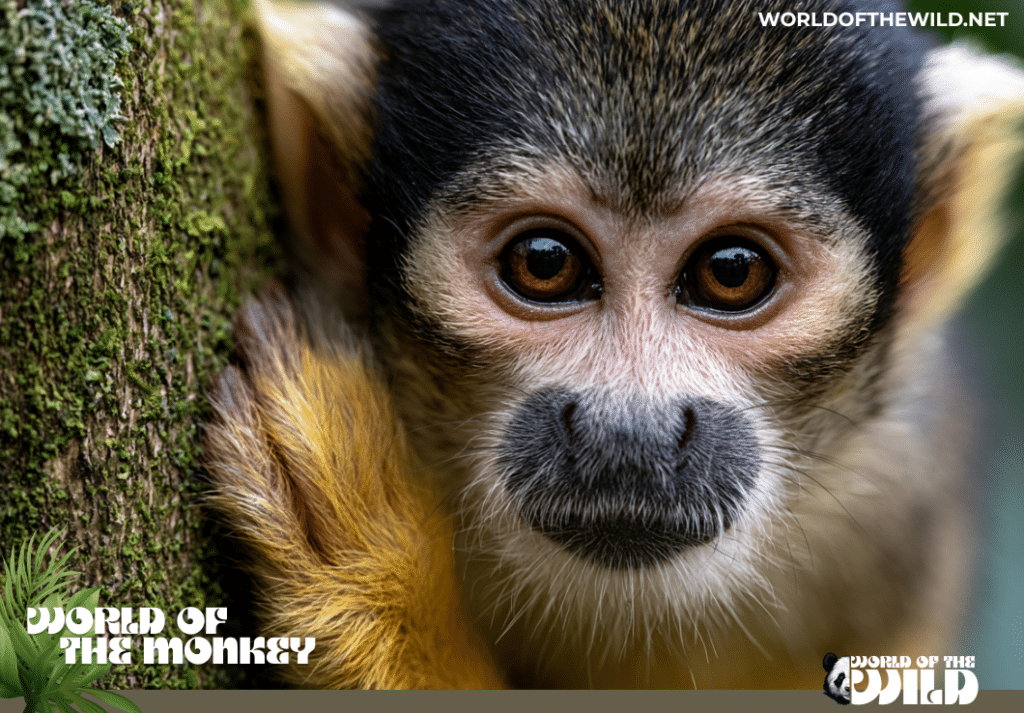
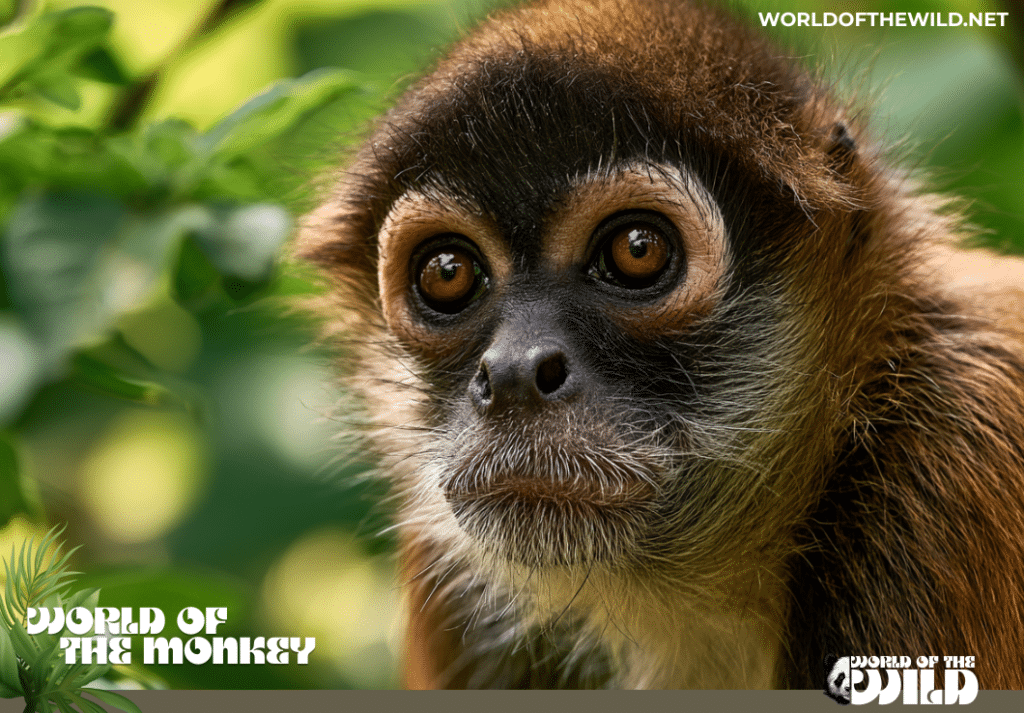
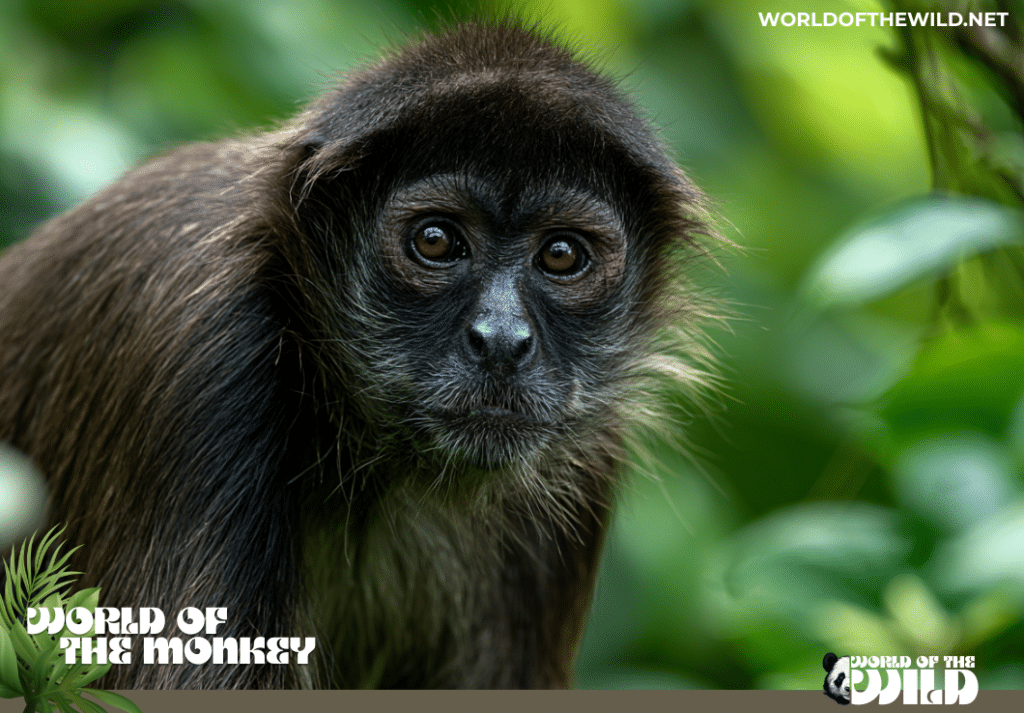
In stark contrast to the sedentary howler, spider monkeys are the acrobatic athletes of the New World primate world. Long-limbed, hook-handed (they have reduced or vestigial thumbs that allow the hand to function as an efficient hook), and equipped with a powerful prehensile tail, spider monkeys move through the high canopy with a flowing, almost effortless grace. They are brachiators — swinging beneath branches in a movement pattern more commonly associated with apes than with monkeys — and can travel rapidly across large areas of forest in search of ripe fruit.
Spider monkeys live in large communities of up to 30 or more individuals, but these communities rarely travel together as a cohesive unit. Instead, they operate in a fluid “fission-fusion” social system, in which community members come together and split apart in smaller subgroups on a daily basis, depending on the distribution of food resources. This flexibility — gathering when fruit is abundant, dispersing when it is scarce — is a sophisticated adaptive response to the patchy distribution of resources in tropical forests.
Spider monkeys are unfortunately among the primates most vulnerable to hunting and habitat loss. Their slow reproductive rate, large body size, and dependence on high-quality forest make them poor survivors in disturbed landscapes, and they are among the first species to disappear when forests are fragmented or subject to hunting pressure.
Old World Monkeys: Baboons (Genus Papio)
Baboons are arguably the most behaviourally complex of all monkeys, and among the most intensively studied wild animals in the world. Long-term research projects — some spanning more than four decades — at sites like Amboseli in Kenya and the Okavango in Botswana have revealed a social world of astonishing richness and subtlety.
There are six living species of baboon, ranging across sub-Saharan Africa and into the Arabian Peninsula. All are large, ground-dwelling primates with dog-like muzzles, powerful bodies, and highly expressive faces. Males are significantly larger than females — in olive baboons (Papio anubis), the sexual dimorphism is such that males can be twice the weight of females — and male baboons possess formidable canine teeth, the largest relative to body size of any primate.
Baboon societies are organised around a core of related females who remain in their birth group for life, while males transfer between troops at sexual maturity. Female social rank is largely inherited matrilineally — daughters of high-ranking mothers tend to rank just below their mothers — and these female hierarchies are stable over long periods. The benefits of high rank are measurable: high-ranking female baboons have lower stress hormone levels, better nutritional condition, higher infant survival rates, and longer lifespans than low-ranking females.
Olive baboons have been observed forming remarkable long-term friendships between individual males and females — relationships characterised by regular grooming, proximity, and mutual support — that persist independent of mating status. Male “friends” have been documented defending females and their infants from harassment by other males, and infants with close male friends have significantly higher survival rates, even when the male is unlikely to be the biological father.
Geladas (Genus Theropithecus)
The gelada is an extraordinary monkey, and one of the most ecologically unusual primates alive. Found only in the highlands of Ethiopia at elevations above 1,400 metres, geladas are the world’s most terrestrial primates apart from humans, spending almost their entire lives on the ground. They are also the only primarily graminivorous primates — animals that subsist predominantly on grass.
Geladas have specialised hands with short, powerful fingers, adapted for plucking grass blades and rhizomes with great efficiency. They can sit in a single spot and harvest the grass around them in a feeding radius, shuffling forward on their haunches when the immediate area is depleted — a foraging technique that requires minimal energy expenditure and allows them to process enormous quantities of low-quality food.
Geladas live in a multi-level social system of remarkable complexity. The basic unit is the “one-male unit” — a harem-like group consisting of a single breeding male, several females, and their offspring. Multiple one-male units aggregate into “bands” that travel and forage together, and multiple bands congregate in enormous sleeping herds of several hundred animals on cliff faces at night, where they are safe from predators. This nested, multi-level society — one-male unit within band within herd — is one of the most complex social structures known in any non-human primate.
Macaques (Genus Macaca)
Macaques are the most geographically widespread non-human primates on Earth, with species distributed from Morocco in the west to Japan in the east, and from the Himalayan foothills in the north to the tropical rainforests of Indonesia in the south. With 23 recognised species, macaques represent one of the most successful primate radiations of the modern era.
The rhesus macaque (Macaca mulatta) deserves special mention for its outsized role in human history. Rhesus macaques have been used extensively in biomedical research, contributing to the development of the polio vaccine, the understanding of the Rh blood factor (named for the species), and countless other medical advances. They are also the first primates to have been sent to space, enduring early American and Soviet space programmes before orbital flights became possible. These contributions have come at considerable cost to the animals themselves, and the ethics of primate research remain a subject of intense debate.
The Barbary macaque (Macaca sylvanus) is the only macaque found outside Asia, living in the mountain forests of Morocco and Algeria, as well as a famous introduced colony on the Rock of Gibraltar — the only wild primates in Europe. The snow monkey or Japanese macaque (Macaca fuscata) is perhaps the most iconic, its red face and thick, shaggy grey coat as recognisable as any primate image outside of the great apes. Japanese macaques have been studied continuously since the 1950s and have produced a wealth of data on social learning, cultural transmission, and behavioural innovation in non-human primates.
Colobus Monkeys (Subfamilies Colobinae, Africa)
The black-and-white colobus monkeys of Africa are among the most visually spectacular of all primates, their jet-black bodies fringed with sweeping capes of white hair that billow dramatically as they leap between trees. There are five species of black-and-white colobus, all of them arboreal folivores restricted to African forests. Their reduced thumbs — colobus means “mutilated” in Greek, a reference to the vestigial thumb — allow their hands to function as efficient hooks for moving rapidly through the canopy.
The red colobus monkeys, a more diverse group with approximately 18 species, are among the most threatened primates in Africa. Several species are critically endangered due to hunting and habitat loss, and at least one subspecies — Miss Waldron’s red colobus of West Africa — is believed to have gone extinct in the early twenty-first century, making it one of the few primates to have been lost to extinction in recent decades.
Langurs and Leaf Monkeys (Asia)
The Asian counterparts of the African colobines are the langurs and leaf monkeys — a diverse group of around 60 species distributed across South and Southeast Asia. The grey langur or Hanuman langur (Semnopithecus entellus) is the most widespread and, in India, the most culturally significant monkey in the world. Considered sacred in the Hindu tradition as the earthly embodiment of the deity Hanuman, Hanuman langurs live in close proximity to human settlements across the subcontinent, raiding crops and gardens with relative impunity, protected by religious reverence.
The proboscis monkey (Nasalis larvatus) of Borneo is perhaps the most immediately recognisable of all Asian primates by virtue of its extraordinary nose. In adult males, the nose can grow to such an extraordinary length that it droops below the chin and must be pushed aside before the animal can eat. The nose appears to function as a resonating chamber that amplifies the male’s calls, and females appear to preferentially choose males with larger noses — making it one of the most remarkable examples of sexual selection in the primate world.
Threats and Conservation: The Monkey Crisis
The diversity and adaptability of monkeys have served them well over millions of years of evolutionary history. But no adaptation has prepared them for the pace and scale of change that the twenty-first century has brought.
Habitat loss is the primary driver of monkey population declines worldwide. Tropical forests — the heartland of primate diversity — are being destroyed at rates that, while slower than the catastrophic deforestation of previous decades, remain deeply alarming. The Atlantic Forest of Brazil, once one of the world’s most biodiverse ecosystems, has been reduced to less than 12 percent of its original extent, with devastating consequences for the numerous primate species that depend on it. The rainforests of Borneo and Sumatra are being converted to oil palm plantations and timber concessions at extraordinary speed, driving proboscis monkeys, pig-tailed macaques, and numerous other species into ever-shrinking forest fragments.
Hunting remains a severe threat throughout much of Africa and Southeast Asia, where monkey meat — often referred to as “bushmeat” — is a significant source of protein and an increasingly commercialised commodity. As human populations in forest regions have grown, and as access to forest interiors has improved through logging roads, hunting pressure on primates has intensified dramatically. Red colobus monkeys are particularly vulnerable because they tend to be inquisitive rather than shy of hunters, making them easy targets.
The illegal wildlife trade poses additional pressures on many species. Young monkeys — particularly small, attractive species like marmosets, tamarins, and squirrel monkeys — are captured for the international pet trade in significant numbers. The capture of a single infant typically involves the killing of the mother and often other troop members who attempt to defend her, meaning that the trade in live animals also drives population declines through adult mortality.
Disease is an emerging threat. As humans increasingly encroach on primate habitats, the opportunities for disease transmission between species multiply. Many viruses that cause serious illness in humans — including various strains of Ebola — appear to circulate in primate populations, and epidemic events have caused significant mortality in chimpanzee and gorilla populations in Central Africa. Conversely, diseases introduced by humans, including respiratory viruses, can devastate primate populations that have no immunity to them.
Despite these challenges, conservation efforts are making a difference in some contexts. The golden lion tamarin recovery story remains an inspiration. The black lion tamarin, the muriqui, and several langur species have benefited from targeted conservation programmes combining habitat protection, captive breeding, and community engagement. In places where local communities have been brought genuinely into conservation efforts — given economic stakes in the survival of wildlife and the forests that sustain them — both human wellbeing and biodiversity have improved.
Monkeys and Humans: A Relationship Across Time
The relationship between humans and monkeys is ancient, complex, and profoundly ambivalent. Primatological research over the past century has fundamentally reshaped our understanding of animal cognition, social behaviour, and the deep evolutionary continuity between human and non-human minds. Watching a capuchin carefully select a stone, test its weight, and strike a nut with methodical precision forces a reckoning with what it means to be a thinking, intentional being. Observing the grief of a baboon mother carrying the body of her deceased infant, or the careful social negotiation of rival macaque males seeking alliance, it becomes impossible to dismiss these animals as mere automatons operating on instinct alone.
Across many human cultures, monkeys have occupied a special place in mythology, religion, and art. The Hindu monkey deity Hanuman is one of the most beloved figures in South Asian religious tradition, representing devotion, strength, and loyalty. In Chinese mythology and literature, the Monkey King Sun Wukong — the protagonist of the sixteenth-century novel Journey to the West — embodies trickery, irreverence, and the transformative power of the enlightened mind. In pre-Columbian Mesoamerican cultures, the monkey was associated with creativity, the arts, and a particular day in the sacred calendar.
Yet the same cultures that revere monkeys in the abstract have often treated them with indifference or cruelty in practice. The history of monkeys in scientific research, entertainment, and the pet trade is a sobering counterpoint to their cultural exaltation.
Today, there is growing recognition — both scientific and ethical — that monkeys are cognitively and emotionally complex animals deserving of serious moral consideration. Many countries have strengthened protections for non-human primates, restricting or prohibiting their use in invasive research, their capture from the wild, and their keeping as pets. These measures reflect a slowly maturing relationship between human beings and their closest relatives — a relationship that, if we are serious about it, must ultimately include ensuring the survival of these animals in their natural habitats.
Conclusion: Why Monkeys Matter
Monkeys are not merely fascinating objects of scientific curiosity. They are keystone actors in the ecosystems they inhabit, playing roles in seed dispersal, insect control, and forest regeneration that reverberate through entire ecological communities. Forests that lose their monkeys are forests diminished — quieter, less dynamic, and less capable of regenerating themselves.
They are also, in a very real sense, our relatives. The more than 260 species of monkey alive today represent 35 to 65 million years of independent evolution from the primate lineage that eventually produced human beings, but the shared ancestry is real, the family resemblance unmistakable, and the cognitive and emotional continuity profound. When we watch a mother langur cradling her newborn, or a young capuchin learning tool use by watching its elders, or a troop of baboons navigating the delicate politics of their social world, we are glimpsing something of ourselves — older, wilder, less complicated in some ways and more in others.
The survival of monkeys in a world increasingly shaped by human decisions is not guaranteed. But it is possible. It requires genuine commitment: to preserving and restoring forests, to ending illegal hunting and the wildlife trade, to supporting the communities that share landscapes with primates, and to valuing the existence of these animals for reasons beyond their utility to us. The world without monkeys would be a world impoverished in ways we are only beginning to understand. The world with them — in all their noise and complexity, their tenderness and savagery, their wit and their patience — is a richer place by far.
World of the Wild is dedicated to exploring the extraordinary diversity of life on Earth and championing the conservation of wildlife and wild places.