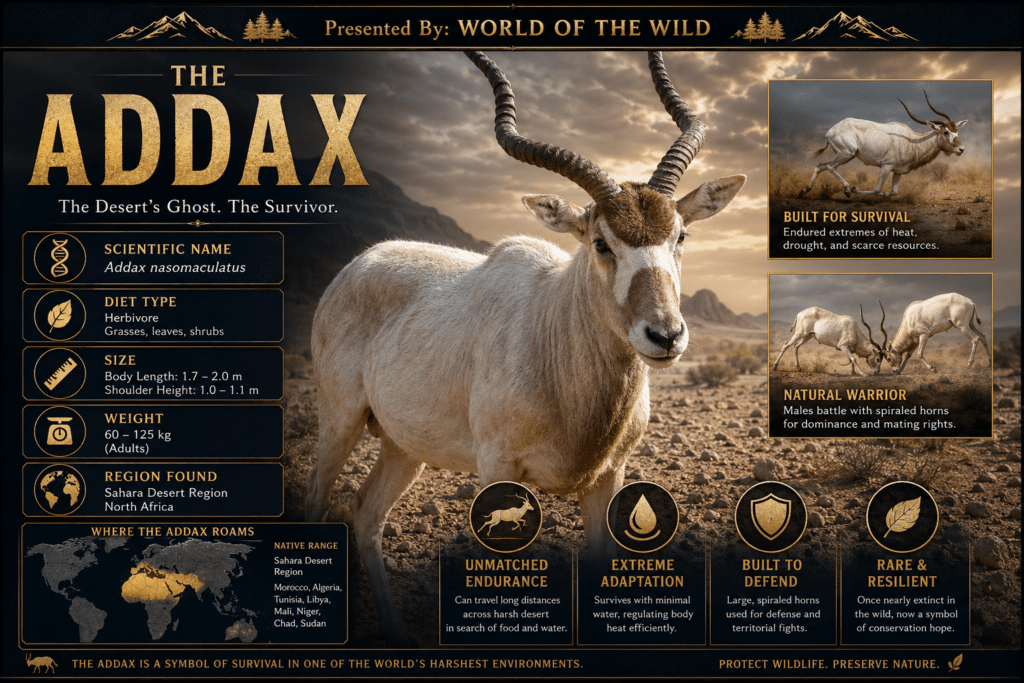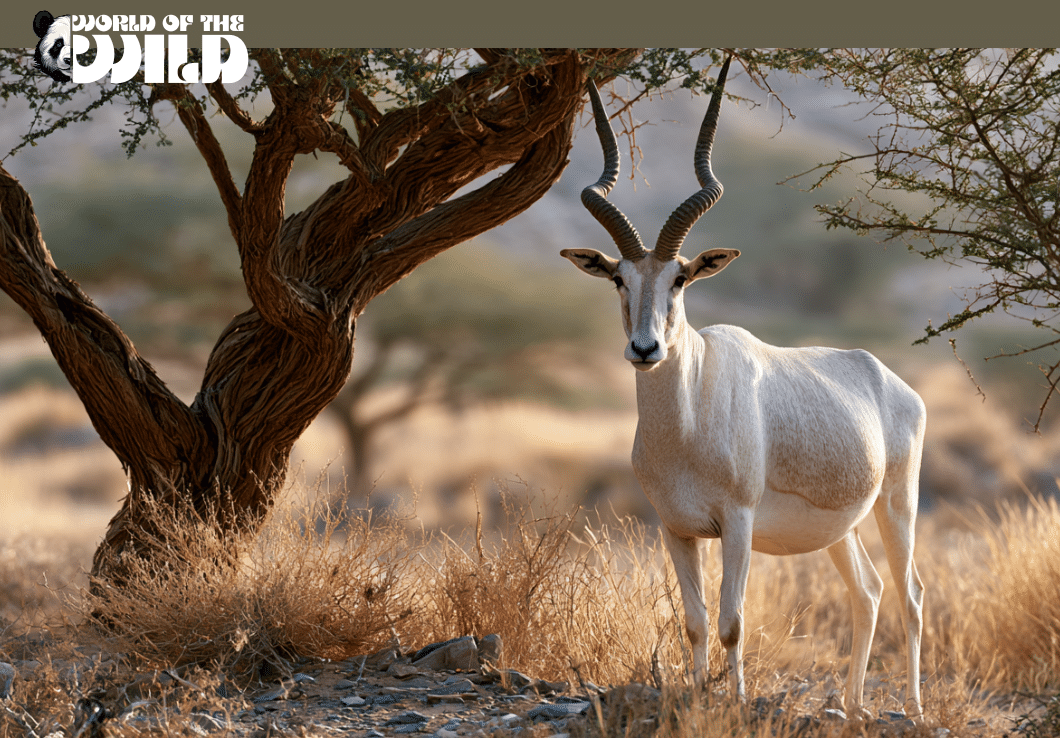

In the vast, shimmering emptiness of the Sahara Desert, where temperatures soar high enough to fry an egg on the sand and rain is little more than a rumor, one animal has spent millennia not merely surviving but thriving. The addax — a pale, spiral-horned antelope — is one of the most perfectly adapted large mammals on Earth, a living testament to what evolution can achieve when pushed to its absolute limits.
But here’s the heartbreaking twist: this extraordinary creature, which has outlasted ice ages, human civilizations, and climatic upheavals, is now teetering on the very edge of extinction. Fewer individuals may remain in the wild than there are days in a year. The addax is not just a remarkable animal — it’s a conservation emergency wrapped in a ghostly white coat, and its story demands to be told.
Facts
- The addax can survive indefinitely without drinking water, extracting all the moisture it needs from the plants it eats and from the morning dew it licks off vegetation.
- Unlike most mammals, the addax’s hooves are broad and flat, functioning almost like natural snowshoes to prevent it from sinking into loose desert sand.
- The addax is sometimes called the “screwhorn antelope” because both males and females grow long, elegantly twisted horns that can spiral two and a half to three full turns.
- Addax herds were historically so enormous that ancient Egyptian pharaohs kept them in semi-captivity as a symbol of prestige and abundance — they appear in hieroglyphs dating back over 3,000 years.
- The addax’s coat actually changes color with the seasons — shifting from grayish-brown in winter to nearly pure white in summer, a remarkable thermoregulatory trick that reflects the brutal desert sunlight.
- The addax has an almost supernatural ability to locate rainfall from extraordinary distances, navigating hundreds of miles across featureless desert in response to distant storms it detects through smell and possibly barometric pressure changes.
- Despite being one of the rarest mammals on Earth, the addax is one of the most successfully bred antelope species in captivity, with healthy zoo populations in North America, Europe, and the Middle East.
Species
The addax occupies a singular position in the tree of life. Its full taxonomic classification reads as follows:
- Kingdom: Animalia
- Phylum: Chordata
- Class: Mammalia
- Order: Artiodactyla
- Family: Bovidae
- Subfamily: Hippotraginae
- Genus: Addax
- Species: Addax nasomaculatus
The addax is the sole living member of its genus, making it a genuinely unique lineage. It belongs to the subfamily Hippotraginae — the so-called “horse antelopes” — a group that also includes the majestic oryx and the sable antelope. Of these relatives, the addax shares the most ecological and morphological overlap with the oryx species of Africa and Arabia, both having evolved for extreme arid environments.
There are no recognized living subspecies of the addax. However, paleontological evidence suggests that ancestral populations were far more widespread and possibly more morphologically diverse than the single surviving lineage we know today. The species’ scientific name, nasomaculatus, derives from the Latin for “nose spot,” a reference to the distinctive white facial marking that adorns the animal’s muzzle.
Appearance
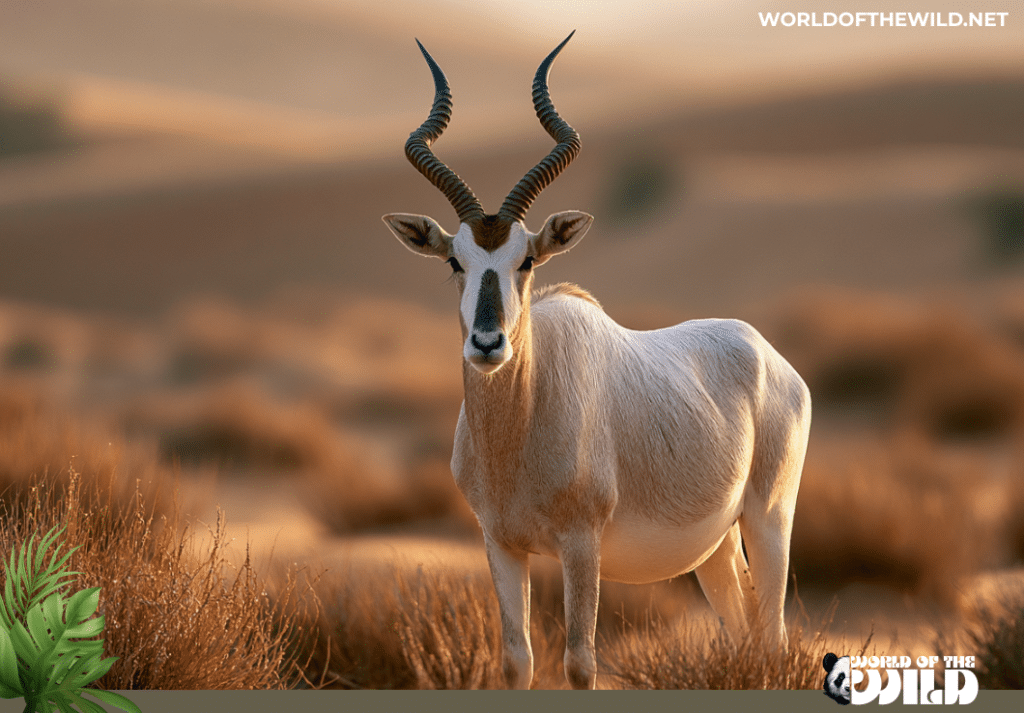
The addax is, by any measure, a stunning animal. At first glance, it might appear almost ghostly — pale, large-eyed, and eerily still against the shimmering desert backdrop — but a closer look reveals an extraordinary suite of features shaped by millions of years of desert life.
In terms of size, addax stand roughly 95 to 115 centimeters at the shoulder (about 37 to 45 inches), with a body length typically ranging from 150 to 170 centimeters (59 to 67 inches). Males are notably stockier than females, weighing between 220 and 300 pounds, while females tend to fall in the range of 130 to 200 pounds. Both sexes are built with a slightly heavy, compact frame — wide-bodied and deep-chested — which helps with heat regulation and energy conservation.
The most iconic feature is undoubtedly the horns. Both males and females carry them, a trait that sets the addax apart from many other horned ungulates in which only males are armed. The horns rise from the skull in a long, corkscrew spiral, typically making two to three complete twists and reaching lengths of 55 to 85 centimeters (roughly 22 to 33 inches), with exceptional individuals sometimes exceeding that. They are ridged and deeply grooved, tapering to sharp points — formidable tools for both defense and display.
The coat is where the addax’s adaptation to desert life becomes visually striking. In summer, the body coat is almost pure white or very pale cream, a direct adaptation to reflect solar radiation and minimize heat absorption. Come winter, the coat deepens to a sandy grayish-brown across the back and flanks, providing a measure of camouflage against the cooler desert substrate. The legs are white year-round, and a distinctive reddish-brown mat of hair sits atop the forehead, contrasting sharply with the pale face. A bold, X-shaped or M-shaped white marking crosses the nose between the eyes — the feature that inspired the species name. The ears are large and mobile, helping to dissipate heat, and the large dark eyes carry an almost mournful expression that has captivated observers for centuries.
Behavior
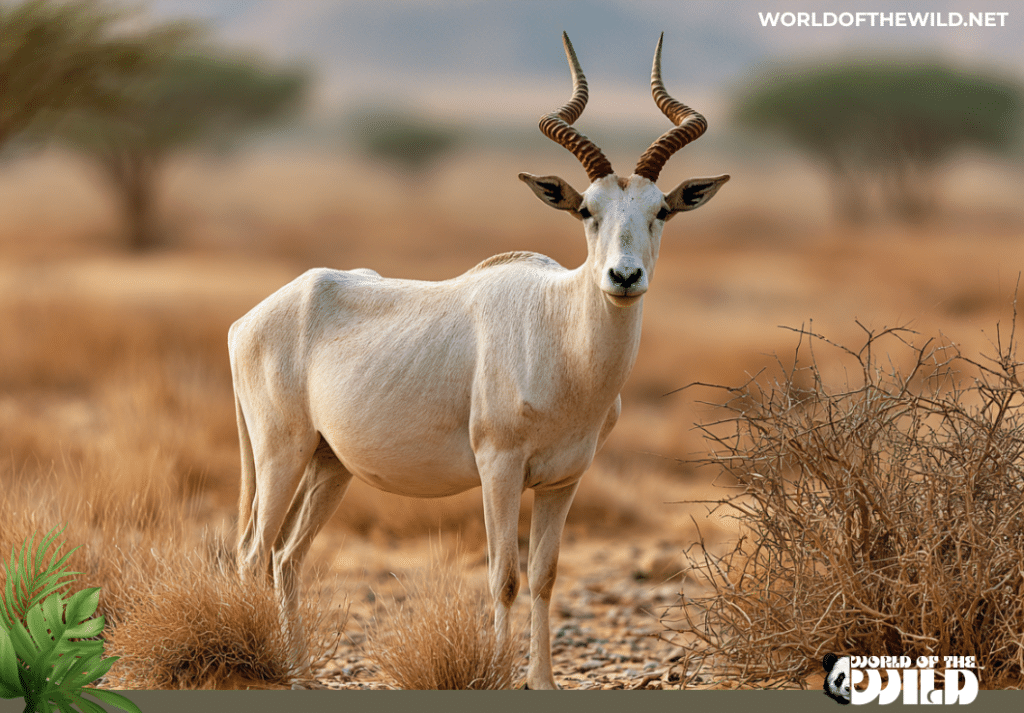
The addax is a profoundly social animal by nature, having evolved in one of Earth’s most challenging environments where collective behavior is a survival strategy, not merely a preference. Historically, addax traveled in herds of 20 to 200 individuals, moving across the Sahara in a loose but organized fashion, led typically by the oldest and most experienced animals who seemed to navigate by accumulated knowledge of where water-bearing plants might be found after rains.
Today, with wild populations critically reduced, large herds are rarely seen. But in areas where small groups persist or have been reintroduced, their social instincts remain intact. Within a herd, there is a clear hierarchical structure, with dominant males asserting themselves through posturing, parallel walking, and occasional sparring with their formidable horns. Serious fights are relatively rare — the spiral horns interlock during confrontations, and the combatants push and twist in a ritualized contest of strength rather than a lethal duel.
One of the most remarkable behavioral traits is the addax’s relationship with heat and movement. Unlike many prey animals that flee at the first sign of danger, addax are built for endurance rather than speed — they are, in truth, rather slow runners compared to many antelope species. Instead, their primary defense is stillness and camouflage. On the hottest parts of the day, they bed down in shallow depressions they scrape into the sand, often oriented with the smallest possible surface area facing the sun. These scrapes, called “forms,” can sometimes be detected from above and have been used to track wild addax from aircraft.
Communication within the herd involves a combination of visual signals — posture, ear position, head orientation — and olfactory messaging. Addax have scent glands on their faces and feet, and males in particular engage in scent-marking behavior during the breeding season. Vocalizations are relatively limited; the addax is not a particularly vocal animal, relying more on body language and scent in the vast, wind-swept silences of the Sahara.
Evolution
The addax belongs to an ancient lineage that traces its roots deep into the Miocene epoch, roughly 5 to 10 million years ago, when the ancestors of modern bovids were diversifying rapidly across the African and Eurasian landmasses. The subfamily Hippotraginae, to which the addax belongs alongside the oryx and roan antelope, represents one of the older branches of the bovid family tree — a lineage adapted to open, semi-arid grasslands and scrublands long before the Sahara became the hyper-arid desert we know today.
Fossil evidence of animals closely related to or ancestral to Addax nasomaculatus has been found across North Africa and parts of the Middle East, indicating that the genus once occupied a far broader range during periods when the Sahara experienced what scientists call “green Sahara” or “African Humid Period” episodes — times when rainfall was dramatically higher, the desert bloomed, and large herbivores could move freely across what is now a near-impassable sea of sand and rock.
As the climate dried over the last several thousand years following the end of the last African Humid Period around 5,500 years ago, populations of addax were progressively confined to the harshest core zones of the Sahara, where their extraordinary physiological adaptations — their water independence, their heat-reflective coats, their specialized feet — gave them a competitive edge that no other large mammal could match. In evolutionary terms, the addax represents the pinnacle of mammalian desert adaptation in Africa, the end product of millions of years of selection pressure in one of the most extreme environments on the planet.
Habitat
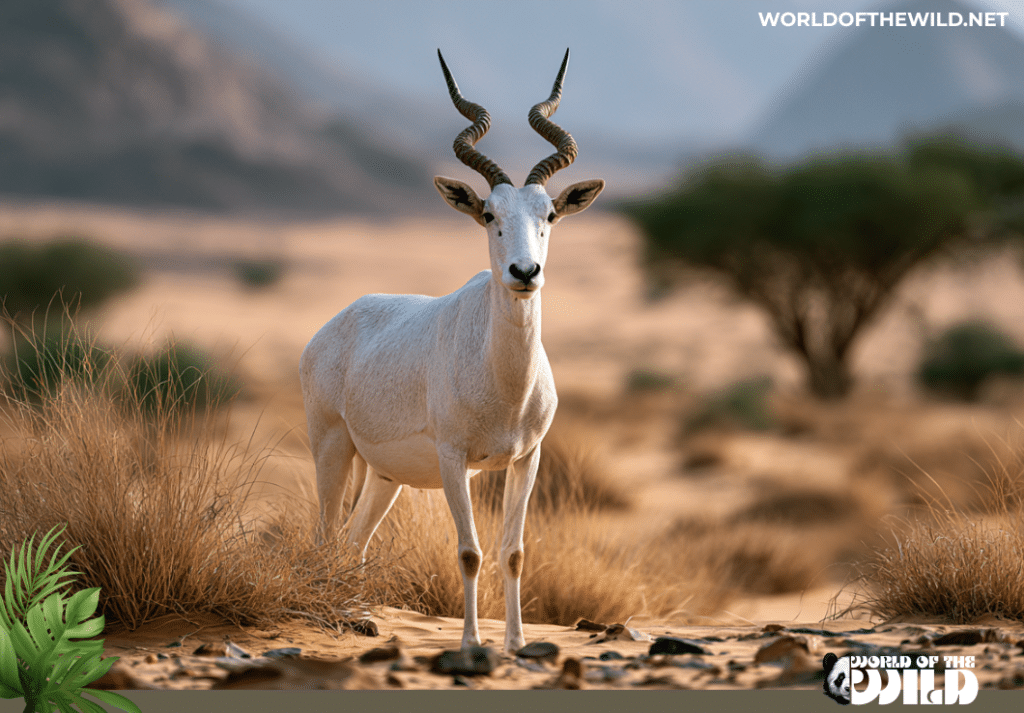
The addax is an animal defined entirely by its habitat. It is, in the most literal sense, a creature of the Sahara Desert — specifically the most extreme, hyper-arid zones that other large mammals cannot tolerate.
Historically, the addax ranged across a vast swath of northern Africa, from Mauritania and Senegal in the west, through Mali, Niger, Chad, Sudan, and across to Egypt in the east. Their range extended into parts of the Western Sahara and possibly Algeria. This was not a continuous, uniformly distributed population but rather a series of nomadic herds tracking the patchy, unpredictable rains of the Saharan interior.
The preferred terrain is open sand dunes (ergs) and stony deserts (regs), interspersed with areas of sparse desert grasses, herbs, and shrubs. The addax is drawn particularly to areas where desert grasses such as Panicum turgidum and Stipagrostis species grow after seasonal rains, often appearing to materialize seemingly from nowhere in regions that appeared entirely barren just weeks before.
Elevations vary — addax are found both in low-lying sand sea basins and on elevated rocky plateaus — but they consistently avoid mountainous terrain and dense vegetation. The open desert suits their strategy: wide sight lines for predator detection, sparse vegetation that their specialized digestive systems can extract nutrition from, and the freedom to move great distances in response to the unpredictable distribution of rainfall.
Today, the wild range has collapsed dramatically, with the last confirmed wild population clinging to survival in the Termit & Tin Toumma National Nature Reserve in Niger.
Diet
The addax is a herbivore — but not in any ordinary sense. It is one of the most specialized large herbivores on Earth, capable of subsisting on vegetation that would barely register as food for most other animals.
The primary diet consists of desert grasses, particularly drought-resistant species like Panicum turgidum (tussock grass) and various Stipagrostis and Aristida species that push up through the sand after rains. When grasses are unavailable or sparse, addax supplement with leaves, shoots, and tubers of desert plants, including succulents and herbs that store water in their tissues — an important secondary moisture source.
The addax’s digestive system is highly efficient, extracting maximum nutrition and moisture from low-quality, often desiccated plant material. Like other ruminants, it has a four-chambered stomach that allows it to ferment and re-digest fibrous plant matter through rumination — that familiar cud-chewing behavior seen in cattle and deer. This process is particularly effective at unlocking nutrients from tough desert grasses.
Foraging typically occurs during cooler parts of the day — early morning, evening, and on moonlit nights — when temperatures are more bearable and the risk of dangerous water loss through exertion is reduced. During the hottest midday hours, addax rest in their sand scrapes to conserve energy and moisture.
Their remarkable water independence means they never need to drink from standing water sources — a critical adaptation in a landscape where such sources may not exist for hundreds of miles in any direction.
Predators and Threats
In a healthy, historic Sahara, the addax faced natural predators including the Barbary lion (now extinct in the wild), the Saharan cheetah, leopards, hyenas, and wild dogs. For a slow-running antelope, vigilance within the herd was the primary defense — many eyes scanning the horizon, and the protective presence of horned adults capable of inflicting serious injury on an attacker.
Today, natural predation plays a minimal role in the addax’s precarious situation. The true threats are entirely human in origin, and they have been catastrophically effective.
Commercial hunting — both historical and ongoing — is the single greatest driver of addax decline. Armed with vehicles and modern firearms, hunters have pursued addax across terrain that once provided the antelope refuge through sheer inaccessibility. Oil exploration and military activity in the Sahara during the 20th century brought roads, vehicles, and armed personnel into previously unreachable addax strongholds, enabling hunting on an industrial scale.
Habitat loss and degradation compound the problem. The expansion of agriculture, overgrazing by domestic livestock, and increasing human settlement across the Sahel and Saharan fringe have reduced and fragmented the already sparse vegetation addax depend upon.
Climate change poses an emerging and deeply troubling threat. The Sahara is experiencing measurable changes in rainfall patterns and temperature extremes — shifts that may alter or eliminate the patchy, rainfall-triggered vegetation pulses that addax migrations depend upon.
Political instability in regions like Mali, Niger, Chad, and Sudan has made conservation work enormously difficult, creating ungoverned spaces where wildlife protection efforts cannot be enforced and illegal hunting continues unchecked.
Reproduction and Life Cycle
The addax’s reproductive biology reflects the rhythms and constraints of desert life — measured, efficient, and geared toward ensuring that young are born during the most favorable conditions available.
Addax do not have a strictly defined breeding season, but births tend to cluster in winter and spring (roughly November through March in the Sahara), when temperatures are cooler and whatever sparse vegetation exists is most palatable. Mating involves competitive behavior among males, including parallel walking displays, horn presentation, and sometimes direct combat where rivals lock horns and push against one another.
After mating, females undergo a gestation period of approximately 257 to 264 days — roughly eight and a half months — giving birth to a single calf. Twins are exceptionally rare. Calves are born well-developed and able to stand within hours of birth, a critical survival trait in a desert environment where a vulnerable newborn lying motionless would be a conspicuous target.
Mothers are attentive and protective, and calves grow quickly on rich milk that is higher in fat and protein than that of many temperate ungulates — an adaptation to ensure rapid development before the brutal summer heat arrives. Young addax begin sampling solid food within the first few weeks but continue nursing for several months.
Sexual maturity arrives at around 2 to 3 years of age for both sexes, though males typically do not successfully compete for mating opportunities until they are older and larger. In the wild, addax are estimated to live 12 to 15 years, while captive individuals, sheltered from the extremes of desert life and predation, have been recorded living beyond 20 years.
Population
The addax holds the deeply troubling designation of Critically Endangered on the IUCN Red List — one step from extinction in the wild. The species has undergone one of the most severe population collapses of any large African mammal in recorded history.
Current estimates suggest that fewer than 100 individuals may remain in the wild, with some assessments placing the number disturbingly lower — perhaps as few as 30 to 90 animals in a single population in the Termit & Tin Toumma region of Niger. A small semi-wild population exists in Tunisia’s Jebil National Park following a reintroduction effort, and there is a managed population in Morocco. Attempts at reintroduction have also been undertaken in Chad in the Ouadi Rimé-Ouadi Achim Game Reserve.
The contrast with captive populations is stark and, in a strange way, hopeful: an estimated 2,000 or more addax live in zoos, wildlife parks, and private collections worldwide, particularly in North America, Europe, and the Gulf states. These captive populations serve as an insurance policy against total extinction and a reservoir of animals for future reintroduction programs.
The trajectory in the wild, however, has been one of near-continuous decline across the 20th and into the 21st century — a collapse so rapid and severe that the addax went from numbering in the tens of thousands as recently as the mid-20th century to functional near-extinction in the wild within just a few decades.
Conclusion
The addax is proof that nature’s greatest engineering marvels are not always the fastest, the fiercest, or the most fearsome. Sometimes, they are the quiet survivors — creatures of extraordinary subtlety and refinement, honed by millions of years of evolutionary pressure into something genuinely remarkable. An animal that can live without drinking water. That can feel rain coming from hundreds of miles away. That carries horns of breathtaking elegance and wears a coat that changes with the seasons to outwit the sun.
And we are losing it.
The addax does not ask for much. It does not need rivers or forests or fertile plains. It needs only the austere, ancient silence of the Sahara and the freedom to wander it undisturbed. We have taken even that.
The good news is that the addax, unlike some species, is not biologically doomed. It breeds successfully in captivity, it responds to protection, and it can be reintroduced. The populations in Tunisia, Morocco, and Chad demonstrate that recovery is possible when the will to make it happen exists. Organizations working in Niger are fighting — against difficult odds and in dangerous conditions — to protect what remains of the last wild population.
The addax’s story does not have to end in the extinction column. But time is desperately short, and the margin for error has essentially vanished. Supporting conservation organizations active in the Sahara, raising awareness, and holding governments accountable for protecting these last wild animals are not abstract gestures — they are the difference between a species that survives and one that exists only in photographs.
The desert ghost deserves to haunt the Sahara for another million years.
Quick Reference
| Scientific Name | Addax nasomaculatus |
| Diet Type | Herbivore (grasses, desert plants, leaves, tubers) |
| Size | 59–67 inches long (approx. 4.9–5.6 feet); 37–45 inches at the shoulder (approx. 3.1–3.75 feet) |
| Weight | 130–300 pounds (females: 130–200 lbs; males: 220–300 lbs) |
| Region Found | Sahara Desert, North Africa; primarily Niger (wild); reintroduced populations in Tunisia, Morocco, and Chad |