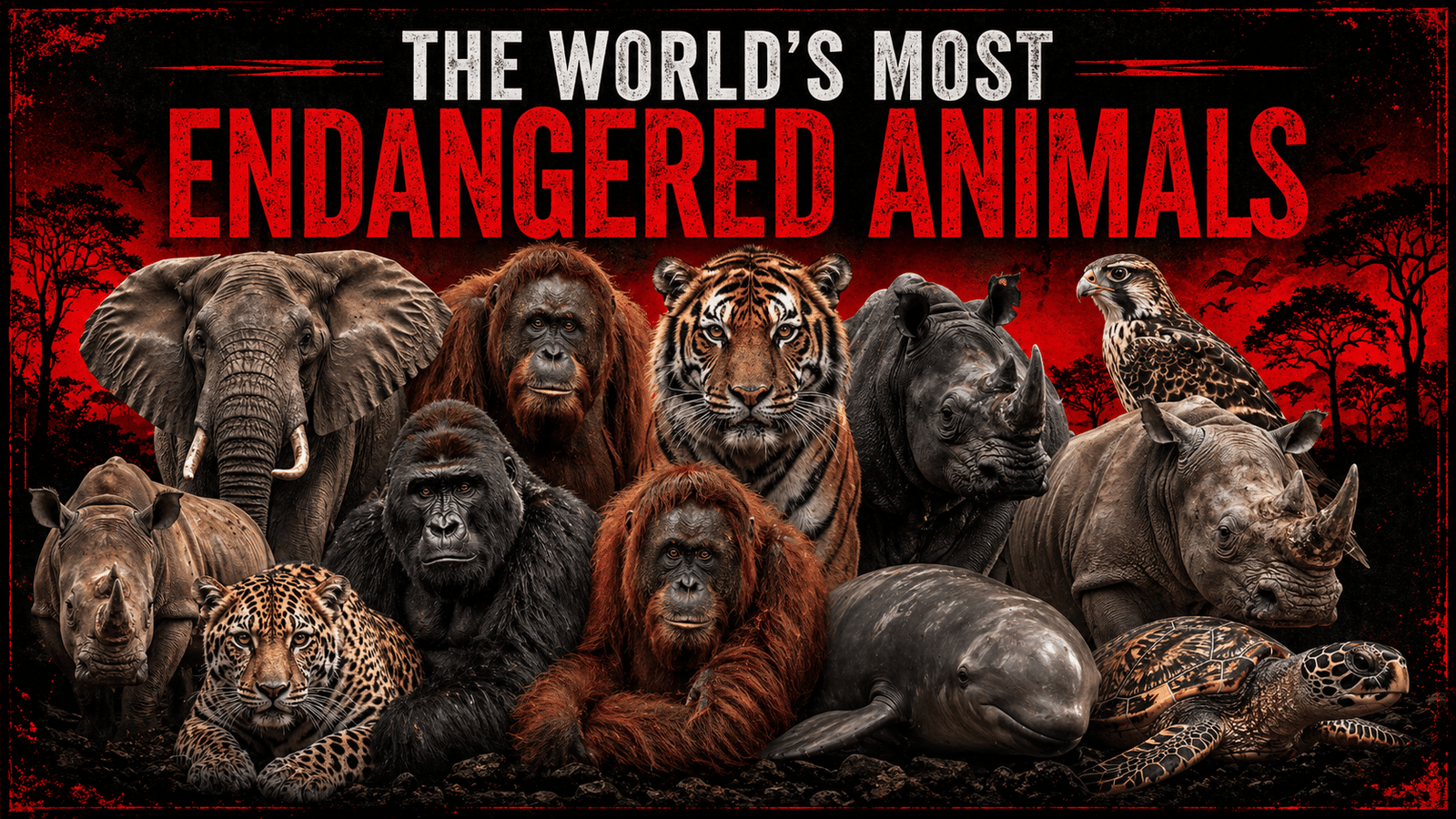

A deep dive into the ten species teetering on the edge of extinction — and what their disappearance would mean for life on Earth.
Introduction: A Planet Under Pressure
We are living through what scientists have called the sixth mass extinction event in Earth’s 4.5-billion-year history. Unlike the five that came before it — each driven by volcanic eruptions, asteroid impacts, or dramatic shifts in climate — this one has a singular, identifiable cause: us. Human activity, through habitat destruction, poaching, pollution, climate change, and the relentless expansion of agriculture and industry, has pushed thousands of species to the very brink of disappearance.
The statistics are staggering, and yet they can feel abstract. What does it truly mean when a species is “endangered”? What is lost when the last Javan Rhino exhales its final breath in a patch of Indonesian forest, or when the last Amur Leopard pads silently across a frozen Siberian hillside and never returns? The answer is that we lose far more than an animal. We lose a thread in the complex tapestry of life — one whose removal can unravel ecosystems that took millions of years to weave. As we examine The World’s Most Endangered Animals, we are reminded of our responsibility to protect what remains.
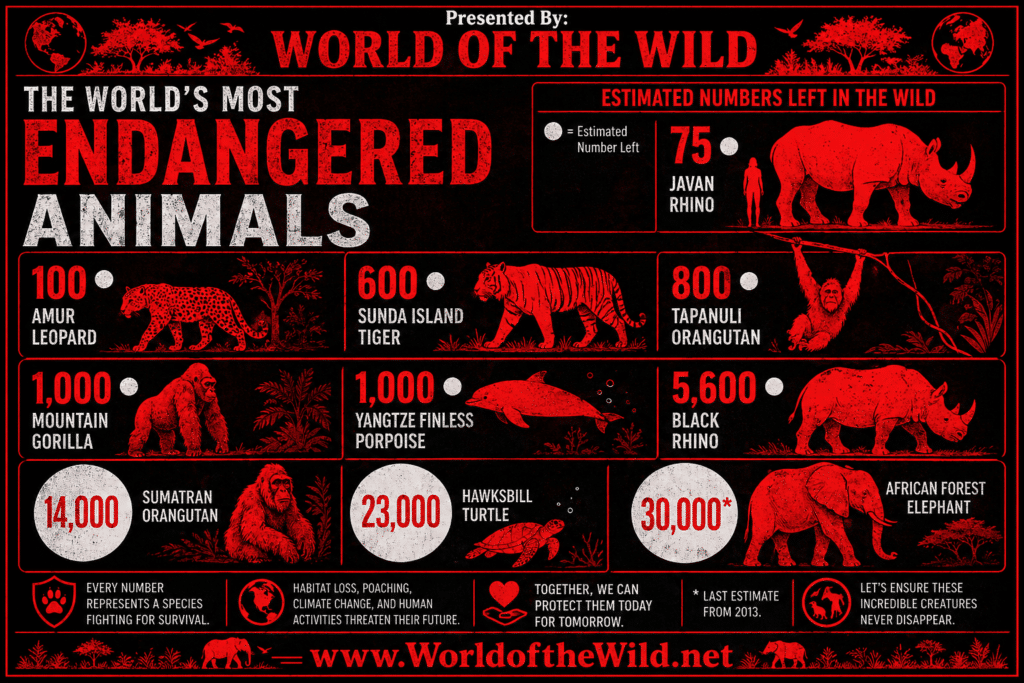
This article profiles ten of the world’s most critically endangered animals, drawing on data compiled by WWF UK in 2022. Together, they represent a spectrum of habitats, geographies, and stories. Some have been pushed to near-extinction by hunters and poachers. Others have been squeezed out by the relentless spread of palm oil plantations or sugarcane fields. A few face threats so entrenched and multifaceted that even the most optimistic conservationists struggle to see a clear path to survival. All of them deserve to be known, understood, and fought for.
In this exploration of The World’s Most Endangered Animals, we highlight their plight and the urgent need for conservation efforts.
1. The Javan Rhino — 75 Remaining
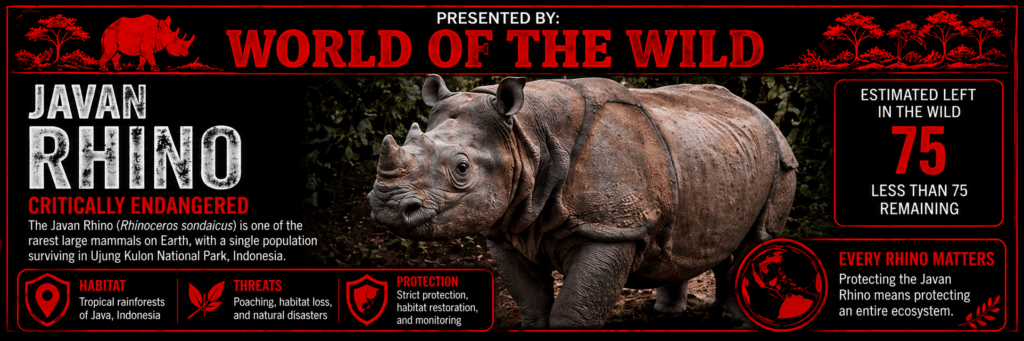
Of all the animals on this list, the Javan Rhino occupies a category of its own. With an estimated 75 individuals left in the wild — all of them confined to a single location, Ujung Kulon National Park on the western tip of Java, Indonesia — it is one of the rarest large mammals on the planet. There are no Javan Rhinos in captivity. No backup population exists in a zoo somewhere, carefully managed and waiting to be reintroduced. What lives in that one fragile patch of forest is all that remains of a species that once roamed across much of Southeast Asia.
The Javan Rhino (Rhinoceros sondaicus) is a solitary, shy animal. It is smaller than its African cousins, sporting a single horn and a distinctive armored skin that hangs in heavy folds, giving it the appearance of wearing a suit of natural armor. For centuries, that horn was its curse. Traditional Asian medicine attributed extraordinary healing powers to rhinoceros horn — despite its being made of nothing more exotic than keratin, the same protein found in human fingernails. The demand it generated fueled a poaching industry that wiped out Javan Rhino populations across Vietnam, Cambodia, Thailand, and eventually almost all of Indonesia.
The last known Javan Rhino in Vietnam was found dead in 2010, shot by a poacher. Its horn had been removed. That left Ujung Kulon as the species’ sole refuge. Park rangers now patrol its forests around the clock, and camera traps regularly capture footage of the surviving animals — a haunting reminder of how thin the line between survival and oblivion truly is.
The rhinos face additional threats beyond poaching. The invasive Arenga palm has colonized large sections of the park, crowding out the plants the rhinos depend on for food. A single volcanic eruption from nearby Krakatau or a disease outbreak could, theoretically, eliminate the entire population in a matter of weeks. With 75 animals and no genetic diversity to buffer them, the Javan Rhino’s future hangs by a thread.
2. The Amur Leopard — 100 Remaining
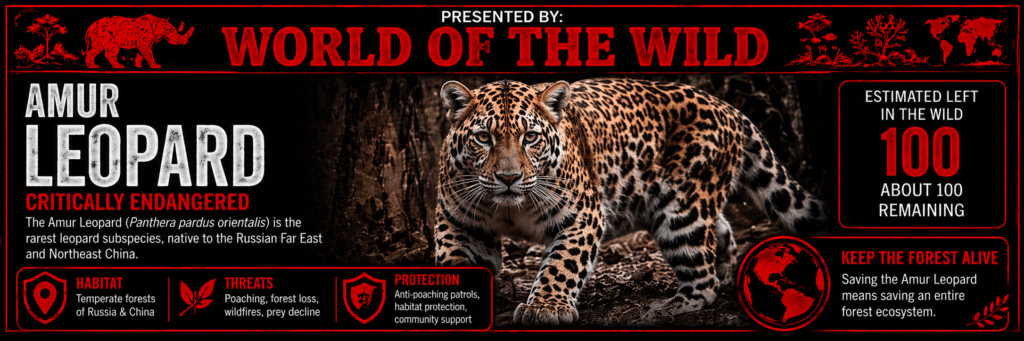
Travel north from the tropical jungles of Java to the frozen forests of the Russian Far East, and you will find an entirely different kind of ghost: the Amur Leopard. With approximately 100 individuals remaining, it is the rarest wild cat on Earth. It inhabits the Primorsky Krai region of Russia and a small adjacent area of northeastern China — a landscape of snow-dusted oak and pine forests, dramatic river valleys, and long, bitter winters that can plunge to -30°C.
The Amur Leopard (Panthera pardus orientalis) is physically distinct from its African relatives. Its coat is paler and more widely spaced, its legs longer, its build stockier — all adaptations to a cold, prey-scarce environment. It is a supremely efficient hunter, capable of running at speeds of up to 60 kilometers per hour and leaping more than six meters horizontally. It hunts roe deer, sika deer, and wild boar, often caching its kills in trees to protect them from bears and wolves.
What pushed it to 100 individuals? The familiar trifecta of habitat loss, human-wildlife conflict, and poaching. Much of its original range was cleared for agriculture during the Soviet era. Roads, railways, and settlements carved up the remaining forest into isolated fragments, making it increasingly difficult for leopards to find mates and maintain the genetic diversity a healthy population needs. Farmers who lost livestock to leopard predation often retaliated by laying poison or setting snares. And throughout the twentieth century, the leopard’s magnificent spotted coat made it a prized target for the fur trade.
The Amur Leopard is now the focus of intensive conservation efforts. Land of the Leopard National Park, established in Russia in 2012, has provided a protected core habitat, and anti-poaching patrols operate year-round. The population has actually grown in recent decades — there were as few as 30 known individuals in the early 2000s — which demonstrates that with sustained effort, recovery is possible. But 100 animals remains a precarious number for a species whose future depends on continued political will, international cooperation, and the goodwill of local communities.
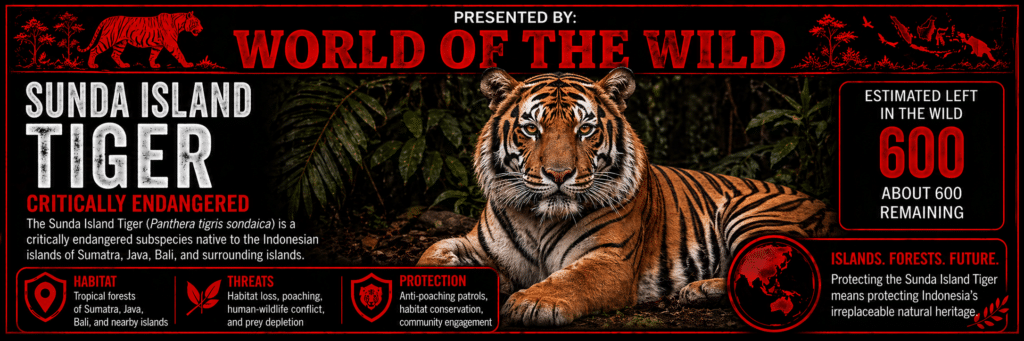
3. The Sunda Island Tiger — 600 Remaining
The island of Sumatra in Indonesia was once home to three subspecies of tiger. The Javan Tiger was declared extinct in the 1970s. The Bali Tiger disappeared even earlier, in the 1940s. Today, the Sunda Island Tiger — also known as the Sumatran Tiger (Panthera tigris sondaica) — clings to survival with an estimated 600 individuals scattered across the island’s remaining forest patches.
The Sumatran Tiger is the smallest surviving tiger subspecies. Its stripes are closer together than those of mainland tigers, a pattern that provides particularly effective camouflage in the dense lowland and montane forests of Sumatra. It is an apex predator, keeping populations of deer, pigs, and tapirs in balance, and its presence is a reliable indicator of a healthy, functioning forest ecosystem.
The destruction of that ecosystem has been the tiger’s primary threat. Sumatra has lost more than half of its forest cover in recent decades, much of it replaced by oil palm and acacia plantations that supply global markets for cooking oil, cosmetics, and paper. As forests shrink, tigers are pushed into closer contact with human settlements, increasing conflict. A tiger that kills a goat or a cow may be poisoned in retaliation. One that attacks a person — an increasingly likely outcome as habitat disappears — will almost certainly be killed.
Poaching remains a serious threat as well. Tiger body parts command enormous prices on black markets across Asia, where they are used in traditional medicines and as luxury goods. Despite international protections, the trade persists, driven by demand and enabled by corruption and porous borders.
Some progress has been made. Several large protected areas exist within Sumatra, and conservation organizations have worked with palm oil companies to establish wildlife corridors connecting fragmented forest patches. But with only 600 tigers remaining and their habitat continuing to shrink, time is critically short.
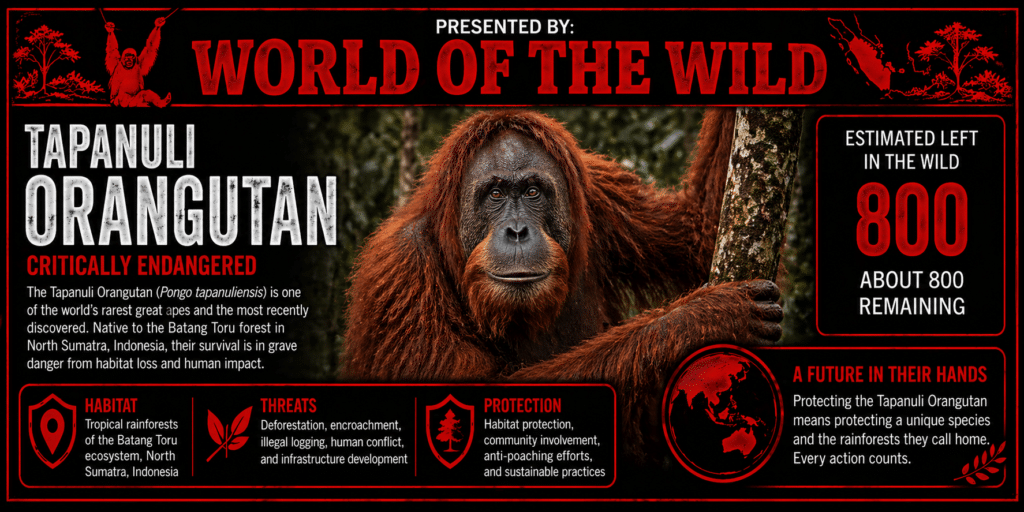
4. The Tapanuli Orangutan — 800 Remaining
In 2017, scientists announced the discovery of a new great ape species — only the eighth known to science. The Tapanuli Orangutan (Pongo tapanuliensis) lives in a tiny pocket of highland forest in North Sumatra, Indonesia, covering less than 1,000 square kilometers. It was immediately classified as critically endangered, with an estimated 800 individuals making it the rarest great ape on Earth.
The Tapanuli Orangutan was hiding in plain sight for decades. Researchers who had studied orangutans in the Batang Toru ecosystem noticed that the animals there looked and behaved subtly differently from the two previously recognized orangutan species — the Bornean and the Sumatran — and genetic analysis confirmed that the differences ran deep. Tapanuli orangutans are, in fact, the most genetically distinct of all three species, and their lineage diverged from the others more than three million years ago.
Their discovery was both a triumph and a tragedy. To find a new great ape is extraordinary. To find it already critically endangered — with a population of 800 individuals in a single fragmented forest — underlines how profoundly we have altered this planet before we have even finished mapping its inhabitants.
The Tapanuli Orangutan faces immediate, specific threats. A major hydroelectric dam project, the Batang Toru dam, is being constructed in the heart of its habitat. If completed, it will flood critical forest, sever the population into isolated fragments, and potentially push the species toward extinction within decades. Conservation groups and scientists worldwide have lobbied against the project, but construction has continued. This species was discovered, described, and pushed toward the edge of extinction within a single human generation.
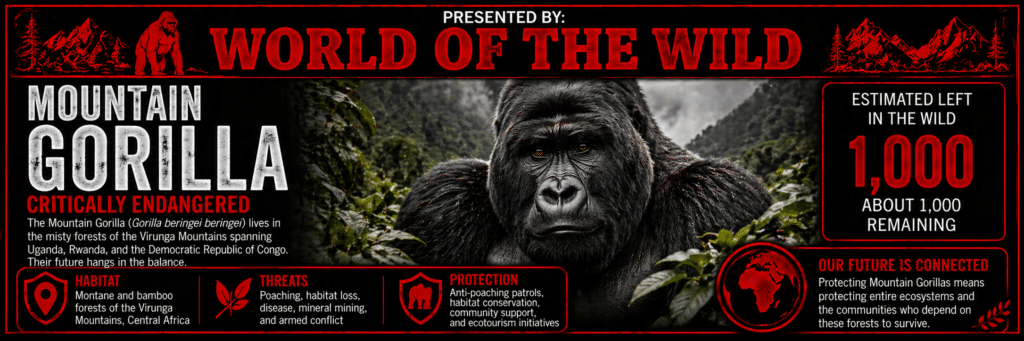
5. The Mountain Gorilla — 1,000 Remaining
There is something almost unbearably moving about watching mountain gorilla footage. Their eyes are deep, intelligent, and unmistakably familiar. They live in tightly bonded family groups, raise their young with care and attention, play, mourn, and communicate in ways that remind us — sometimes uncomfortably — of ourselves. We share roughly 98% of our DNA with gorillas. They are not distant cousins. They are family.
The Mountain Gorilla (Gorilla beringei beringei) lives in the Virunga volcanic mountains that straddle the borders of Rwanda, Uganda, and the Democratic Republic of Congo, and in the Bwindi Impenetrable National Park in Uganda. With approximately 1,000 individuals remaining, they occupy one of the most politically volatile regions on Earth.
For decades, the mountain gorilla was predicted to go extinct. Wars, civil unrest, and the complete breakdown of law in parts of the DRC meant that national parks became battlegrounds, rangers were killed, and poaching was rampant. Gorillas were killed for bushmeat, captured for the illegal pet trade, and caught in snares set for other animals. Habitat destruction driven by one of the world’s most dense and growing human populations compressed their range further every year.
And yet — remarkably, and almost uniquely among the animals on this list — the mountain gorilla population has been growing. From a low of around 620 individuals in the 1980s, the population has climbed to roughly 1,000 today. This recovery is the direct result of sustained, courageous conservation work. Rangers have died protecting the gorillas. Community programs have given local people economic stakes in the gorillas’ survival through tourism. Veterinary teams monitor and treat sick and injured animals. The mountain gorilla story is proof that conservation works when it is properly funded, locally supported, and stubbornly maintained.
But 1,000 is still an achingly small number, and the Virunga region remains fragile. Disease — particularly human respiratory illnesses to which gorillas are highly susceptible — poses a constant threat. Climate change is altering the high-altitude forests the gorillas depend on. And political stability in the DRC remains elusive.
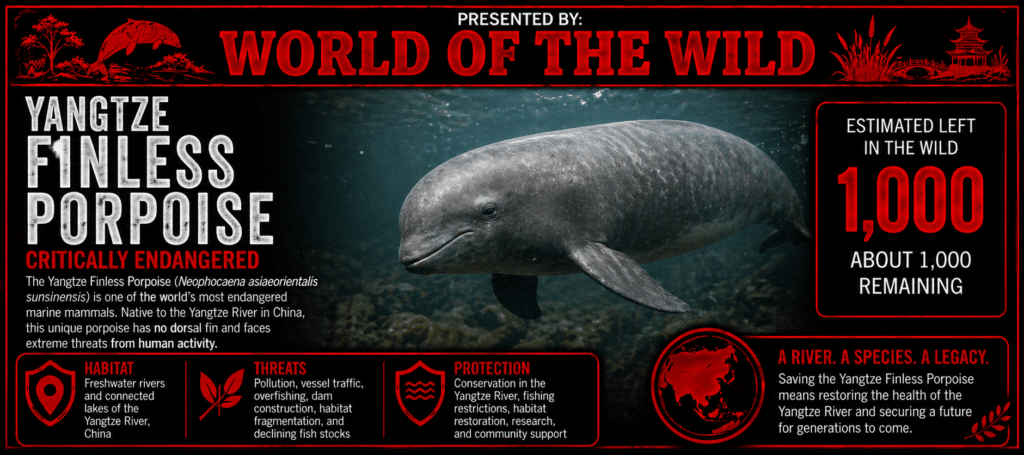
6. The Yangtze Finless Porpoise — 1,000 Remaining
The Yangtze River, stretching 6,300 kilometers through the heart of China, is one of the most economically important waterways on Earth. It is also one of the most ecologically devastated. The baiji — the Yangtze River Dolphin — was declared functionally extinct in 2006, becoming the first large aquatic mammal driven to extinction in modern times. It left behind, as a kind of haunting echo, its close relative: the Yangtze Finless Porpoise (Neophocaena asiaeorientalis asiaeorientalis).
With approximately 1,000 individuals remaining, the Yangtze Finless Porpoise is critically endangered. Unlike the baiji, it can survive in the lakes connected to the Yangtze as well as the main river channel, which has given it a marginal advantage. It is a small, stub-nosed animal with an expression that, to human eyes, looks perpetually cheerful — a contrast that makes the circumstances of its decline particularly bleak.
The porpoise faces threats that are almost comically stacked: illegal fishing, pollution from agricultural runoff and industrial waste, noise pollution from heavy river traffic that disrupts its echolocation, the loss of the fish species it depends on, and the dramatic alteration of the river’s hydrology by massive dam projects including the Three Gorges Dam.
China has taken some meaningful steps in recent years, including a ten-year ban on fishing in the Yangtze that began in 2020 — a measure of extraordinary scale and ambition. Semi-natural reserves have been established to house captive porpoise populations. Whether these measures will be enough, and whether they have come in time, remains genuinely uncertain.
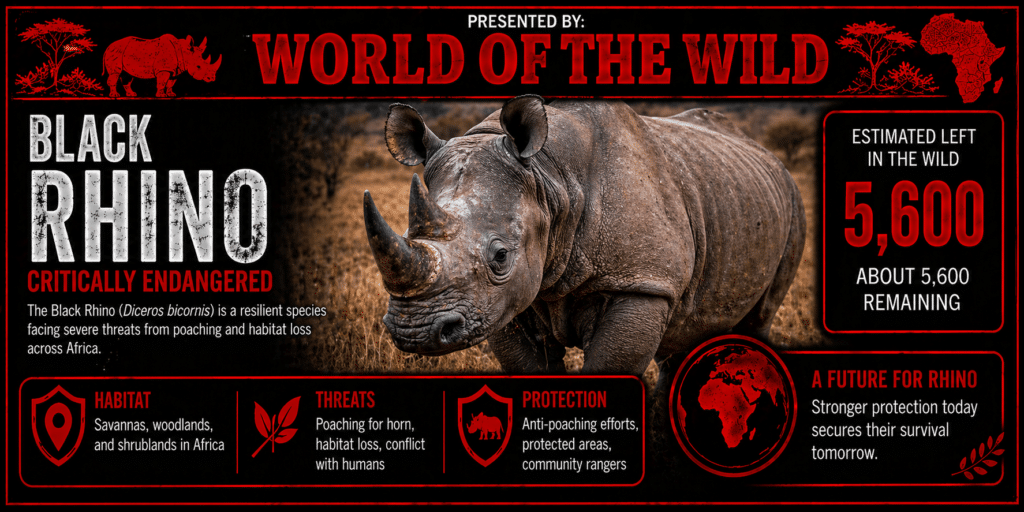
7. The Black Rhino — 5,600 Remaining
At 5,600 individuals, the Black Rhinoceros (Diceros bicornis) has a larger population than most animals on this list, but its number masks a history of catastrophic decline. In 1970, an estimated 65,000 Black Rhinos roamed across sub-Saharan Africa. By 1995, poaching had reduced that number to just 2,410 — a population collapse of 96% in less than 25 years. The species was, for all practical purposes, hurtling toward extinction.
The primary driver was rhino horn. As with the Javan Rhino, demand from East Asian traditional medicine markets and, more recently, from buyers in Vietnam who believed powdered horn could cure cancer, created a poaching incentive so powerful that it overwhelmed conservation efforts across entire countries. Rangers were outgunned. Corruption allowed poaching syndicates to operate with relative impunity. In some years, more rhinos were being killed than were being born.
The recovery of the Black Rhino from 2,410 to 5,600 represents one of conservation’s more significant victories, achieved through intensive management, strict anti-poaching operations, and the relocation of animals to create new subpopulations. But the species remains critically endangered, and the gains are fragile. Poaching pressure fluctuates with demand in consumer markets. Some countries have experimented with dehorning rhinos to make them unattractive to poachers — an imperfect solution that leaves the animals unable to defend themselves or their calves. The debate over whether to legalize and regulate the rhino horn trade to undercut black market prices continues to divide the conservation community.
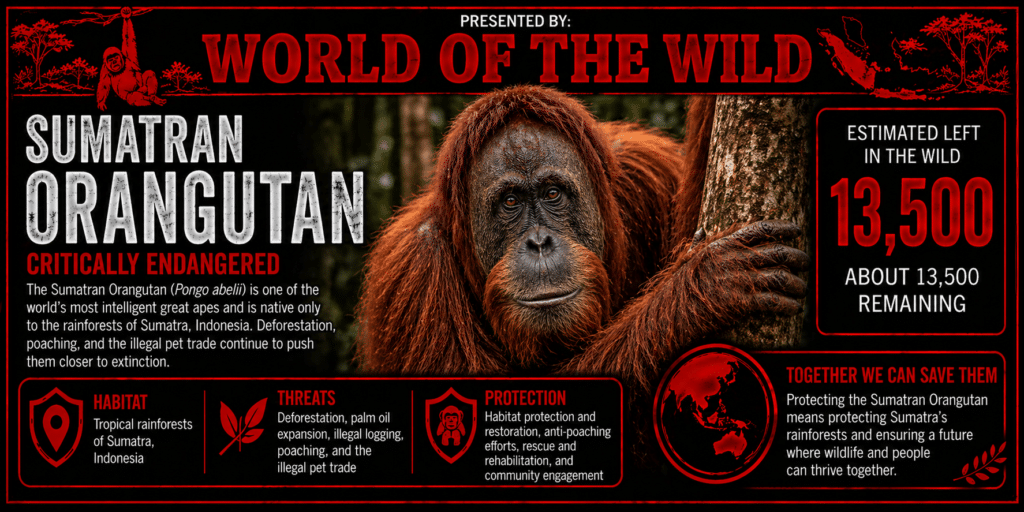
8. The Sumatran Orangutan — 14,000 Remaining
The Sumatran Orangutan (Pongo abelii) is the more widely recognized of Sumatra’s two orangutan species. With approximately 14,000 individuals, it has a substantially larger population than its newly discovered Tapanuli cousin, but it too is critically endangered, and the forces driving its decline are relentless.
Orangutans are forest people — the word itself derives from the Malay for “person of the forest.” They are highly intelligent, use tools, pass knowledge between generations, and have complex social structures. They are also primarily frugivores, dependent on large, intact forests that produce the diverse array of fruits they need to survive. This makes them uniquely vulnerable to deforestation.
The conversion of Sumatra’s lowland forests to oil palm plantations has been, and continues to be, the dominant threat. Palm oil is found in an estimated half of all packaged supermarket products — from biscuits and chocolate to shampoo and lipstick. The scale of its cultivation has made it an almost unstoppable economic force, one that has reshaped entire landscapes. Orangutans caught in newly cleared areas are sometimes captured for the illegal pet trade, used as entertainment in tourist venues, or simply killed.
Conservation efforts have focused on rehabilitation programs for orphaned and injured orangutans, the establishment of protected reserves, and sustained pressure on palm oil companies to adopt sustainable sourcing practices. Progress has been made, but the underlying economic drivers of deforestation remain powerful.
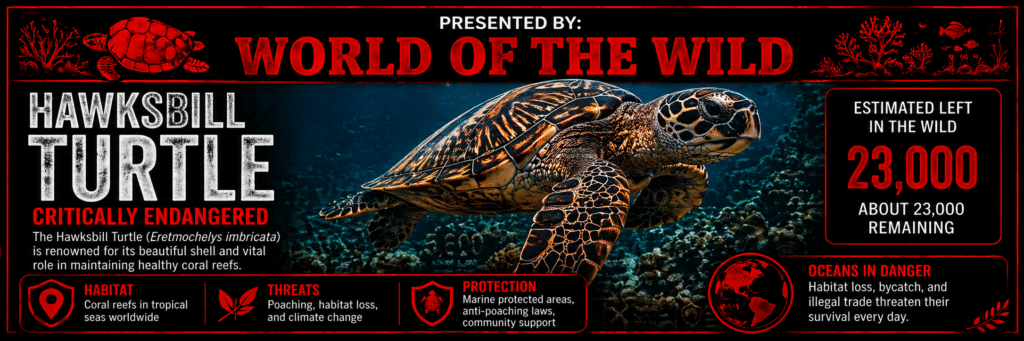
9. The Hawksbill Turtle — 23,000 Remaining
The Hawksbill Sea Turtle (Eretmochelys imbricata) is one of the ocean’s most beautiful and ancient creatures. It has existed in recognizable form for more than 100 million years, surviving the asteroid impact that killed the dinosaurs, ice ages, and the rise and fall of entire continents. It now faces threats it was never equipped to survive: humans.
With an estimated 23,000 nesting females remaining — a population metric used because females are easier to count at nesting beaches than individuals at sea — the Hawksbill is critically endangered. It inhabits tropical and subtropical oceans worldwide, where it plays a crucial ecological role as one of the few predators of sea sponges, which it consumes with its distinctive narrow, hooked beak. Without hawksbill turtles, sponge populations explode, crowding out corals and fundamentally altering reef ecosystems.
Hawksbills were hunted for centuries for their shells — the “tortoiseshell” of combs, jewelry, eyeglass frames, and decorative objects. The trade devastated populations globally. Although the commercial trade in hawksbill products is now internationally banned, illegal trafficking continues. Eggs are collected from nesting beaches. Turtles drown in fishing nets. Plastic pollution fills their stomachs. Climate change threatens to skew the sex ratios of hatchlings (temperature determines sex in sea turtles) and erode the beaches where they nest. Coral reef degradation destroys both their foraging grounds and the habitat of the sponges they eat.
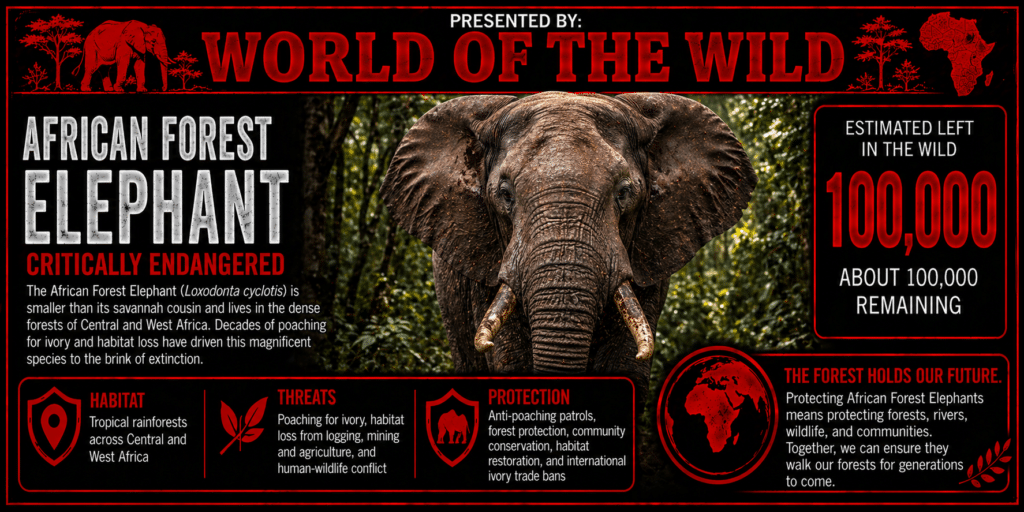
10. The African Forest Elephant — 30,000 Remaining
The African Forest Elephant (Loxodonta cyclotis) is the largest animal on this list by both size and estimated population, with approximately 30,000 individuals remaining — though this figure dates from 2013 and may be lower today. It is also, perhaps, the species whose ecological importance is most dramatically underappreciated.
Forest elephants are the “megagardeners” of the Congo Basin, one of the world’s most important carbon sinks. As they move through the forest, they eat fruit and disperse the seeds across vast distances, maintaining the diversity and structure of the forest itself. They create clearings — “bais” — that serve as mineral licks and gathering places for dozens of other species. The removal of forest elephants would trigger a cascade of ecological changes affecting everything from forest carbon storage to the population dynamics of chimpanzees, forest buffalo, and bongo antelope.
Forest elephants are distinguished from their better-known savanna cousins by their smaller, rounder ears, straighter tusks, and preference for dense forest habitat. They are shy and rarely seen, living much of their lives under the canopy of the Congo Basin’s vast tropical forests in the DRC, Gabon, Cameroon, and neighboring countries.
Their population has declined by an estimated 86% over 31 years. The primary driver has been poaching for ivory. The Congo Basin has been accessible to armed poaching networks, some of them affiliated with militias and organized criminal groups that have transformed ivory into a form of conflict currency. Habitat loss and human-elephant conflict have compounded the pressure. The 2013 population estimate of 30,000 was itself a stark reduction from historical levels, and given the continued poaching pressure in parts of the species’ range, updated figures would likely be lower still.
The Common Thread: What These Ten Species Tell Us
Reading these ten stories side by side, patterns emerge that are impossible to ignore.
Habitat destruction appears in virtually every case. Whether it is Sumatran forests converted to palm oil plantations, Yangtze river ecosystems altered by industrial development, or African forests opened up by logging roads that give poachers access to previously remote areas, the loss of wild habitat is the universal precondition for species decline. And habitat loss is, in almost every case, driven by demand — demand for palm oil in our biscuits, for timber in our furniture, for paper in our packaging, for beef raised on cleared land, for the electricity generated by dams.
Poaching and the illegal wildlife trade accounts for the primary or secondary threat facing every large mammal and the hawksbill turtle on this list. The economics of the trade are driven by consumer demand, principally in Asia, for products whose alleged benefits have no scientific basis — and yet those markets are worth billions of dollars annually and have proven extraordinarily resistant to enforcement and cultural change.
Political instability and governance failures create the conditions in which both habitat loss and poaching thrive. The most biodiverse regions on Earth are often among the world’s poorest and most politically fragile. Without functioning governments, enforced laws, and rangers who are adequately paid and protected, conservation is almost impossible to sustain.
And yet the mountain gorilla teaches us something important: recovery is possible. The Amur Leopard’s population has grown from 30 to 100. Black Rhino numbers have more than doubled from their lowest point. These are not consolations — they are evidence that targeted, sustained, well-funded conservation does work.
What Needs to Happen
The trajectory of all ten species profiled in this article can be changed. It requires action on multiple fronts simultaneously.
Stronger protection of critical habitats is non-negotiable. This means governments must designate and enforce protected areas, and the international community must financially support countries that contain the world’s most biodiverse ecosystems but lack the resources to protect them. The loss of the Amazon, the Congo Basin, and the forests of Southeast Asia would be a civilizational catastrophe, not just an ecological one.
Demand reduction in consumer markets for ivory, rhino horn, and other wildlife products must be pursued more aggressively. Conservation campaigns that have changed attitudes in parts of Asia show that this is possible, but the work is slow and needs sustained investment.
Local communities must be central to conservation, not marginal to it. When the people who live alongside wildlife benefit economically and socially from its survival — through tourism, employment, or land ownership — they become its most effective protectors. When they do not, they have every rational incentive to convert forests to farmland and to look the other way when poachers move through.
International corporations that source palm oil, timber, and agricultural commodities from biodiverse regions must be held to binding environmental standards, not voluntary pledges. The supply chains of everyday consumer products run directly through the habitats of every species on this list.
Conclusion: The Weight of What We Stand to Lose
Seventy-five Javan Rhinos. One hundred Amur Leopards. Eight hundred Tapanuli Orangutans. These are not abstractions. Each of those individual animals has a physical body, a place it moves through, prey it hunts or fruit it seeks, young it may be raising. Each one is the product of millions of years of evolutionary history that will end, without drama or ceremony, when it draws its last breath.
We have arrived at this moment through the accumulated choices of billions of people and centuries of industrial civilization. The question now is whether we will make different choices — not just individually, but collectively, through the laws we demand, the products we buy, the politicians we elect, and the value we place on life that is not human.
The evidence says we can save these animals. The evidence also says we are not yet doing enough. That gap, between what is possible and what we are actually doing, is where the fate of the world’s most endangered animals will be decided.
Sources: WWF UK (2022). African Forest Elephant population figure is from the last available estimate (2013).