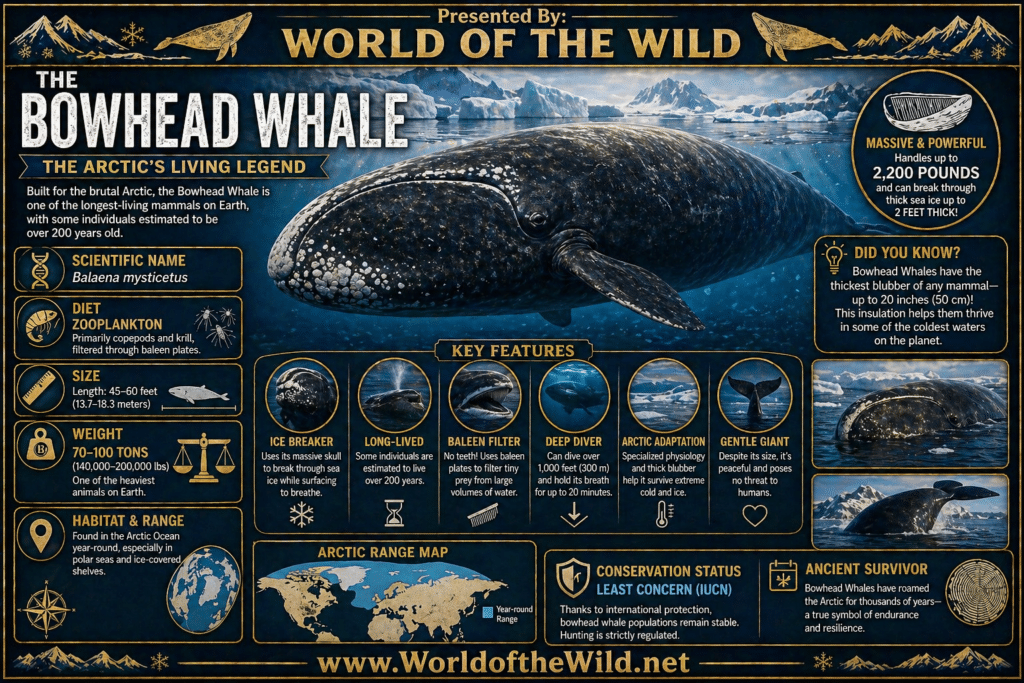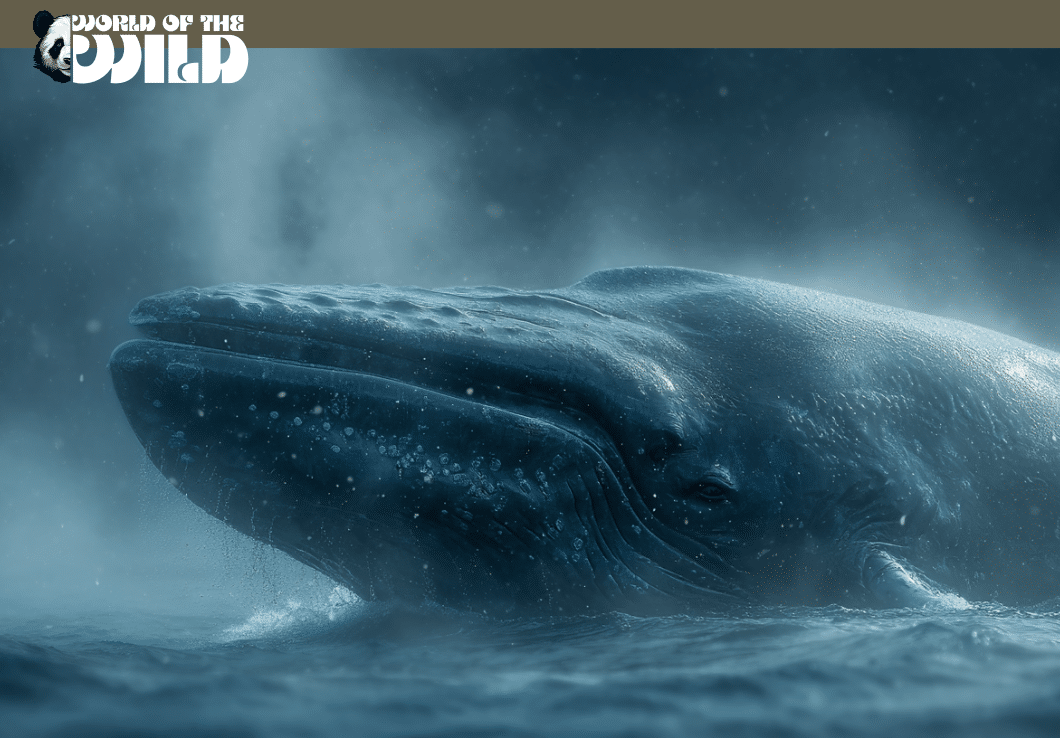

Imagine an animal that was already alive when Shakespeare was writing his plays — and is still swimming in the Arctic today. No, this isn’t science fiction. The bowhead whale (Balaena mysticetus) is one of the most extraordinary creatures to have ever graced our planet, and it holds a record that stops most people in their tracks: individuals have been confirmed to live beyond 200 years, making them the longest-lived mammals on Earth.
But longevity is just the beginning of what makes this species so remarkable. Equipped with the thickest blubber of any animal, capable of breaking through sea ice with its reinforced skull, and producing songs of haunting complexity beneath frozen Arctic waters, the bowhead whale is a biological marvel hiding in one of the planet’s most inhospitable environments. As climate change reshapes the Arctic faster than scientists predicted, understanding and appreciating this ancient giant has never been more urgent.
Facts
- The oldest known bowhead whale was estimated to be over 211 years old — determined by analyzing amino acids in its eye tissue, making it the oldest mammal ever recorded.
- Their mouths are record-breaking. A bowhead’s mouth can reach up to 16 feet long and 13 feet wide — large enough to park a small car inside.
- They possess the thickest blubber of any whale, with insulating layers measuring up to 20 inches thick, allowing them to survive in water temperatures that hover just above freezing.
- Bowheads are living ice-breakers. Their massive, reinforced skulls can shatter sea ice up to 24 inches (two feet) thick from below using sheer force alone.
- Their baleen plates are the longest of any whale, sometimes exceeding 13 feet in length — nature’s most impressive filtration system.
- Bowhead whales appear to have cancer-resistant genetics. Researchers have identified unique DNA repair and cell cycle control genes that may explain both their remarkable longevity and low cancer rates.
- Each bowhead whale has a unique song, and their vocal repertoire is so diverse that scientists have compared their musical creativity to jazz improvisation — they rarely repeat the same song twice across a season.
Species
The bowhead whale occupies the following taxonomic classification:
- Kingdom: Animalia
- Phylum: Chordata
- Class: Mammalia
- Order: Artiodactyla (formerly Cetacea)
- Family: Balaenidae
- Genus: Balaena
- Species: Balaena mysticetus
The bowhead is the sole living member of the genus Balaena, though it shares the family Balaenidae with the three species of right whales — the North Atlantic right whale (Eubalaena glacialis), the North Pacific right whale (Eubalaena japonica), and the Southern right whale (Eubalaena australis). These relatives share the bowhead’s signature lack of a dorsal fin and similar baleen structure, but none approach the bowhead’s size, blubber thickness, or cold-water specialization.
Within the species itself, scientists generally recognize five distinct population stocks, which are sometimes referred to informally as subspecies or subpopulations: the Bering-Chukchi-Beaufort stock (the largest), the Hudson Bay-Foxe Basin stock, the Davis Strait stock, the Spitsbergen (Svalbard) stock, and the Okhotsk Sea stock. These populations are geographically separated and exhibit slight differences in migration patterns and genetic makeup, though they are not formally classified as distinct subspecies by most authorities.
Appearance
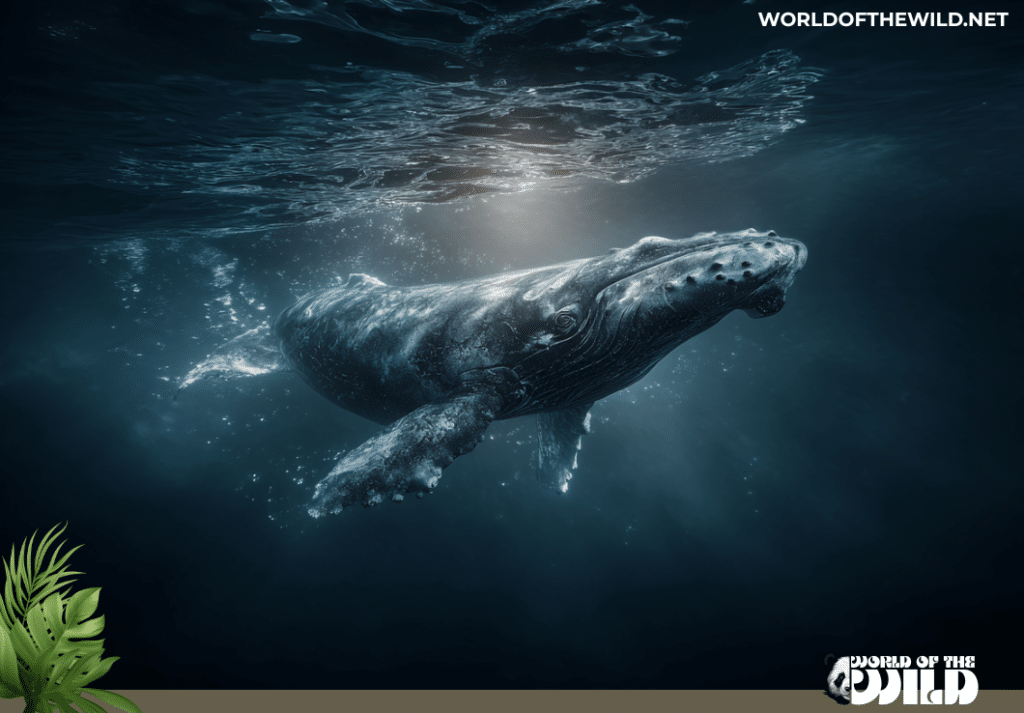
The bowhead whale is built for one purpose above all else: surviving the Arctic. Everything about its body speaks to a life defined by ice, cold, and depth.
In terms of sheer size, bowheads are among the largest animals on Earth. Adults typically range from 46 to 59 feet (14 to 18 meters) in length, with females being notably larger than males — a reversal of the typical mammalian pattern. The largest individuals can weigh up to 220,000 pounds (100 metric tons), though most adults fall in the range of 150,000 to 200,000 pounds.
The animal’s most defining feature is its enormous, highly arched — or “bowed” — upper jaw, which gives the species its common name. This dramatic curve accommodates the longest baleen plates of any whale on Earth, hanging in dense, comb-like rows from the upper jaw and used to filter enormous quantities of tiny prey from the water.
Their body coloration is predominantly blue-black to dark gray or brown, though most individuals have a distinctive white or pale gray chin patch marked by a scattering of black spots. The belly may also show lighter pigmentation. This high-contrast patterning makes individual identification possible for researchers in the field.
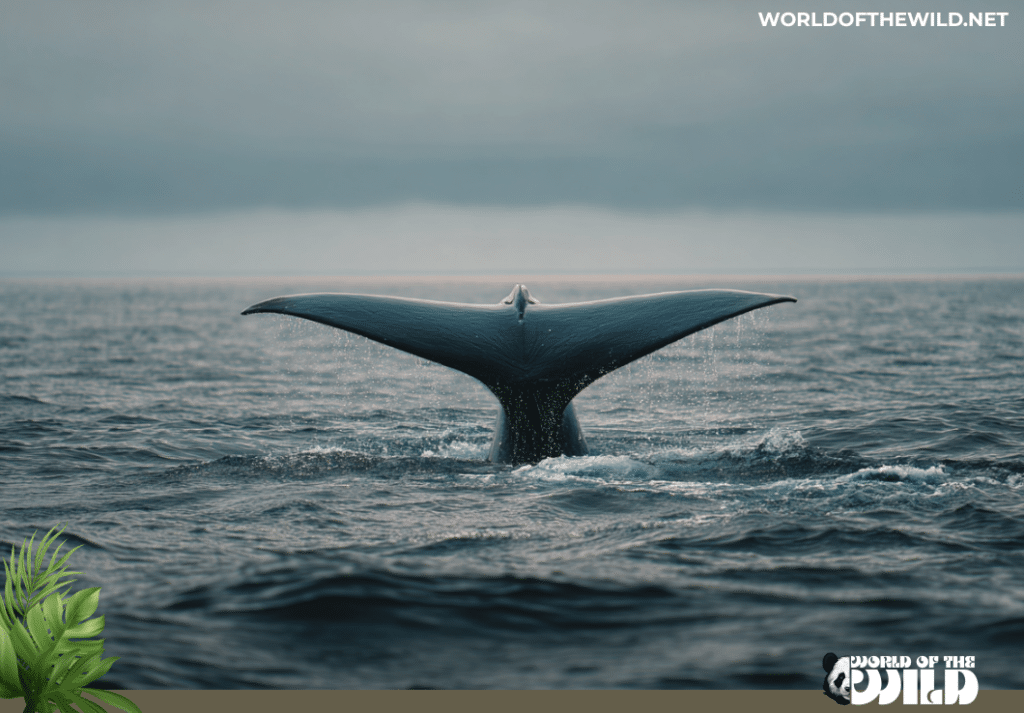
Unlike most large whale species, the bowhead has no dorsal fin — an adaptation that prevents heat loss through the fin and allows the animal to slide beneath ice floes without obstruction. In its place, there is a slight dorsal hump about two-thirds of the way down the back. The flippers are broad and paddle-like, and the tail flukes are wide and deeply notched, providing powerful propulsion through dense, ice-filled waters.
Beneath the skin lies the bowhead’s greatest survival tool: a blubber layer measuring up to 20 inches (50 centimeters) thick. This extraordinary insulation is both an energy reserve and a thermal barrier against water temperatures that routinely dip below 32°F.
Behavior
Despite their enormous size, bowhead whales are gentle, unhurried animals — oceangoing elders whose behavior reflects a deep evolutionary patience.
Bowheads are generally semi-social, often traveling alone or in small, loosely associated groups of two to three individuals, though larger aggregations of up to 14 whales can form during migration or in productive feeding grounds. They are not as tightly gregarious as some other whale species, but they are far from solitary — vocal contact appears to maintain loose bonds between individuals across great distances.
Their vocal behavior is among the most complex of any baleen whale. Researchers recording bowhead songs beneath the ice have been astonished to document hundreds of distinct song types within a single population over a single season. Unlike humpback whales, which all sing the same evolving song within a population, bowheads appear to produce individually unique compositions — a phenomenon that has led researchers to draw comparisons to free-form jazz. These songs are primarily produced during the winter breeding season, suggesting a role in mate attraction.
Bowheads are slow, deliberate swimmers, typically cruising at 2 to 6 miles per hour, though they can sustain bursts of up to 12 mph when threatened. Their dives, while not as extreme as sperm whales, can reach depths of around 500 feet and last up to 40 minutes.
One of their most dramatic behavioral adaptations is ice-breaking. Bowheads actively seek breathing holes in sea ice and, when necessary, use the reinforced dome of their skull to ram upward through thick ice to create new breathing access points. This gives them access to feeding grounds and refuges that other large cetaceans simply cannot reach.
Bowheads also engage in spy-hopping (lifting their head vertically above the water surface), breaching (launching their massive bodies clear of the water), and lobtailing (slapping the tail flukes against the surface) — behaviors that may serve communication, play, or parasite removal functions.
Their intelligence, while difficult to measure by conventional standards, is evidenced by their complex vocalizations, apparent awareness of hunting pressure (populations in heavily hunted areas have become notably more evasive), and — remarkably — the fact that stone harpoon tips from the 1800s have been found embedded in living whales harvested in the 21st century, suggesting that some individuals remember and avoid particular hunting grounds across a human lifetime.
Evolution
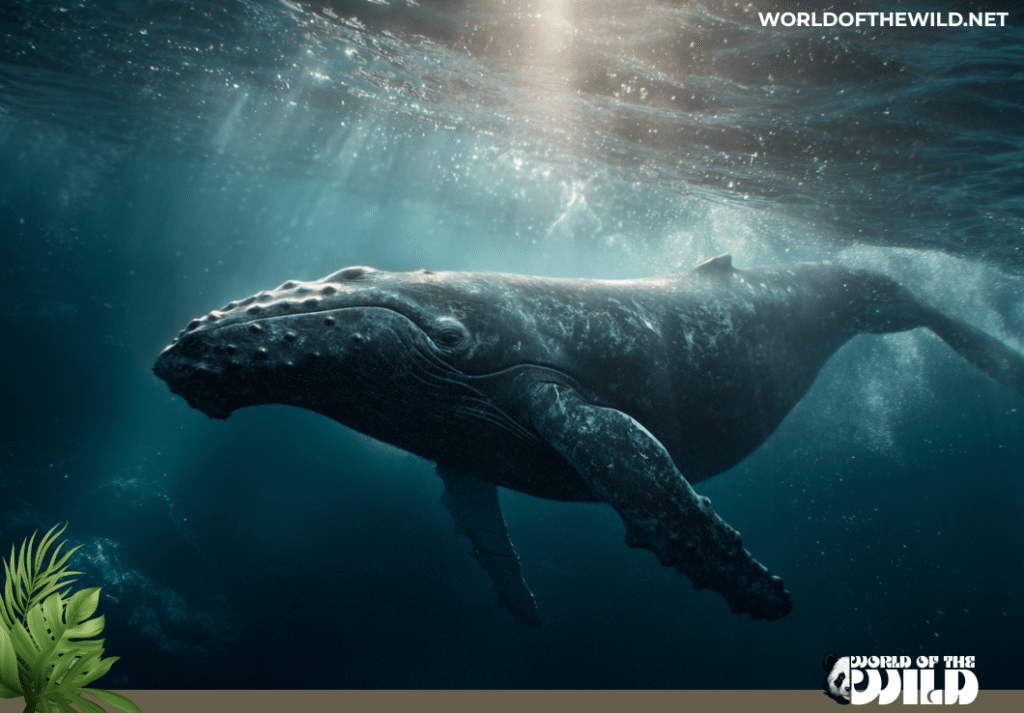
The story of the bowhead whale is one of the most extraordinary journeys in vertebrate evolution — a 50-million-year transformation from land-dwelling mammal to fully aquatic Arctic specialist.
The ancestors of all whales, including the bowhead, were terrestrial even-toed ungulates (artiodactyls) that lived approximately 52 to 48 million years ago during the Eocene epoch. The earliest known proto-whale, Pakicetus, was a wolf-sized, four-legged mammal that waded in shallow freshwater environments in what is now Pakistan and India. Subsequent genera, including Ambulocetus (the “walking whale”), showed increasingly aquatic lifestyles, with the hind limbs gradually reduced and the body elongated.
By around 35 million years ago, fully aquatic ancestors had evolved, and the great split between toothed whales (Odontoceti) and baleen whales (Mysticeti) was underway. The transition from teeth to baleen — one of evolution’s most remarkable innovations — involved an intermediate stage in which early mysticetes had both teeth and the precursors of baleen plates before baleen became the dominant feeding structure.
The family Balaenidae, to which the bowhead belongs, diverged from other baleen whales approximately 20 to 25 million years ago during the Miocene. The genus Balaena itself appears in the fossil record by the Late Miocene or Pliocene, roughly 5 to 10 million years ago. The bowhead’s specific lineage appears to have become increasingly specialized for cold-water, sea-ice environments as Arctic glaciation intensified through the Pleistocene epoch.
The bowhead’s modern form — with its massive blubber stores, reinforced skull, elongated baleen, and absence of a dorsal fin — represents millions of years of fine-tuned adaptation to one of Earth’s harshest environments.
Habitat
The bowhead whale is one of the very few large whale species that spends its entire life in Arctic and sub-Arctic waters, never migrating to warmer tropical breeding grounds the way many other baleen whales do. This commitment to the cold is total and extraordinary.
Their range spans the Arctic Ocean and adjacent seas, including the Bering Sea, Chukchi Sea, Beaufort Sea, Hudson Bay, Davis Strait, Baffin Bay, and the waters around Svalbard (Spitsbergen) in the North Atlantic. The five recognized population stocks occupy distinct, partially overlapping geographic ranges across this vast circumpolar territory.
Bowheads are intimately associated with sea ice, and their seasonal movements track the advance and retreat of the Arctic ice pack. In winter, they inhabit areas of broken pack ice where they can maintain breathing holes. In spring, as ice breaks up, they follow the ice edge northward in one of the animal kingdom’s most dramatic migrations, moving into rich Arctic feeding grounds. In summer and early fall, they exploit highly productive open Arctic waters before retreating south again as winter ice advances.
The specific habitat characteristics they favor include marginal ice zones, areas of fractured or broken sea ice, polynyas (areas of open water surrounded by ice), and coastal waters near productive upwelling zones where prey concentrations are highest. Water depths in their feeding areas can vary enormously, from shallow coastal shelves to deep oceanic basins.
Their extreme habitat specialization is a double-edged sword: it has shaped them into perfectly adapted Arctic organisms, but it also makes them uniquely vulnerable to the dramatic changes currently transforming the Arctic ecosystem.
Diet
The bowhead whale is a filter-feeding carnivore — a distinction worth unpacking. While “carnivore” typically conjures images of teeth and predatory pursuit, bowheads consume exclusively animal matter, but their prey is among the smallest in the ocean.
Their primary food sources are zooplankton, particularly copepods (tiny crustaceans often no larger than a grain of rice), euphausiids (krill), and amphipods. They also consume mysid shrimp, small schooling fish, and other small invertebrates when available. To sustain a body that can weigh over 100 tons, a bowhead must consume enormous quantities of these miniature prey items — estimates suggest they eat between 100 and 200 metric tons of zooplankton per year.
Feeding occurs through continuous ram filtration and skim feeding. The whale swims slowly forward with its mouth partially or fully open, seawater rushing in and being forced back out through the long baleen plates, which trap prey on their inner, bristle-like surface. The tongue then sweeps the captured prey toward the throat. This elegant simplicity belies the extraordinary efficiency of the system — baleen plates over 13 feet long provide an immense filtration surface that allows the whale to process vast volumes of water with minimal energy expenditure.
Bowheads appear to be opportunistic in their feeding locations, foraging at the surface, in the water column, and along the seafloor. Evidence of bottom-feeding has been documented through the presence of sediment and benthic organisms in stomach contents, as well as abrasion patterns observed on the chin and rostrum of some individuals.
Their feeding is heavily concentrated in spring and summer, when Arctic productivity explodes and zooplankton reaches peak abundance. The thick blubber accumulated during this productive season fuels the animal through leaner winter months.
Predators and Threats
Natural Predators
The bowhead whale faces few natural predators, a consequence of its enormous size and frigid habitat. The primary natural threat comes from orcas (killer whales), which occasionally prey on bowhead calves and, in rare documented cases, have been observed attacking adult bowheads in coordinated group hunts. Attacks are most likely to occur during spring migration when bowheads are navigating ice-edge environments where orcas also travel.
Large sharks are not considered meaningful predators in the bowhead’s Arctic range, and no other species regularly preys on healthy adult bowheads.
Human-Caused Threats
The bowhead whale’s history of human exploitation is one of the darkest chapters in the story of marine mammals. Commercial whaling beginning in the 1500s and intensifying through the 17th to 20th centuries devastated bowhead populations globally. Whalers prized them for their exceptional quantities of oil and the enormous value of their baleen (used in corsets, umbrellas, and other manufactured goods). By the early 20th century, several population stocks had been reduced to the verge of extinction, with the Spitsbergen population reduced from tens of thousands to perhaps a few hundred individuals.
Today, climate change represents the most profound and urgent threat. The Arctic is warming at two to four times the global average rate, causing dramatic sea ice loss that directly threatens the bowhead’s habitat, disrupts zooplankton distribution, and alters migration routes. Warming waters also allow previously absent species — including orcas — to spend more time in Arctic waters, increasing predation pressure.
Commercial shipping through newly opened Arctic sea routes brings noise pollution that can mask the bowhead’s complex vocalizations, disrupt feeding and reproduction, and create collision risks. Oil and gas exploration in Arctic waters poses threats through both direct disturbance and the catastrophic potential of spills in an environment where cold temperatures would dramatically slow any cleanup response.
Entanglement in fishing gear, while less severe for bowheads than for some other large whales, remains a documented mortality source. Subsistence hunting by Indigenous Arctic peoples — including Iñupiat, Yupik, and Chukchi communities — continues under internationally recognized rights and is managed at sustainable levels, representing a culturally vital practice with a minimal overall population impact.
Reproduction and Life Cycle
Bowhead whales reproduce at an unhurried pace that mirrors their centuries-long lifespans — a life history strategy that prioritizes quality and longevity over rapid reproduction.
Sexual maturity is reached relatively late, estimated at between 10 and 25 years of age, with females likely not producing their first calf until they are well into their teenage years at minimum. Given documented lifespans exceeding 200 years, this means a female bowhead may not begin reproducing until she has lived longer than the average human lifespan.
Mating is believed to occur primarily during winter and early spring, when bowheads are most vocally active. The complex, varied songs documented in winter-breeding aggregations strongly suggest a role in male competition and female mate selection, though the precise social dynamics of bowhead courtship remain difficult to study in their remote, ice-covered habitat. Males may compete for females, and the relatively large testes of bowhead whales (among the largest of any animal) suggest that sperm competition — where multiple males mate with a single female and competition occurs at the level of sperm — may play a role in their reproductive strategy.
Gestation lasts approximately 13 to 14 months, after which females give birth to a single calf. Twin births are extremely rare. Calves are born in spring or early summer, typically measuring 13 to 15 feet in length and weighing around 2,000 pounds. They are born tail-first, as is typical for cetaceans.
Nursing lasts approximately 9 to 12 months, during which calves grow rapidly on their mother’s extraordinarily rich, fat-dense milk. Mothers are intensely protective of their young, and the bond between mother and calf is strong throughout the nursing period.
Calving intervals are long — females are estimated to give birth approximately every 3 to 7 years, meaning a single female may produce only a handful of calves over her lifetime despite living for two centuries. This slow reproductive rate makes population recovery from hunting or other stressors an extremely gradual process.
The combination of late maturity, long gestation, single offspring, extended nursing, and slow calving rates makes the bowhead one of the most K-selected (slow-reproducing, long-lived) mammals on Earth. Their extraordinary longevity — with confirmed ages over 200 years — means that the individual whales scientists observe today may carry within them memories, in a biological sense, of a world before industrial whaling.
Population
The bowhead whale is currently classified as Least Concern on the IUCN Red List — a remarkable turnaround from the brink of extinction that followed centuries of commercial whaling. However, this overall classification masks significant variation between population stocks.
The Bering-Chukchi-Beaufort (BCB) stock is by far the largest and healthiest, estimated at approximately 16,000 to 25,000 individuals and showing a positive population trend. The recovery of this stock following the cessation of commercial whaling in the early 20th century has been one of the more encouraging stories in marine mammal conservation.
Other stocks are in far more precarious positions. The Spitsbergen stock, once numbering in the tens of thousands before European commercial whalers decimated it beginning in the 1600s, is estimated to number only in the hundreds of individuals and remains critically endangered at the stock level. The Okhotsk Sea stock is also considered critically endangered by many researchers, with population estimates ranging from a few hundred to around 400 individuals.
The Hudson Bay-Foxe Basin and Davis Strait stocks are in intermediate positions, both showing signs of recovery but remaining well below pre-whaling abundances.
Global population estimates place the total bowhead whale population somewhere between 10,000 and 25,000 individuals, depending on the methodology and populations included in the estimate. The trend for the species overall is cautiously positive, but the profound threat posed by accelerating Arctic climate change introduces significant uncertainty into long-term projections.
Conclusion
The bowhead whale is more than a remarkable animal — it is a living archive of Arctic history, a biological mystery that is rewriting our understanding of aging and longevity, and a symbol of both the resilience of nature and the devastating consequences of human overexploitation.
An animal that can outlive empires, sing improvised songs beneath polar ice, and break through two feet of frozen ocean with its skull alone deserves our deepest respect — and our most serious conservation attention. The recovery of some bowhead stocks from the edge of extinction is proof that when we choose to act responsibly, nature can heal. But that recovery remains fragile, and the Arctic environment these whales depend upon is transforming at an alarming pace.
The bowhead whale has survived ice ages, mass extinctions, and centuries of relentless hunting. Whether it survives us — the planet-altering species that arrived only recently in geological terms — depends entirely on choices we make right now. Support organizations working on Arctic conservation, advocate for meaningful climate policy, and remember: somewhere beneath the ice, a 200-year-old whale is singing a song no one has ever heard before. It deserves the chance to keep singing.
Quick Reference
| Scientific Name | Balaena mysticetus |
| Diet Type | Carnivore (filter feeder — zooplankton, krill, copepods) |
| Size | 552–708 inches (46–59 feet) |
| Weight | Up to 220,000 pounds (up to ~110 tons) |
| Region Found | Arctic and sub-Arctic oceans (Bering Sea, Chukchi Sea, Beaufort Sea, Hudson Bay, Davis Strait, Baffin Bay, Svalbard/Barents Sea, Sea of Okhotsk) |