
World of the Wild — Endangered Species Series
The Ghost of the Dense Tropical Rainforests
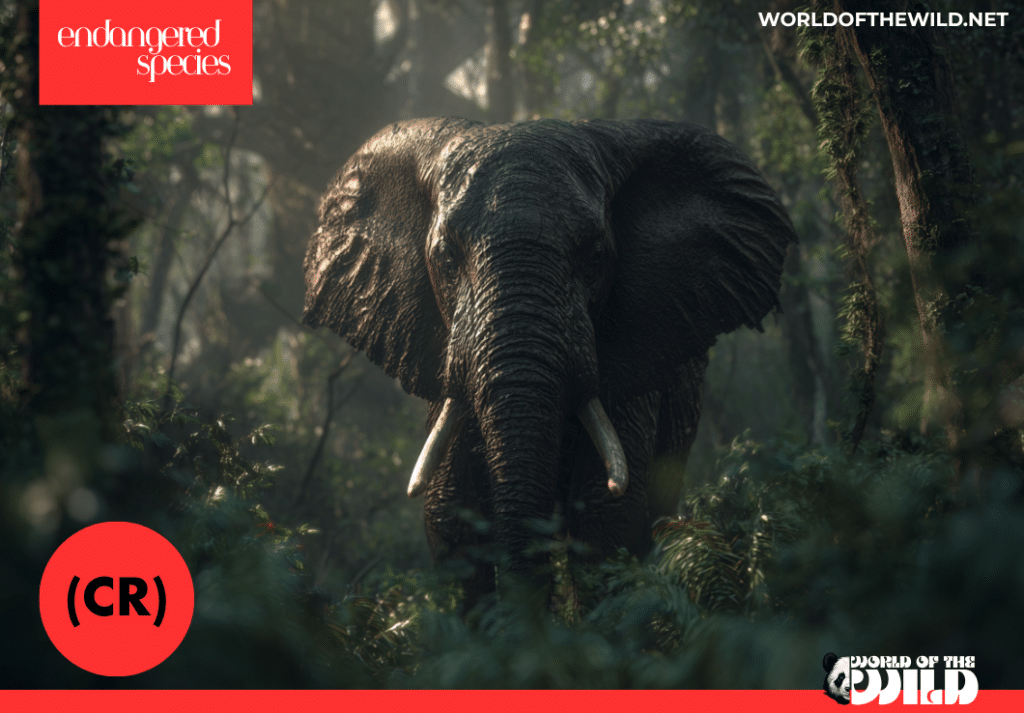
Before the sun reaches the canopy, the forest breathes. In the deep interior of the Congo Basin — where the air hangs heavy with the smell of wet bark, decaying leaves, and something older, something primordial — the ground begins to tremble. Not violently. Just enough. A low-frequency rumble, felt more in the chest than heard by the ear, moves through the undergrowth like a slow tide. The birds fall silent. The okapis freeze. And then, from between the cathedral buttresses of a century-old moabi tree, she appears.
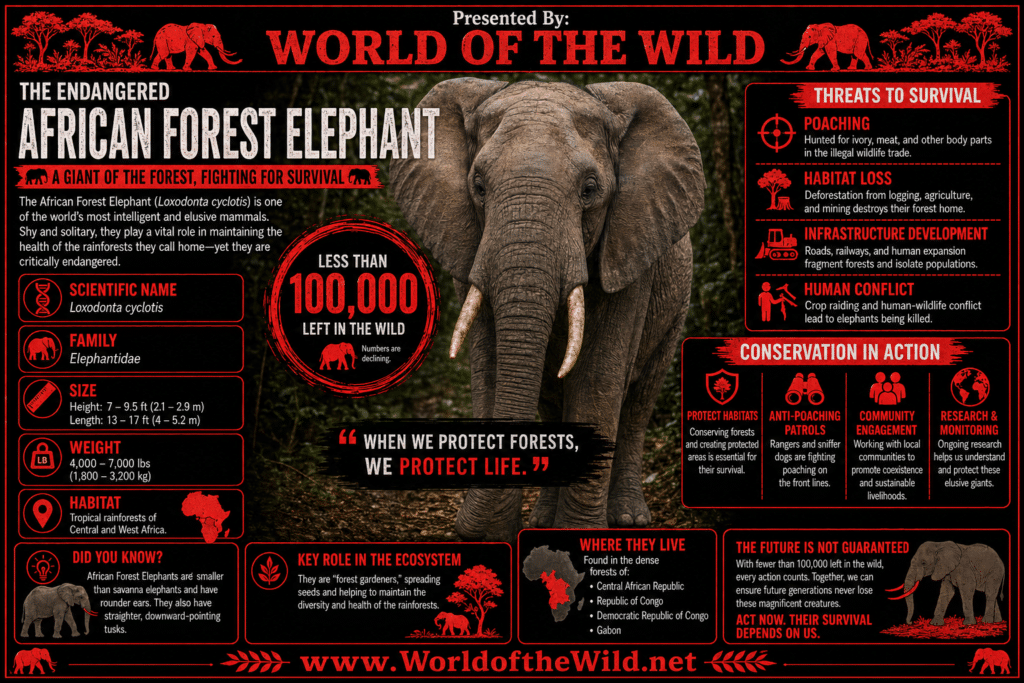
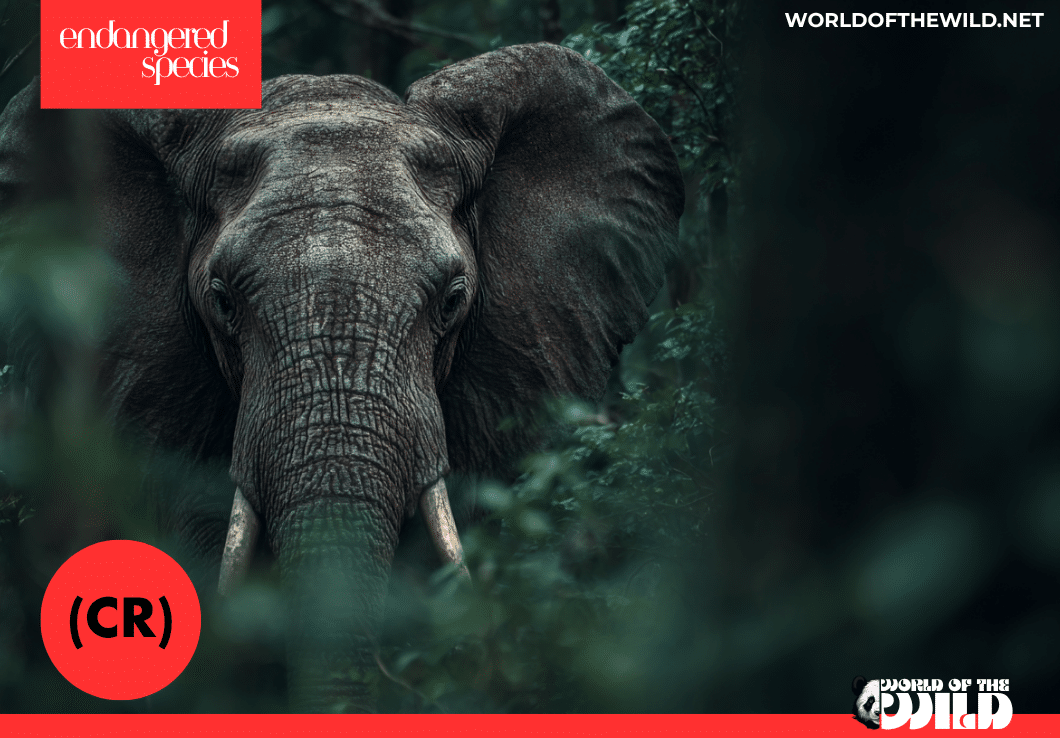
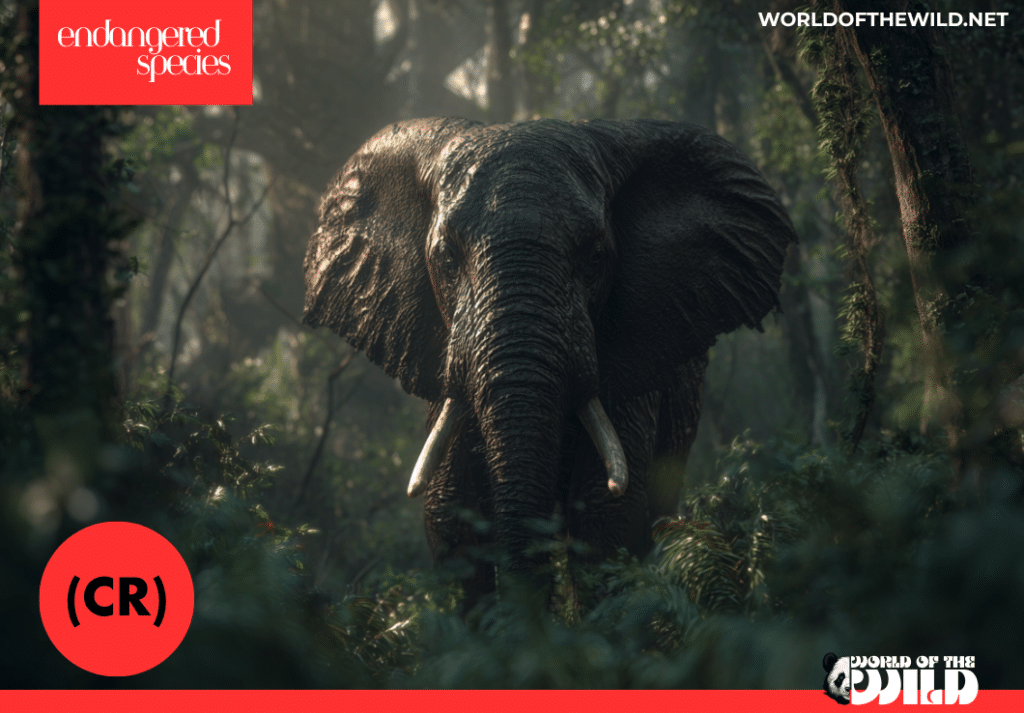
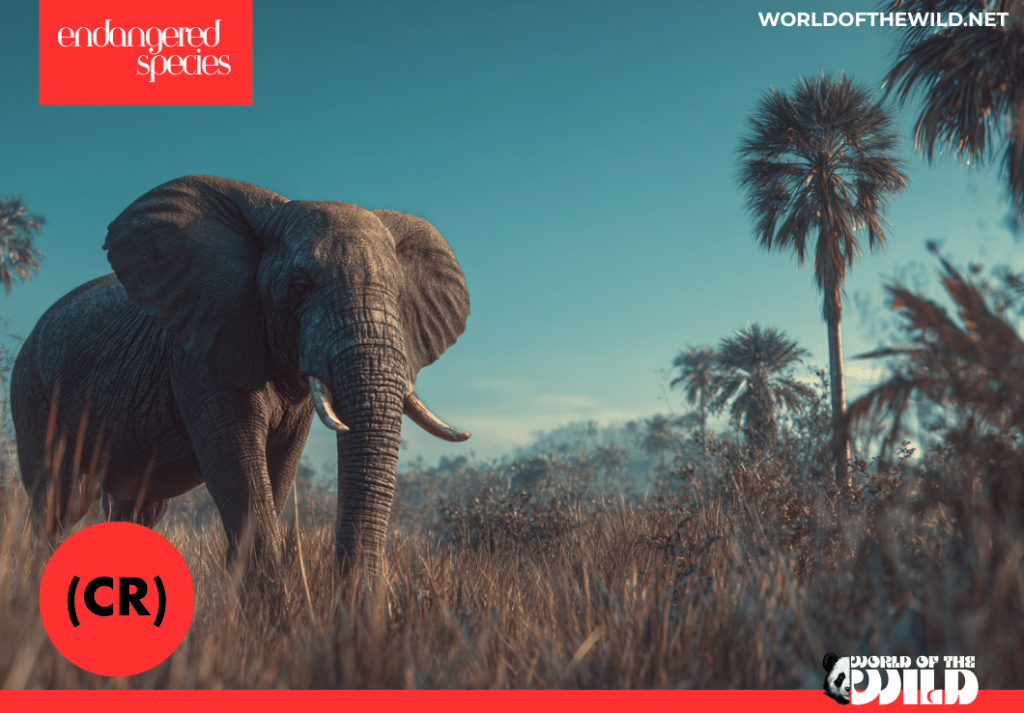
She is roughly 2.4 meters at the shoulder, smaller than her savanna cousins, built for the shadows. Her ears are rounded, not swept wide like wings. Her skin is a deep charcoal, almost slate, glistening with the moisture she rolled into at the forest pool an hour before dawn. Her tusks are straight, angled slightly downward — evolved not for combat but for digging, for gouging minerals from the earth, for stripping the bark of trees with surgical precision. She moves through a stand of dense vegetation that would stop a human cold, and she does it in near-silence, her feet spreading across the soft soil like slow, deliberate hands.
She is a Loxodonta cyclotis — an African Forest Elephant — and she is a ghost that the forest cannot afford to lose.
She moves with three juveniles in tow, all daughters, all born within the last decade. She has covered more than 40 kilometers in the past four days, following a network of trails her mother taught her, and her mother’s mother before that — paths carved over generations through the Congolian rainforest, leading to salt licks, fruiting trees, and river crossings that only the elders know. These mental maps, passed down through matriarchal lineages, represent thousands of years of ecological knowledge that cannot be stored in a gene bank or reconstructed in a laboratory. They exist only in her and animals like her.
She pauses at a stand of Omphalocarpum trees, whose large fruits litter the ground like fallen lanterns. She picks one up with the delicate two-fingered tip of her trunk — the same tip that can thread a peanut from your palm — and crushes it in her massive molars. The seeds inside, some the size of a child’s fist, pass through her digestive system largely intact. In three days, they will be deposited miles away, far from the parent tree’s shade, in soil freshened by her own droppings. She is not just eating. She is planting a forest.
And she has been doing this, unobserved by most of the world, for perhaps 45 years.
Now, in 2026, the corridors she walks are shrinking. The chain saws are closer than they have ever been. The silence that used to follow her for miles is being replaced, one kilometer at a time, by the sounds of extraction. She does not know what a “critically endangered” designation means. But she knows, in some way that science is only beginning to understand, that her world is contracting. The old paths her mother taught her sometimes lead nowhere now — to a clear-cut hillside, or a road, or a fence. She turns back. She finds another way. But there are fewer and fewer ways left to find.
Status of Survival
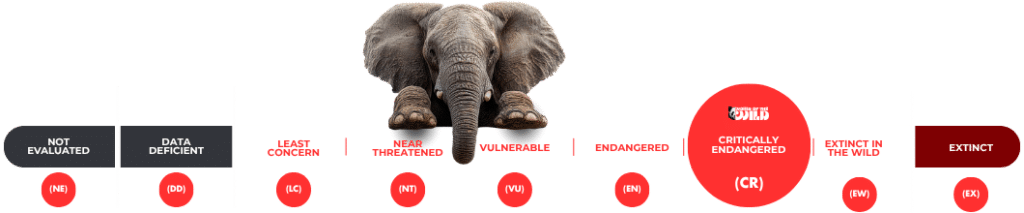
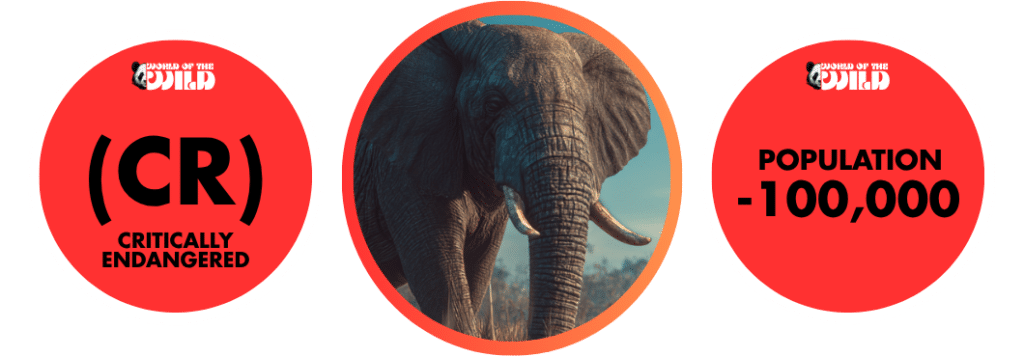
The African Forest Elephant holds one of the most alarming designations in the natural world. As of the most recent IUCN Red List assessment (2021, reaffirmed through 2025 monitoring cycles), Loxodonta cyclotis is classified as Critically Endangered — the last category before Extinct in the Wild. This is not a precautionary listing. It is a verdict handed down by population data that leaves little room for optimism.
Current estimates place the global population of African Forest Elephants at somewhere between 95,000 and 135,000 individuals, though many field ecologists working in the Congo Basin consider even the upper figure optimistic given the pace of recent losses and the inherent difficulty of counting animals that live beneath a closed forest canopy. For context: the species lost more than 62% of its total population in just 31 years, between 1979 and 2010. In some of its core range countries, the losses were closer to 80%.
These numbers are not just a conservation statistic. They represent a crisis at the genetic level. Forest elephants have a generational interval of approximately 22 to 25 years — among the longest of any land mammal. This means that population recovery is achingly slow. A female who survives poaching, habitat loss, and the disruption of her social group may not produce her first calf until she is 12 to 14 years old, and will rarely produce more than four offspring across her lifetime. When populations drop below certain thresholds, inbreeding becomes a compounding problem, reducing the immune diversity and adaptive capacity of the survivors. Some geneticists studying forest elephant populations in Gabon and Cameroon have already identified warning signs of reduced genetic heterozygosity in isolated subpopulations — the biological equivalent of a canary in a coal mine.
The species was formally recognized as distinct from the African Bush Elephant (Loxodonta africana) only in 2010, following decades of debate and a landmark genetic analysis that confirmed the two lineages had been diverging for 2.5 to 6 million years — a deeper split than the one between Asian and African elephants. This reclassification matters enormously for conservation: management strategies, population viability analyses, and legal protections are all species-specific. Counting forest elephants as a subset of a healthier savanna population had, for years, masked how precipitously their numbers had fallen.
The Map of the Vanishing
The African Forest Elephant’s range is defined by canopy. It is a creature of the Guinean and Congolian rainforests — the second-largest tropical forest system on Earth — with its strongholds concentrated in Gabon, the Democratic Republic of Congo, Cameroon, the Republic of Congo, Central African Republic, and Equatorial Guinea. Isolated and increasingly fragmented populations exist in Côte d’Ivoire, Ghana, and a handful of other West African nations, though these western populations are in an advanced state of collapse. In Nigeria, once home to substantial forest elephant herds, fewer than 300 individuals are believed to remain.
Gabon currently holds the largest contiguous population — an estimated 40,000 to 60,000 animals — protected in part by a network of national parks that cover roughly 11% of the country’s landmass. The Lopé–Waka corridor and the Gamba Complex of protected areas represent some of the most critical remaining refuges on the continent. But even in Gabon, the pressure is mounting.
Within this range, the forest elephant occupies a niche that no other animal can fill. It is, by any scientific measure, a keystone species — an organism whose impact on the ecosystem is vastly disproportionate to its numbers. Consider what one forest elephant does in a single year:
- It can disperse the seeds of more than 96 plant species, many of which are large-seeded hardwood trees that no other frugivore is capable of consuming and dispersing effectively.
- It creates forest clearings — known locally as bais — by browsing, trampling, and digging, which become biodiversity hotspots supporting scores of other mammals, birds, reptiles, and invertebrates.
- Its trails, worn into the forest floor over decades, function as hydraulic channels during heavy rains, directing water flow and reducing erosion.
- Through its consumption of bark and understory vegetation, it actively promotes the dominance of hardwood trees over faster-growing, lower-carbon softwood species.
This last point has profound implications for climate science. A landmark 2019 study published in Nature Geoscience estimated that the loss of African Forest Elephants could reduce the above-ground carbon storage capacity of Central African forests by as much as 6 to 9 percent — the equivalent of releasing billions of tons of CO₂ into the atmosphere. The elephant does not merely live in the forest. It builds the forest. Remove it, and the ecosystem does not simply become an elephant-free version of itself. It becomes something fundamentally different — less diverse, less resilient, and less capable of sequestering the carbon that human civilization depends on to stabilize the climate.
The Descent: How We Got Here
The African Forest Elephant’s crisis did not arrive overnight. It is the accumulated weight of a century of pressure applied from multiple directions simultaneously, and understanding its arc requires acknowledging both historical culpability and present-day failures.
The Ivory Trade: A Century of Slaughter
The forest elephant’s tusks are denser, harder, and more coveted than those of its savanna cousin. In the carving workshops of Asia and the auction houses of the colonial era, “hard ivory” — as forest elephant tusks were known — commanded premium prices. The late 19th and early 20th centuries saw industrial-scale ivory extraction across Central and West Africa that devastated populations before any scientific baseline could even be established. By the time the Convention on International Trade in Endangered Species (CITES) enacted its landmark 1989 ivory ban, decades of market-driven slaughter had already hollowed out forest elephant populations across much of their historical range.
The ban worked — briefly. Poaching declined sharply through the 1990s. But a controversial “one-off” sale of stockpiled ivory to Japan in 1999, and a second sale to China and Japan in 2008, reignited demand and sent a signal to criminal networks that ivory remained a viable commodity. Between 2002 and 2011, an estimated 62% of all remaining forest elephants were killed across Central Africa. In the Minkébé Forest of Gabon alone — once considered a sanctuary — nearly 11,000 elephants were killed for their ivory in a single decade. Across the Tridom landscape spanning Cameroon, Congo, and Gabon, aerial surveys recorded declines exceeding 50% in under ten years.
The ivory trade did not merely reduce numbers. It dismantled social structures. Forest elephants are matriarchal, with complex multi-generational family bonds. When poachers — who preferentially target large, older females with the most developed tusks — kill a matriarch, they eliminate the repository of ecological knowledge she carries. Orphaned calves raised without elder guidance show profound behavioral abnormalities, including elevated stress hormones, impaired navigation, and disrupted reproductive cycles. The psychological wounds of poaching ripple outward through entire family groups for years.
Habitat Fragmentation: The Slow Erasure
If poaching is the bullet, habitat loss is the slow poison. Central Africa’s rainforests are under sustained pressure from industrial logging, mining concessions, smallholder agriculture expansion, and road construction funded by Chinese, European, and domestic investors. Between 2001 and 2023, the Congo Basin lost an estimated 2.6 million hectares of forest cover annually — a rate that, while lower than the Amazon, represents staggering losses for a landscape that is irreplaceable. Roads are particularly destructive: every new road penetrating the forest interior opens access for both commercial poachers and bushmeat hunters, collapsing the protective isolation that deep forest cover previously provided.
Mining operations — for coltan, gold, diamonds, and increasingly cobalt driven by global battery demand — fragment habitat, introduce human settlements into previously intact wilderness, and create demand for bushmeat that decimates local wildlife populations including juvenile elephants. The Democratic Republic of Congo, which holds some of the most critical remaining forest elephant habitat on Earth, is simultaneously the site of some of the most intense and poorly regulated mineral extraction on the continent.
Climate Disruption: The Compounding Variable
Forest elephants are also increasingly squeezed by climate-driven shifts in rainfall patterns and fruiting cycles. Research published in 2022 and 2023 documents the synchronization between elephant movement patterns and the availability of specific fruit species — relationships built over millennia that are now being disrupted by irregular rainy seasons. When preferred fruiting trees fail to produce in expected cycles, elephants range farther, pushing into agricultural areas where human-elephant conflict escalates sharply. In communities where people have lost crops to elephant raids, tolerance for conservation measures evaporates quickly — a social dynamic that anti-poaching programs ignore at their peril.
The Front Lines of Conservation
Amid the darkness, there is resistance. Across the forest elephant’s range, a network of scientists, rangers, indigenous communities, and international organizations is fighting one of conservation’s most difficult battles.
The Wildlife Conservation Society (WCS) operates monitoring programs across Gabon, Congo, and Cameroon that combine GPS collar tracking, acoustic monitoring using autonomous recording units, and satellite imagery analysis to track population movements in near-real time. Their data has been instrumental in identifying poaching hotspots before ground teams can detect them through conventional means. Similarly, the African Wildlife Foundation (AWF) has pioneered community conservation agreements in buffer zones around key protected areas, compensating local villages for tolerance of elephant presence and creating economic incentives for coexistence rather than conflict.
Drone technology has emerged as one of the most promising frontline tools of the past five years. The Elephant Conservation Fund and various partner NGOs now deploy fixed-wing and multirotor drones across Dzanga-Sangha in the Central African Republic and the Odzala-Kokoua National Park in Congo, conducting anti-poaching surveillance over terrain that is impassable by foot patrol. Combined with AI-powered image recognition software — capable of identifying individual elephants by ear vein patterns and distinguishing ranger activity from unauthorized human movement — these systems have reduced poaching incidents in covered areas by an estimated 30 to 45%.
Acoustic monitoring represents another technological frontier. Cornell Lab of Ornithology’s Elephant Listening Project, in partnership with institutions across Central Africa, has deployed a network of recording stations in the forest that detect the low-frequency rumbles of elephant communication — sounds that travel several kilometers through forest substrate and are largely inaudible to human rangers. These recordings allow researchers to track herd movements, identify stress responses in populations under poaching pressure, and detect the sudden silence that often precedes or follows a poaching event.
The Hero of the Species: Andrea Turkalo and the Bai Hokou Legacy
No figure has contributed more to our understanding of African Forest Elephants than Dr. Andrea Turkalo, who spent more than three decades — from 1990 to 2013, and intermittently since — studying a population of forest elephants at the Dzanga Bai, a forest clearing in the Central African Republic that functions as a natural salt lick and gathering point for hundreds of animals. Working under extraordinarily difficult conditions, including evacuation during armed conflict in 2013, Turkalo identified and catalogued more than 4,000 individual elephants by their distinctive ear and tusk patterns, creating the longest-running individual-based study of wild forest elephants in existence.
Her work revealed the depth of forest elephant social intelligence: long-term friendships between unrelated females, systematic avoidance behaviors toward groups that had experienced poaching, and nuanced communication systems that suggest a cognitive complexity we are only beginning to map. She demonstrated, irrefutably, that forest elephants are not interchangeable biological units — they are individuals with histories, relationships, and irreplaceable ecological roles. Her data now underpins population viability models used by IUCN and CITES policy bodies worldwide. She continues to advocate, with the particular urgency of someone who has watched the Dzanga Bai’s congregations shrink over a lifetime of fieldwork, for the political will to match the science.
A Success Story: Gabon’s National Commitment
In 2017, Gabon made global conservation history by becoming the first African nation to receive carbon credits in exchange for protecting its forest cover — a direct financial incentive for maintaining elephant habitat that now generates tens of millions of dollars annually under emerging carbon market frameworks. Combined with the country’s longstanding national park system, this has positioned Gabon as the strongest remaining refuge for the species. Surveys conducted between 2018 and 2023 suggest that forest elephant populations in Gabon’s core protected areas have remained stable — a relative triumph in a landscape of relentless decline.
The Odds of Tomorrow
Standing in 2026 and looking 50 years forward, the future of the African Forest Elephant bifurcates into two radically different worlds.
The Best Case Scenario
In the optimistic projection — achievable, but requiring sustained political will and international investment at a scale not yet demonstrated — the Congo Basin’s forest cover is stabilized through a combination of REDD+ carbon financing, debt-for-nature swaps, and binding international commitments under frameworks like the Kunming-Montreal Global Biodiversity Framework (adopted in 2022). Anti-poaching enforcement is professionalized and adequately funded across all major range states. Ivory demand in Asian markets continues its documented decline, driven by generational shifts in consumer values and stronger domestic enforcement in China, which banned domestic ivory trade in 2017. Community-based conservation programs mature into genuine partnerships that give forest-adjacent communities a financial stake in elephant survival. Under these conditions, models suggest the global population could recover to somewhere between 200,000 and 250,000 individuals by 2075 — still far below historical abundance, but enough to restore functional ecological roles across key landscapes.
The Worst Case Scenario
In the pessimistic projection — which current trend lines suggest is more probable — deforestation accelerates as Congo Basin nations prioritize economic development over conservation in the absence of adequate international support. Carbon markets fragment or collapse. Ivory trafficking networks, increasingly sophisticated and operating in conjunction with other forms of organized crime, adapt faster than enforcement mechanisms. Climate change renders 15 to 20 percent of current elephant habitat unsuitable by mid-century, forcing range contractions that place survivors in direct and escalating conflict with expanding human populations. Under this scenario, isolated subpopulations — particularly those in West Africa and in the periphery of the DRC — blink out entirely within the next two to three decades. The remaining animals consolidate in Gabon and a few Congolese strongholds, their genetic diversity narrowing, their ecological function diminished. By 2075, the African Forest Elephant survives, but as a conservation-dependent relic — a ghost maintained by human intervention in a forest it can no longer fully build.
The difference between these two futures is not a matter of biology. The African Forest Elephant is biologically capable of recovery. It is a matter of political choice, international solidarity, and the willingness of consuming nations to internalize the true cost of the commodities they extract from the last great tropical forests. The animal does not need our sentiment. It needs our action — in trade policy, in conservation funding, in carbon market design, in the enforcement of protections that exist on paper and often nowhere else.
Somewhere in the Congo Basin tonight, she is still moving. Still planting seeds. Still following the paths her mother taught her, in a world that is running out of room for the kind of patient, ancient wisdom she carries. The question is not whether she deserves to survive. The question is whether we will choose to let her.
Research for this article draws on IUCN Red List assessments (2021, updated 2025), peer-reviewed studies from Nature Geoscience, Oryx, and Biological Conservation, field data from WCS Congo Basin Program, and the published research of Dr. Andrea Turkalo, Dr. Katy Payne, and the Cornell Lab of Ornithology’s Elephant Listening Project.
World of the Wild — Endangered Species Series. All rights reserved.